Gadkari Hails Commissioning of INS Dunagiri, INS Agray, INS Sanshodhak

Synopsis
Union Minister Nitin Gadkari hailed the commissioning of INS Dunagiri, INS Agray, and INS Sanshodhak in PM Modi's presence on 21 June 2026, calling it a landmark in India's maritime strength and a testament to growing defence self-reliance under Make in India and Atmanirbhar Bharat.
Key Takeaways
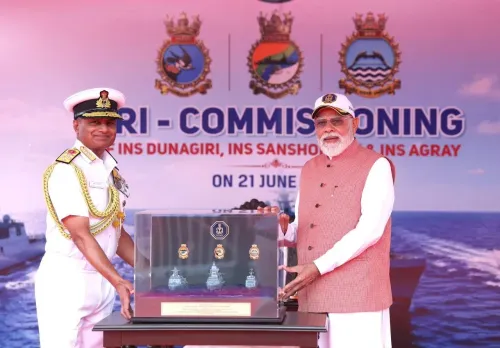
Three platforms commissioned: INS Dunagiri (Nilgiri-class stealth frigate, Project 17A), INS Agray, and INS Sanshodhak were inducted into the Indian Navy on 21 June 2026 .
PM Modi presided over the commissioning ceremony, signalling top-level political priority for naval indigenisation.
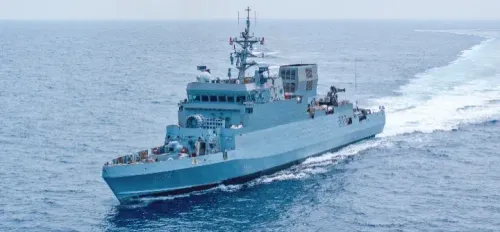
INS Dunagiri is a Project 17A stealth frigate designed for anti-submarine warfare and multi-role operations, built at an Indian shipyard.
The inductions advance the Make in India (2014) and Atmanirbhar Bharat Abhiyan (2020) defence self-reliance frameworks.
The commissioning reinforces India's strategic presence in the Indian Ocean region and its blue-water naval ambitions.
Further Project 17A frigates and Sanshodhak-class vessels remain in the construction pipeline.
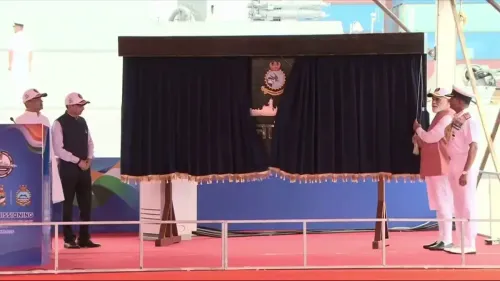
Union Road Transport and Highways Minister Nitin Gadkari on Sunday, 21 June 2026 hailed the commissioning of three new Indian Navy platforms — INS Dunagiri, INS Agray, and INS Sanshodhak — describing the event as 'a landmark stride in India's maritime strength' and 'a new chapter in naval capability.'
Context
The commissioning ceremony was held in the presence of Prime Minister Narendra Modi, whose attendance signalled the highest level of political priority attached to the induction of the three vessels. Gadkari, in his post on X, noted that the platforms 'showcase India's growing defence self-reliance and technological prowess' and are 'built with precision and purpose' to 'secure our seas, protect national interests, and reinforce India's strategic presence across the Indian Ocean region.'
The simultaneous commissioning of vessels from different classes — a stealth frigate, a corvette, and a survey ship — underscores the breadth of the Indian Navy's ongoing fleet modernisation drive. Senior ministers from portfolios outside defence publicly amplifying the event reflects a whole-of-government communication strategy around indigenisation milestones.
Policy Backdrop
INS Dunagiri is a Nilgiri-class stealth frigate built under Project 17A, a programme approved in 2015 for construction at Indian shipyards. Project 17A vessels are designed for anti-submarine warfare and multi-role operations, incorporating stealth features and advanced sensors developed domestically.
The inductions sit squarely within two flagship policy frameworks: the Make in India initiative launched in 2014 to promote domestic manufacturing including warships, and the Atmanirbhar Bharat Abhiyan announced in May 2020, which set specific defence indigenisation targets to reduce dependence on foreign platforms. Successive governments have used warship commissionings as visible proof-points of progress on both agendas.
Stakeholders and Impact
The primary beneficiary is the Indian Navy, which gains enhanced blue-water capability and maritime domain awareness through the three new platforms. Domestic shipyards that constructed the vessels also stand to benefit from the reputational and commercial momentum generated by high-profile commissionings attended by the Prime Minister.
For the Indian Ocean region more broadly, the additions to the fleet carry strategic signalling value, reinforcing India's posture as a net security provider and its ambition to expand its maritime footprint. Analysts have long noted that fleet modernisation at this pace is central to India's ability to respond to evolving maritime competition in the region.
What's Next
Attention will now turn to the remaining vessels in the Project 17A pipeline, with further frigates at various stages of construction at Indian shipyards. The commissioning of follow-on Sanshodhak-class survey vessels is also expected as the Navy expands its hydrographic and oceanographic capabilities.
The pace of these inductions will be closely watched as a barometer of India's ability to translate its indigenisation ambitions into operational fleet strength, particularly as strategic competition in the Indo-Pacific intensifies.
Point of View
Not a siloed defence ministry milestone. Gadkari's amplification, alongside PM Modi's personal presence at the event, places the commissioning firmly within the broader Atmanirbhar Bharat political narrative ahead of what is an intensely competitive strategic environment in the Indian Ocean. The simultaneous induction of vessels from multiple classes — frigate, corvette, and survey ship — also suggests the Navy and the government are managing optics carefully, bundling milestones for maximum visibility. If the Project 17A pipeline delivers its remaining frigates on schedule, the self-reliance story will gain further credibility; delays, by contrast, would test the narrative.
NationPress
19 Sept 2026
Frequently Asked Questions
What is INS Dunagiri and why is it significant?
INS Dunagiri is a Nilgiri-class stealth frigate built under Project 17A, a programme approved in 2015 for indigenous construction at Indian shipyards. It is designed for anti-submarine warfare and multi-role naval operations, and its commissioning is a key milestone in India's drive to reduce dependence on foreign warships.
Who commissioned INS Dunagiri, INS Agray, and INS Sanshodhak?
The three vessels were commissioned in the presence of Prime Minister Narendra Modi on 21 June 2026, with Union Minister Nitin Gadkari among the senior figures who publicly hailed the event.
What is Project 17A?
Project 17A is an Indian Navy stealth frigate programme approved in 2015, under which Nilgiri-class frigates — including INS Dunagiri — are being built indigenously at Indian shipyards as part of the Make in India initiative.
How does the commissioning relate to Atmanirbhar Bharat?
The Atmanirbhar Bharat Abhiyan, announced in May 2020, set specific targets for defence indigenisation to reduce import dependence. The commissioning of domestically built warships like INS Dunagiri is cited by the government as direct evidence of progress under this policy.
What is the Indian Navy's role in the Indian Ocean region?
India positions the Indian Navy as a net security provider in the Indian Ocean region, tasked with protecting national maritime interests, securing sea lanes, and reinforcing India's strategic presence amid growing competition in the Indo-Pacific.