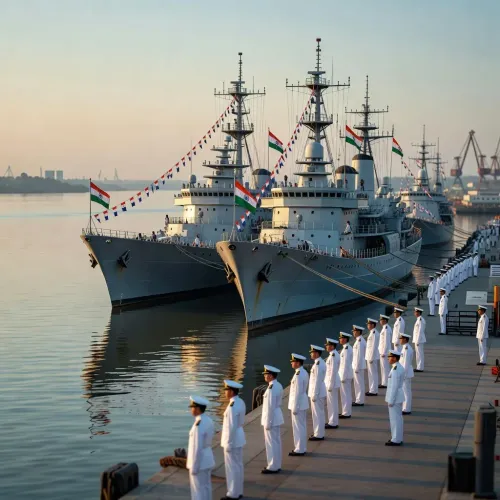
CM Dhami Hails Induction of Three Indigenous Warships into Indian Navy
Synopsis
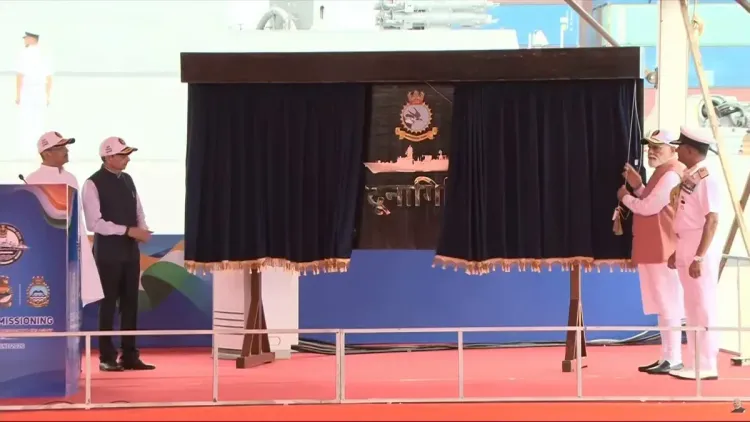
Uttarakhand CM Pushkar Singh Dhami congratulated India on the commissioning of three indigenous warships — INS Dunagiri, INS Sanshodhak, and INS Agray — into the Indian Navy on 21 June 2026, calling it a landmark in India's maritime self-reliance and strategic strength.
Key Takeaways
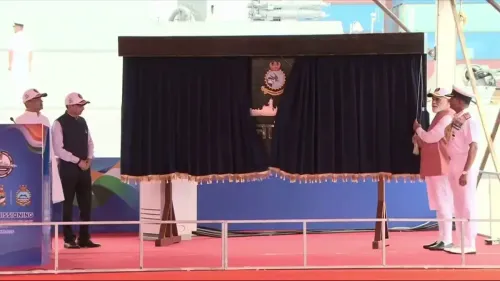
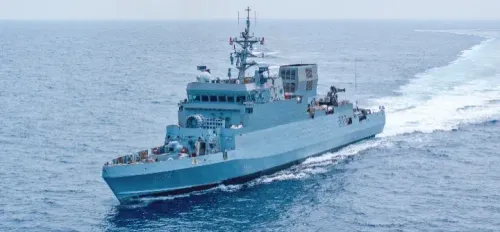
Three indigenously built warships — INS Dunagiri , INS Sanshodhak , and INS Agray — were commissioned into the Indian Navy on 21 June 2026 .
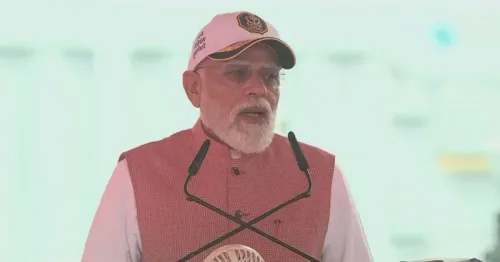
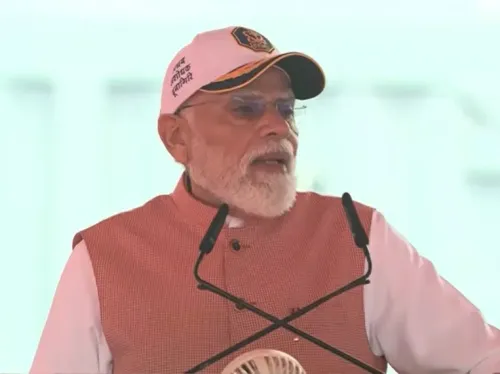
PM Narendra Modi was present at the commissioning ceremony, underscoring the government's emphasis on defence indigenisation.
CM Pushkar Singh Dhami described the event as a symbol of India's growing strategic strength and technological self-reliance.
The inductions are part of a sustained policy push under Make in India , the updated Defence Procurement Procedure , and the Aatmanirbhar Bharat initiative launched in 2020 .
The commissioning is expected to strengthen India's maritime presence across the Indian Ocean Region and bolster its credentials as a global defence manufacturer.
Follow-on inductions under Project 17A and other indigenous programmes remain on the horizon for continued fleet expansion.
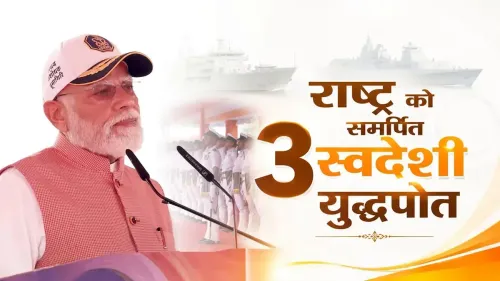
Uttarakhand Chief Minister Pushkar Singh Dhami on Sunday, 21 June 2026 congratulated the nation on the commissioning of three indigenously built warships — INS Dunagiri, INS Sanshodhak, and INS Agray — into the Indian Navy, describing the event as a historic achievement in India's maritime and defence self-reliance.
Posting on X, CM Dhami wrote that the induction of the three warships, carried out in the presence of Prime Minister Narendra Modi, symbolises India's growing strategic strength, technological self-reliance, and maritime security capabilities. In his words, 'यह ऐतिहासिक उपलब्धि भारत की बढ़ती सामरिक शक्ति, तकनीकी आत्मनिर्भरता और समुद्री सुरक्षा क्षमताओं का प्रतीक है' ('This historic achievement is a symbol of India's growing strategic strength, technological self-reliance, and maritime security capabilities').
Context
The simultaneous commissioning of INS Dunagiri, INS Sanshodhak, and INS Agray marks a significant moment for the Indian Navy's fleet expansion programme. All three vessels were built using indigenous technology, reflecting India's sustained push to design and manufacture advanced warships domestically rather than depend on foreign suppliers.
PM Modi's presence at the commissioning ceremony underscored the political priority the government attaches to defence indigenisation. CM Dhami credited Modi's 'visionary leadership' for enabling such milestones in national security.
Policy Backdrop
The induction of these warships is the latest step in a policy trajectory that began with the launch of the Make in India programme in 2014, which identified defence as a priority manufacturing sector. Updated Defence Procurement Procedures in 2016 and 2020 progressively raised the mandatory indigenous content requirements for naval platforms, pushing shipyards to deepen domestic design and integration capabilities.
The commissioning of India's first indigenous aircraft carrier, INS Vikrant, in September 2022 was a landmark in this journey. The addition of INS Dunagiri, INS Sanshodhak, and INS Agray continues the pattern of incremental fleet expansion through home-built platforms. The overarching policy framework, Aatmanirbhar Bharat — launched in 2020 — has provided both the political narrative and procurement incentives driving this shift.
Stakeholders and Impact
The primary beneficiary of these inductions is the Indian Navy, which gains enhanced capacity to patrol and secure India's maritime boundaries and project power across the Indian Ocean Region. Domestic defence shipyards and the broader defence-industrial ecosystem also stand to benefit, as successful inductions validate indigenous design and production pipelines and open the door to future orders.
CM Dhami emphasised that the achievement would not only strengthen national security but also give India 'a new global identity in the field of defence manufacturing.' The Indian Ocean Region remains a strategic focal point, with India seeking to maintain a credible presence amid evolving maritime competition.
What's Next
Attention will now turn to follow-on inductions under Project 17A and other active indigenous naval programmes, which are expected to add further frigates and specialised vessels to the fleet in coming years. Defence budget allocations and the Navy's force accretion roadmap will be closely watched as indicators of the pace of future expansion.
The political messaging around these commissioning events is also likely to intensify as India positions itself as an emerging global defence manufacturer, with exports and technology partnerships forming an increasingly important dimension of the country's strategic posture.
Point of View
Celebrated by a state chief minister, illustrates how naval indigenisation has become a pan-party political touchstone rather than a purely defence-ministerial affair — a sign of how deeply the 'Aatmanirbhar Bharat' narrative has permeated India's political class. For the BJP, each such induction serves as a visible proof-point of the Make in India programme's tangible outcomes, particularly in a sector where India historically relied on foreign suppliers. The emphasis on the Indian Ocean Region in political messaging also signals that maritime strategy is increasingly being projected as a domestic political asset, not just a foreign-policy instrument. Sustained inductions under Project 17A and allied programmes will test whether this political momentum translates into durable industrial capacity.
NationPress
19 Sept 2026
Frequently Asked Questions
What are INS Dunagiri, INS Sanshodhak, and INS Agray?
INS Dunagiri, INS Sanshodhak, and INS Agray are three indigenously built warships commissioned into the Indian Navy on 21 June 2026 in the presence of Prime Minister Narendra Modi. They were constructed using domestic technology as part of India's naval indigenisation drive.
Why did CM Dhami congratulate the nation on the Navy commissioning?
Uttarakhand CM Pushkar Singh Dhami posted on X to congratulate the nation because the simultaneous induction of three indigenous warships is seen as a milestone in India's strategic strength, maritime security, and defence self-reliance under the Aatmanirbhar Bharat initiative.
What is the Aatmanirbhar Bharat initiative in defence?
Aatmanirbhar Bharat is a national self-reliance initiative launched in 2020 that, in the defence sector, aims to reduce India's dependence on foreign weapons and platforms by promoting indigenous design, development, and production of military equipment.
What is Project 17A in the Indian Navy?
Project 17A is an Indian Navy programme for the construction of advanced stealth frigates built domestically. It represents one of the key follow-on indigenous shipbuilding efforts expected to add further warships to India's fleet in the coming years.
How does the commissioning of these warships strengthen India's position in the Indian Ocean Region?
Adding indigenously built warships expands the Indian Navy's capacity for patrol, surveillance, and power projection across the Indian Ocean Region, where India seeks to maintain a credible strategic presence amid evolving maritime competition.