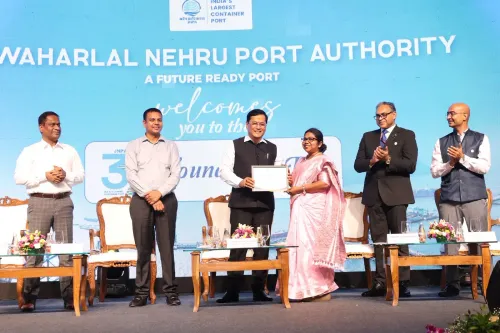
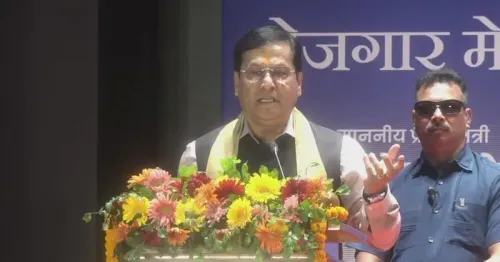
Sonowal: Maritime Expansion Creating Jobs for Engineers
Synopsis
Union Ports Minister Sarbananda Sonowal says India's 11-year maritime infrastructure and shipbuilding push is opening large-scale employment for engineers and skilled workers, invoking the Rozgar Mela initiative to connect capital investment with visible job creation.
Key Takeaways
Union Minister Sarbananda Sonowal posted on 23 May 2026 linking maritime expansion to job creation under #RozgarMela .
The 11-year reference points to growth since 2015 , when the Sagarmala Project and Shipbuilding Financial Assistance Policy were launched.
Maritime India Vision 2030 , released in 2021 , set explicit targets for port capacity, coastal shipping and domestic shipbuilding employment.
Primary beneficiaries identified are maritime engineers , shipyard technicians and the broader skilled workforce in coastal states.
The post reflects an established government pattern of coupling capital-intensive port projects with Rozgar Mela outreach to maximise employment visibility.
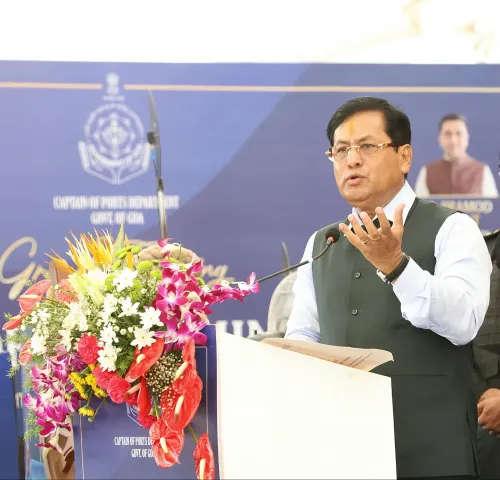
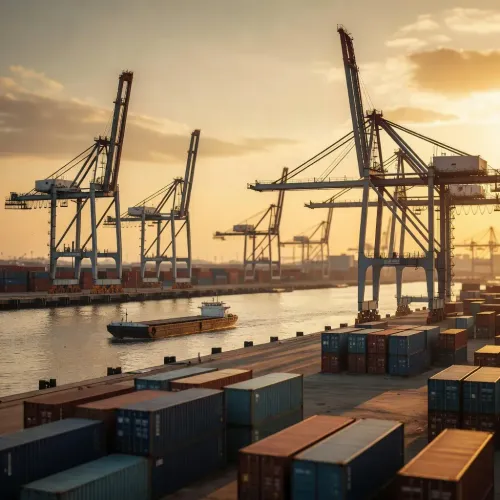
Union Ports and Shipping Minister Sarbananda Sonowal on Saturday, 23 May 2026 highlighted India's maritime infrastructure build-out and shipbuilding ecosystem growth over the past 11 years, saying the expansion is generating 'huge employment opportunities' for engineers, technicians and skilled workers. The minister posted under the #RozgarMela hashtag, linking port-led development directly to formal-sector job creation.
Context
Sonowal's post arrives as the central government continues to use the Rozgar Mela initiative — a recurring national job-fair programme — to make public-sector recruitment visible to citizens. By tagging the employment drive, the minister is framing maritime infrastructure investment not merely as a logistics upgrade but as a direct pipeline into formal employment for India's technical workforce.
The 11-year window referenced in the post points to the period since 2015, when the Sagarmala Project was launched to modernise existing ports and catalyse coastal shipping. That same year, the Shipbuilding Financial Assistance Policy was notified, extending support to domestic shipyards to reduce India's dependence on foreign-built vessels.
Policy Backdrop
The maritime sector's policy architecture has been built in layers. Maritime India Vision 2030, unveiled in 2021, set explicit targets for port capacity expansion, coastal shipping growth and a revival of domestic shipbuilding, with employment generation listed as a core outcome. Sonowal, who has held the Ports, Shipping and Waterways portfolio since 2021, has been the political face of that vision.
Successive policy documents have linked higher domestic shipbuilding output to three strategic goals: reduced import dependence, enhanced strategic sealift capacity and formal-sector job creation in coastal states. The Sagarmala Project alone spans port modernisation, port-led industrialisation, coastal community development and connectivity enhancement — each strand carrying an employment dimension.
The broader Atmanirbhar Bharat manufacturing push has treated ports and shipyards as anchor institutions for industrial clusters in coastal states, channelling capital investment toward regions where technical skilling infrastructure already exists.
Stakeholders and Impact
The primary beneficiaries Sonowal identifies are maritime engineers, shipyard technicians and the broader skilled workforce — categories that span both white-collar naval architecture roles and blue-collar fabrication and welding trades. Coastal states with established shipyard presence, including Goa, Andhra Pradesh, Maharashtra and West Bengal, stand to see the most direct employment impact from capacity additions at major and minor ports.
Public-sector undertakings such as the major port trusts and state-owned shipbuilding firms are the institutional channels through which Rozgar Mela appointments in this sector are typically processed, giving the recruitment drive a structured pipeline into maritime trades.
What's Next
Observers will watch for updated shipbuilding capacity-utilisation data and any revision to the Shipbuilding Financial Assistance Policy guidelines ahead of the next Maritime India Summit. The government's ability to translate infrastructure investment into verifiable employment numbers — disaggregated by skill category and state — will determine how credibly the maritime sector can be positioned as a pillar of India's broader jobs agenda.
With the Rozgar Mela framework providing a ready communications vehicle, further announcements linking port-sector appointments to specific projects or PSU expansions are likely in the near term.
Point of View
The minister converts an infrastructure milestone into a jobs story — a framing that plays well in coastal constituencies where port and shipyard employment is economically significant. The 11-year timeframe is deliberate, anchoring credit to the post-2014 policy cycle and the Sagarmala-to-Maritime Vision 2030 continuum. The real test, however, will come when disaggregated employment data — by skill level, state and project — is put on the public record, since the credibility of the maritime-jobs narrative ultimately rests on verifiable numbers rather than directional claims.
NationPress
20 Sept 2026
Frequently Asked Questions
What is the Rozgar Mela and how does it relate to maritime jobs?
Rozgar Mela is a recurring government job-fair initiative that facilitates recruitment into central ministries and public-sector undertakings; Minister Sonowal invoked it to highlight that India's maritime infrastructure expansion is creating formal employment for engineers and technicians in the sector.
What is the Sagarmala Project?
Sagarmala is the central government's flagship port-led development scheme, launched in 2015 , aimed at modernising existing ports, developing new ones, promoting coastal shipping and catalysing port-linked industrialisation in coastal states.
What is Maritime India Vision 2030?
Maritime India Vision 2030 is a policy roadmap released in 2021 that sets targets for expanding port capacity, growing coastal shipping and reviving domestic shipbuilding, with employment generation as an explicit goal.
Which states benefit most from India's shipbuilding and port expansion?
Coastal states with established shipyard and port infrastructure — including Goa , Andhra Pradesh , Maharashtra and West Bengal — are positioned to see the most direct employment impact from ongoing capacity additions.
Who is Sarbananda Sonowal?
Sarbananda Sonowal is the Union Minister of Ports, Shipping and Waterways since 2021 , a senior BJP leader from the Northeast and former Chief Minister of Assam.