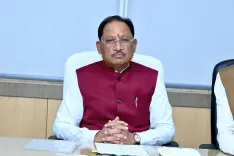
Sonowal pushes e-tariffs and port-linked industrial zones

Synopsis
Union Ports Minister Sarbananda Sonowal has mandated electronic publication of port tariffs for full transparency and announced Centre-state partnerships to build plug-and-play port-linked Industrial Regions, extending India's Sagarmala-era port-led development agenda.
Key Takeaways
Electronic tariff mandate: Port tariffs must now be published electronically, ensuring pricing transparency for shippers, manufacturers, and traders.
Port-linked Industrial Regions: The Centre is partnering with state governments to develop zones featuring plug-and-play infrastructure and fast-tracked regulatory approvals.
Policy lineage: The announcements build on the Sagarmala Project (2015) and the Major Port Authorities Act, 2021 , which granted major ports greater operational and tariff autonomy.
State partnership is pivotal: Land, utilities, and clearances lie with states, making Centre-state coordination the decisive factor in delivery.
Logistics cost target: Both measures aim to reduce India's historically high logistics costs and improve port competitiveness against regional hubs.
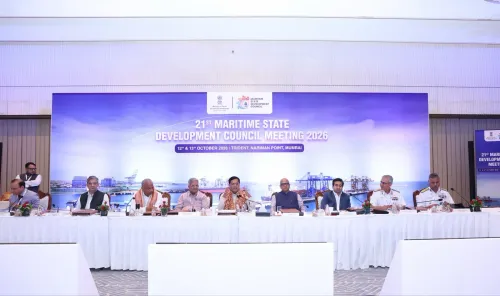
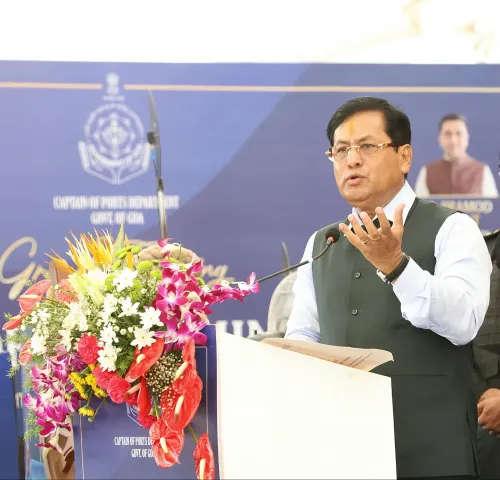
Transparency at the dock and factories at the waterfront — Union Minister of Ports, Shipping and Waterways Sarbananda Sonowal outlined two concrete steps on Tuesday, 13 October 2026 to deepen port-led industrial growth: a mandate for electronic publication of port tariffs and a coordinated push with state governments to build port-linked Industrial Regions with plug-and-play infrastructure and fast-tracked approvals.
E-tariffs: shutting the door on opacity
Port tariffs — the fees charged for berthing, cargo handling, and storage — have long been a source of friction for shippers and manufacturers trying to plan supply chains. By mandating their electronic publication, the government is signalling that pricing information must be visible, consistent, and accessible to every stakeholder, from a multinational exporter to a small coastal trader. The move aligns with the autonomy given to major ports under the Major Port Authorities Act, 2021, which replaced a 1963-era law and granted ports greater freedom in setting and publishing tariffs on their own terms.
Digitising the tariff framework reduces the arbitrage that once crept in through manual or opaque fee structures. It also makes Indian ports more comparable — and more competitive — against regional peers in Singapore, Dubai, and Colombo.
Port-linked Industrial Regions: the plug-and-play bet
The second pillar is more ambitious in scale. Sonowal announced that the Centre is 'partnering closely with the states' to develop port-linked Industrial Regions — purpose-built zones where land is ready, utilities are connected, and regulatory clearances are pre-approved. The phrase 'plug-and-play' is deliberate: it promises manufacturers that they can arrive, install equipment, and begin production without navigating the multi-year approval maze that has historically slowed industrial investment in India.
This idea sits squarely within the DNA of the Sagarmala Project, the flagship 2015 scheme that set out to use India's 7,500-km coastline as an engine of industrial dispersal and logistics efficiency. Sagarmala's coastal economic zones were the prototype; the port-linked Industrial Regions appear to be the next, more state-integrated generation of that idea.
Why states are the critical variable
Land, water, power, and state-level approvals all sit with state governments — which makes the Centre-state partnership the linchpin of this plan. The success of any port-adjacent industrial zone depends on how fast a state can gazette land, extend transmission lines, and clear environmental and municipal permissions. Past experience with special economic zones shows that zones with genuine state buy-in outperform those that are centrally mandated but locally neglected.
Sonowal's framing — 'partnering closely with the states' — suggests formal MoUs or joint development agreements could follow. Those notifications, and the first named state-port pairings, will be the real test of momentum.
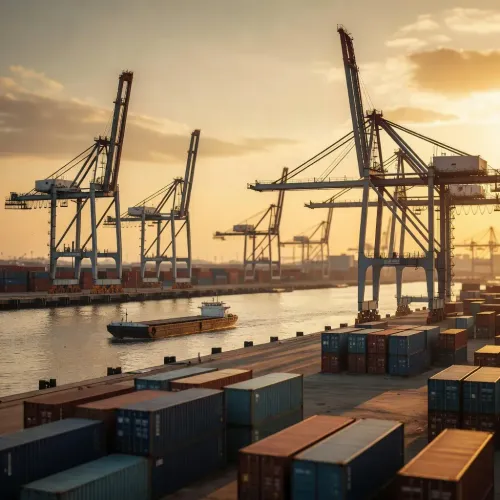
India's logistics-cost disadvantage — estimated at several percentage points of GDP above global benchmarks — has persisted despite successive port modernisation drives. Electronic tariffs and ready-to-occupy industrial land at the water's edge won't close that gap overnight, but they cut at two of its oldest roots.
Point of View
While the plug-and-play zone model attempts to pre-solve the land-and-approvals bottleneck that has historically hobbled coastal SEZs. The political economy is telling: by explicitly looping in state governments, the Centre is acknowledging that port-led industrialisation cannot be imposed top-down. Whether this produces named, funded, operationalised zones — or remains aspirational — will depend on the formal agreements and budget lines that follow.
NationPress
13 Oct 2026
Frequently Asked Questions
What is the electronic publication of port tariffs announced by Sonowal?
It is a government mandate requiring Indian ports to publish their tariff schedules — charges for berthing, cargo handling, and storage — electronically, making pricing transparent and accessible to all stakeholders including shippers and manufacturers.
What are port-linked Industrial Regions with plug-and-play infrastructure?
These are purpose-built industrial zones near ports where land is ready, utilities are connected, and regulatory clearances are pre-approved, so manufacturers can begin operations without lengthy approval delays.
How does this relate to the Sagarmala Project?
The Sagarmala Project , launched in 2015 , is India's flagship scheme for port-led coastal industrialisation. The new port-linked Industrial Regions appear to be the next generation of Sagarmala's coastal economic zone concept, with deeper state-government integration.
What role did the Major Port Authorities Act 2021 play in port tariff reform?
The Major Port Authorities Act, 2021 replaced a 1963 -era law and granted major ports greater autonomy in setting and publishing tariffs, laying the legal groundwork for the current electronic publication mandate.
Why is Centre-state partnership important for port-linked industrial zones?
Land acquisition, power supply, water infrastructure, and state-level environmental or municipal clearances all fall under state government jurisdiction, making active state participation essential for any port-adjacent industrial zone to become operational.