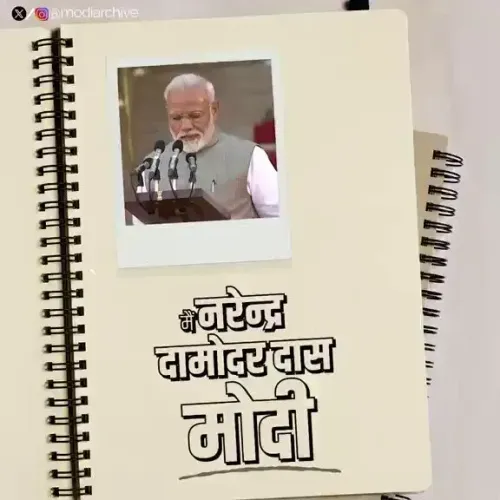
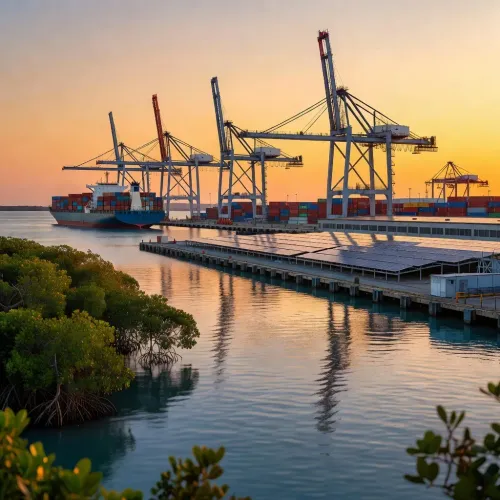
Sonowal backs Modi's zero-tolerance corruption push
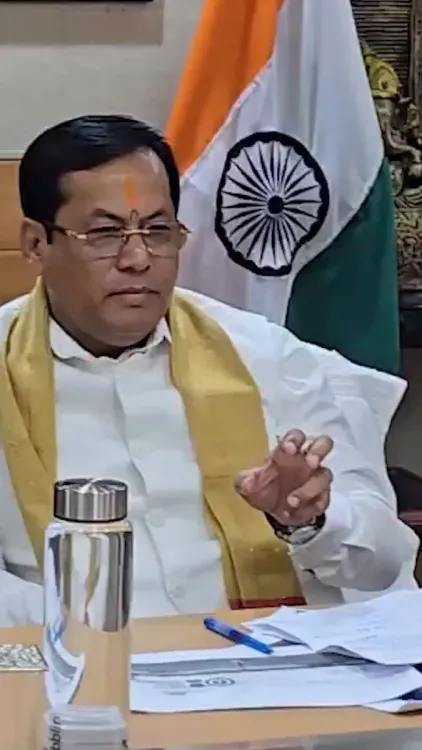
Synopsis
Union Minister Sarbananda Sonowal on 24 September 2026 invoked PM Modi's 'Zero Tolerance for Corruption' doctrine, arguing that protecting honest officers from fear enables faster infrastructure delivery across India's ports and shipping sector.
Key Takeaways
Union Minister Sarbananda Sonowal posted on 24 September 2026 invoking PM Narendra Modi 's 'Zero Tolerance for Corruption' governance principle.
His formulation — 'Zero compromises on integrity, zero delays in progress' — directly links anti-corruption policy to India's infrastructure execution speed.
The 'zero tolerance' frame is positioned as protection for honest officers, enabling bold decision-making without fear of retrospective scrutiny.
The Ministry of Ports, Shipping and Waterways oversees high-stakes procurement and clearances where vigilance anxiety has historically slowed progress.
The BJP 's anti-corruption governance emphasis dates to its 2014 election manifesto and has been a consistent pillar of Modi-government communications.
The post signals to ministry officials and stakeholders that accountability and delivery speed are complementary, not competing, goals.
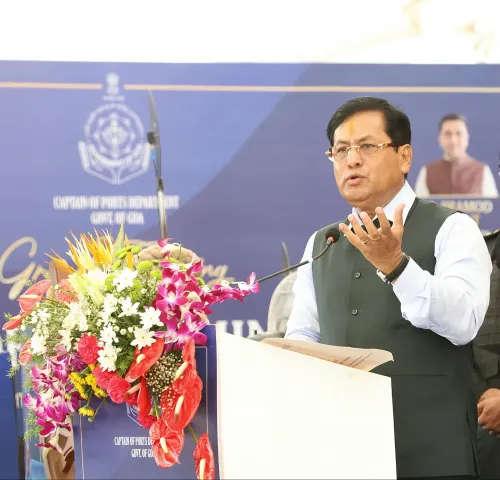
Integrity and speed do not have to be trade-offs — that is the argument Union Minister of Ports, Shipping and Waterways Sarbananda Sonowal put squarely on the table on Thursday, 24 September 2026, invoking Prime Minister Narendra Modi's governance doctrine to frame honest administration as the very engine of India's development velocity.
Posting on X, Sonowal distilled the message to a single sharp axis: 'Zero compromises on integrity, zero delays in progress.' The formulation is deliberate — it rejects the old bureaucratic alibi that caution and compliance slow things down, and instead positions PM Modi's 'Zero Tolerance for Corruption' as the shield that lets honest officers move fast without looking over their shoulders.
Integrity as bureaucratic armour
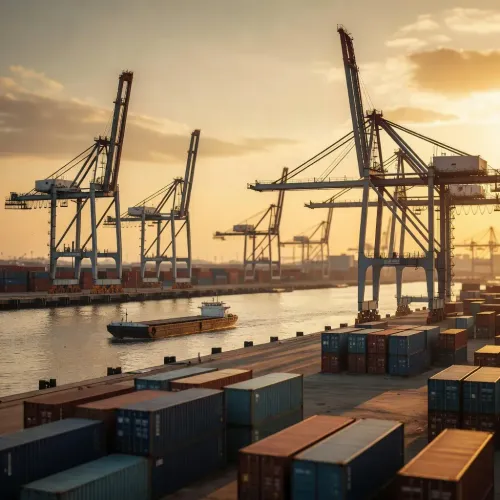
The logic Sonowal is advancing is worth unpacking. In large infrastructure ministries — ports, shipping lanes, coastal development — project clearances, procurement decisions, and contractor empanelments are perennial pressure points. Vigilance anxiety, the fear of a retrospective inquiry even on a clean decision, has historically frozen mid-level officers. The 'zero tolerance' frame, as deployed here, is a counter-signal: the government's anti-corruption architecture is not meant to paralyse the honest; it is meant to protect them and paralyse the corrupt. This is not a new theme for the BJP-led government — it has been a through-line from the 2014 election manifesto onward. But the framing of 'Speed & Scale' alongside integrity gives it a sharper operational edge, especially in a ministry overseeing port-led development, the Sagarmala programme, and India's expanding maritime trade footprint.What 'Speed & Scale' means for India's ports agenda
Sonowal has been one of the more active communicators in the Modi cabinet on linking governance quality to project throughput. The Ministry of Ports, Shipping and Waterways sits at the intersection of trade logistics, foreign investment in port infrastructure, and coastal economic zones — all domains where administrative delay translates directly into cost and lost competitiveness. By anchoring the 'zero tolerance' message to his own ministry's mandate, Sonowal is also signalling to officials and project stakeholders: accountability and delivery are two sides of the same coin, not opposing forces. The message will now be watched in the context of vigilance and administrative actions in the ministry — and whether the rhetoric translates into measurable project timelines on the ground.Point of View
Where procurement and clearance decisions are high-value and high-scrutiny, the 'zero tolerance as shield' message is aimed as much at mid-level bureaucrats as at political audiences. The consistent repetition of this frame since 2014 suggests it is as much a morale-management tool for the civil service as a political communication. Whether port project timelines and vigilance outcomes validate the rhetoric remains the ground-level test.
NationPress
24 Sept 2026
Frequently Asked Questions
What is PM Modi's Zero Tolerance for Corruption policy?
PM Modi's 'Zero Tolerance for Corruption' is a governance doctrine introduced with the BJP government in 2014, emphasising that no compromise on integrity will be accepted at any level of public administration. It has been repeatedly cited as a foundational principle across central government ministries.
What did Sarbananda Sonowal post about corruption on 24 September 2026?
Sonowal posted on X stating 'Zero compromises on integrity, zero delays in progress,' invoking PM Modi's anti-corruption framework to argue that protecting honest officers from fear directly drives India's infrastructure speed and scale.
What is the Sagarmala programme and how does this message relate to it?
Sagarmala is the central government's flagship port-led development programme aimed at modernising India's coastline and improving logistics. Sonowal's message is relevant because the programme's delivery depends heavily on administrative efficiency and clean procurement processes in the ports ministry.
Why does 'vigilance anxiety' matter in infrastructure ministries?
Vigilance anxiety refers to the hesitation honest officers feel when making large procurement or clearance decisions, fearing retrospective scrutiny even on clean calls. Sonowal's framing argues that a strong anti-corruption framework should protect such officers, not paralyse them.
What is Sarbananda Sonowal's role in the Modi government?
Sarbananda Sonowal is the Union Minister of Ports, Shipping and Waterways, a senior BJP leader, and a former Chief Minister of Assam. He has been a prominent voice in the Modi cabinet linking governance integrity to faster infrastructure project delivery.