CM Majhi Flags Odisha's Urban Housing Push Under PMAY-U
Synopsis
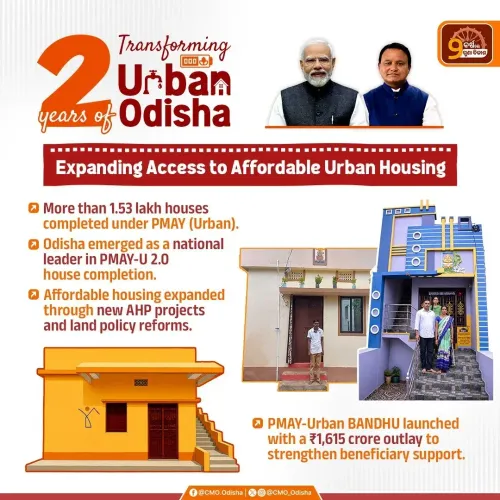
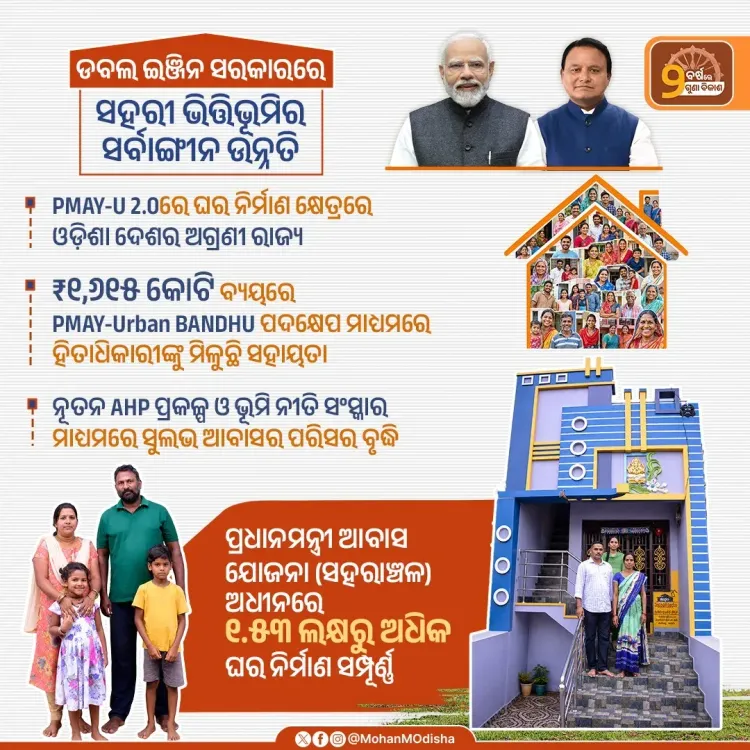
Odisha Chief Minister Mohan Charan Majhi has cited construction of over 1.53 lakh urban houses under PMAY-U, a claimed national top rank under PMAY-U 2.0, and a ₹1,615 crore BANDHU initiative as proof of the 'double engine' government's urban housing push.
Key Takeaways
CM Mohan Charan Majhi posted on 21 July 2026 highlighting Odisha's urban housing achievements under the BJP's 'double engine' framework.
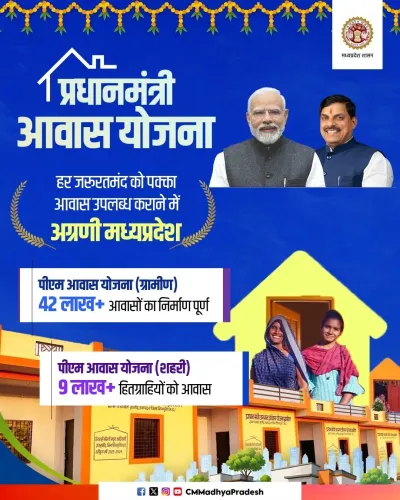
Over 1.53 lakh houses have been constructed under Pradhan Mantri Awas Yojana-Urban (PMAY-U) in the state.
Odisha claims a national top ranking in house construction under PMAY-U 2.0 .
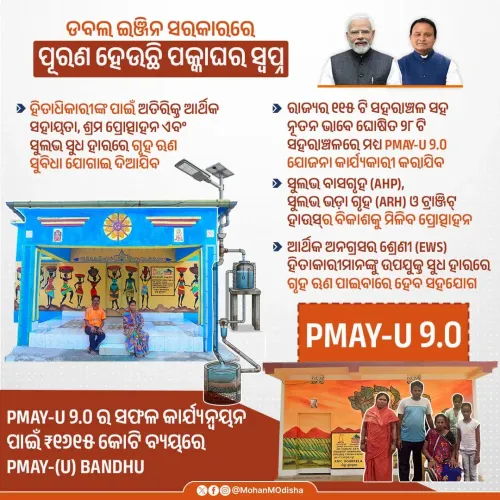
A dedicated PMAY-Urban BANDHU initiative with an outlay of ₹1,615 crore has been cited alongside AHP projects and policy reforms.
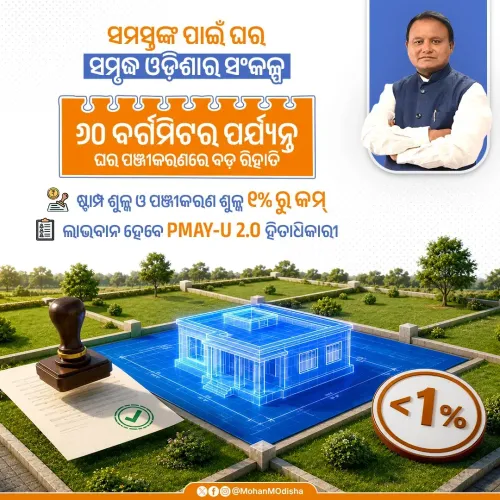
The push targets urban poor households and slum dwellers, aiming to ensure affordable, safe, and dignified housing for every urban family.
Independent validation of the ranking and BANDHU outlay is expected from the Ministry of Housing and Urban Affairs .
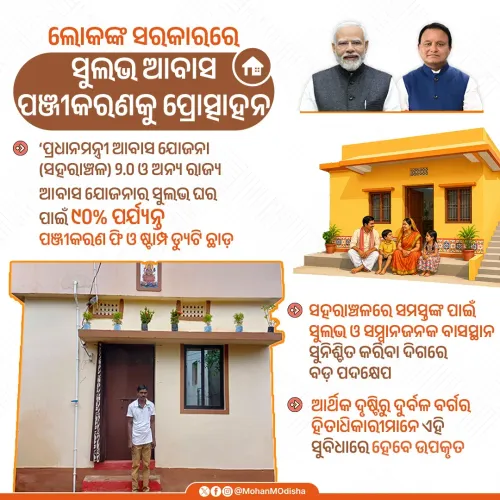
Odisha Chief Minister Mohan Charan Majhi on Tuesday, 21 July 2026 highlighted his government's urban housing drive, citing construction of over 1.53 lakh houses under Pradhan Mantri Awas Yojana-Urban (PMAY-U), a national top ranking under PMAY-U 2.0, and a ₹1,615 crore outlay under the PMAY-Urban BANDHU initiative — framing the push as a defining achievement of the 'double engine' BJP government in the state.
Context
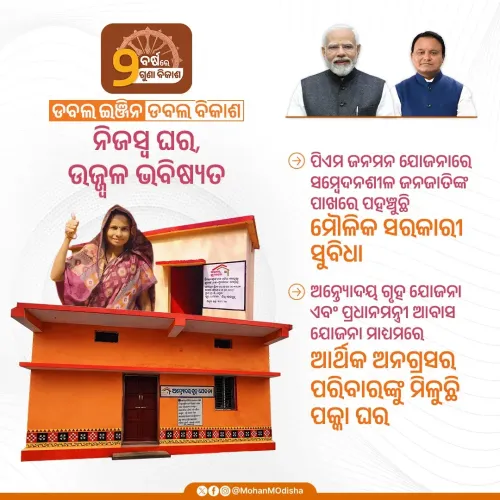
Writing in Odia, CM Majhi declared: 'ଡବଲ ଇଞ୍ଜିନ ସରକାରରେ ସହରୀ ବିକାଶର ସଶକ୍ତ ରୂପାନ୍ତର' — roughly, 'a powerful transformation of urban development under the double engine government.' He pointed to multiple milestones: house construction targets being met, a national leadership position in PMAY-U 2.0, and a dedicated BANDHU initiative alongside Affordable Housing in Partnership (AHP) projects as pillars of reform.
The post concludes with an aspirational note: 'Affordable housing for all and building empowered cities is the firm foundation of a prosperous Odisha.' The messaging is squarely aimed at urban poor households and slum dwellers who form the primary beneficiary base of PMAY-U.
Policy Backdrop
PMAY-Urban was launched nationally in 2015 under the Housing for All mission, structured across four verticals — including the AHP vertical, which leverages public-private partnerships for large-scale delivery. PMAY-U 2.0 represents the scheme's extended phase, under which states are ranked on construction progress and fund utilisation.
Odisha shifted from nearly two decades of BJD rule to BJP governance after the 2024 assembly elections, with Majhi becoming the state's first BJP Chief Minister. Since then, the state administration has aligned its urban housing machinery with central scheme guidelines — a convergence the ruling party brands as the 'double engine' advantage of having the same party in power at both the state and the Centre.
The PMAY-Urban BANDHU initiative, cited with a ₹1,615 crore outlay, appears to be a state-level facilitation and beneficiary-support mechanism layered atop the central scheme. The AHP vertical, meanwhile, is designed to bring in developer partnerships to accelerate supply in urban pockets where demand is highest.
Stakeholders and Impact
The primary beneficiaries are urban poor families, slum dwellers, and economically weaker section households across Odisha's towns and cities. Over 1.53 lakh households are said to be covered under PMAY-U construction sanctioned or completed in the state — a figure the Chief Minister is presenting as evidence of accelerated delivery post-2024.
A national top ranking under PMAY-U 2.0, if confirmed by the Ministry of Housing and Urban Affairs, would mark a significant reputational milestone for the new government, distinguishing Odisha's performance from peers in the housing scheme league table. Urban local bodies and state housing boards are the key implementing agencies on the ground.
What's Next
Analysts will watch for the Ministry of Housing and Urban Affairs to publish updated PMAY-U 2.0 state rankings that can independently validate Odisha's claimed position. Any supplementary urban housing allocations in the state's upcoming budget cycle will also test whether the ₹1,615 crore BANDHU outlay translates into on-ground disbursements at scale.
If Odisha sustains its reported momentum, it could emerge as a reference model for other BJP-governed states seeking to demonstrate the 'double engine' dividend in welfare delivery — adding political weight to a housing agenda that the party has made central to its governance narrative since 2014.
Point of View
Using PMAY-U metrics to cement the narrative that BJP's 'double engine' alignment with the Centre delivers measurable welfare outcomes — a contrast the party has consistently drawn with the previous BJD administration. The claimed national top ranking under PMAY-U 2.0, if officially confirmed, would give Odisha a powerful data point ahead of any urban local body elections or mid-term political stocktaking. The introduction of the BANDHU branding signals that the state is layering its own identity onto a central scheme, a common BJP state-government tactic to localise credit while leveraging central funds. Broader policy watchers will note that housing delivery speed and beneficiary satisfaction — not just sanctions — will ultimately determine whether the 'double engine' promise holds in Odisha's rapidly urbanising districts.
NationPress
20 Oct 2026
Frequently Asked Questions
How many houses has Odisha built under PMAY-Urban?
According to CM Mohan Charan Majhi's post on 21 July 2026, over 1.53 lakh houses have been constructed under Pradhan Mantri Awas Yojana-Urban (PMAY-U) in Odisha. This figure is a state government claim and awaits independent confirmation from the Ministry of Housing and Urban Affairs.
What is PMAY-U 2.0 and how is Odisha performing?
PMAY-U 2.0 is the extended phase of the Pradhan Mantri Awas Yojana-Urban scheme, under which states are ranked on housing construction progress and fund utilisation. CM Majhi has claimed that Odisha holds a national top rank in house construction under this phase.
What is the PMAY-Urban BANDHU initiative in Odisha?
The PMAY-Urban BANDHU initiative is a state-level programme cited by CM Majhi with an outlay of ₹1,615 crore, aimed at facilitating beneficiary support and housing delivery under PMAY-U. Details of its scope and official orders are yet to be widely confirmed from public records.
What is the 'double engine government' in Odisha?
The 'double engine government' refers to the BJP being in power both at the Centre and in Odisha state simultaneously since the 2024 assembly elections, which the party argues enables faster scheme implementation and fund flow for welfare programmes like PMAY-U.
Who is Mohan Charan Majhi?
Mohan Charan Majhi is the Chief Minister of Odisha and a BJP leader. He became the state's first BJP Chief Minister after the party won the 2024 Odisha assembly elections, ending nearly two decades of BJD rule.