CM Majhi Announces 90% Stamp Duty Waiver for Urban Housing
Synopsis
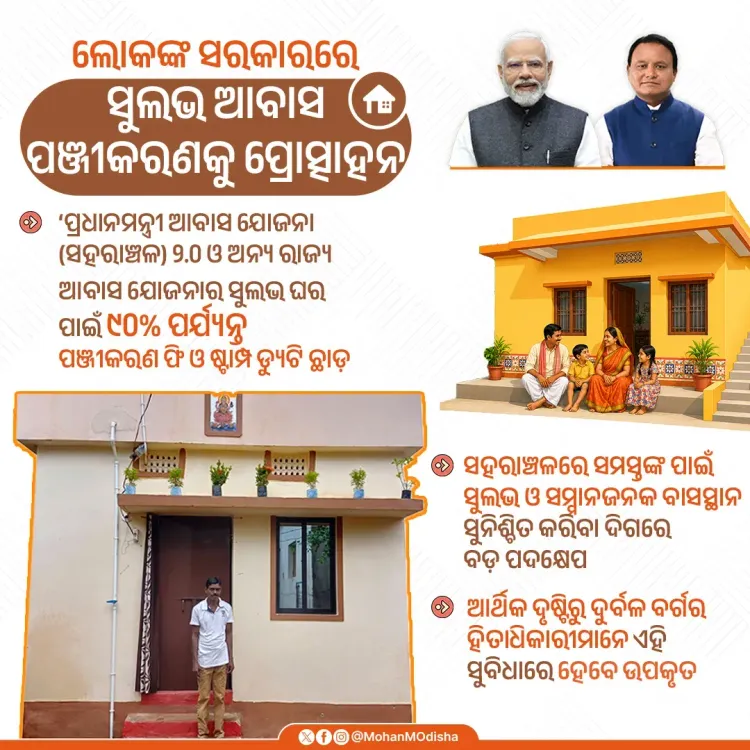
Odisha Chief Minister Mohan Charan Majhi announced up to 90% relief on stamp duty and registration fees for affordable homes under PMAY (Urban) 2.0 and state housing schemes, aiming to reduce financial barriers for economically weaker urban families.
Key Takeaways
Odisha CM Mohan Charan Majhi announced up to 90 per cent exemption on registration fees and stamp duty for affordable urban housing.
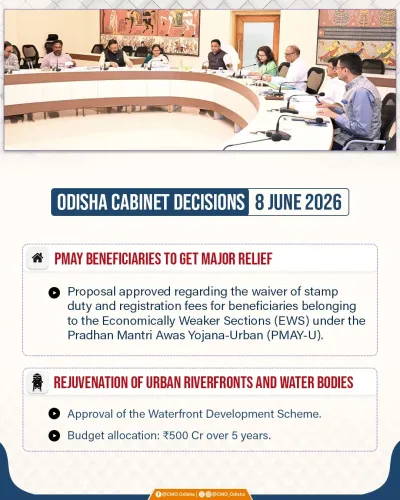
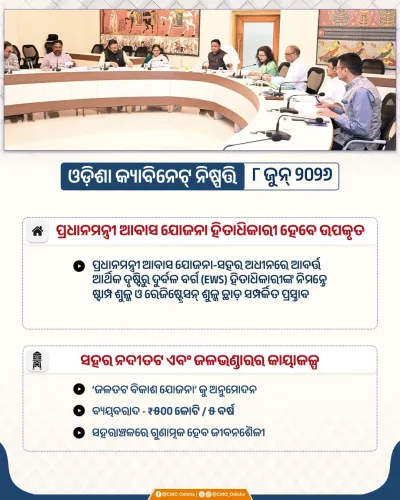
The waiver covers homes allotted under Pradhan Mantri Awas Yojana (Urban) 2.0 and other state housing schemes.
The primary beneficiaries are economically weaker section (EWS) and low-income urban households in Odisha.
The move aims to eliminate a key financial barrier — transaction costs at the point of property registration — that has historically deterred scheme uptake.
The decision follows a broader national pattern of states pairing central PMAY subsidies with state-level fiscal concessions to address urban housing deficits.
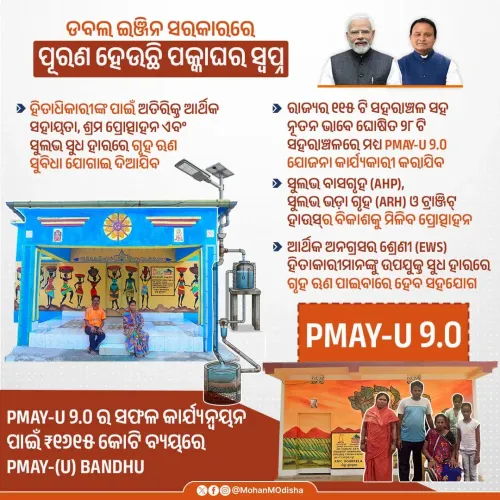
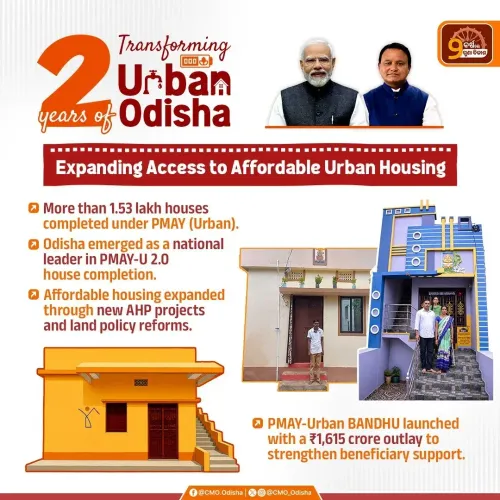
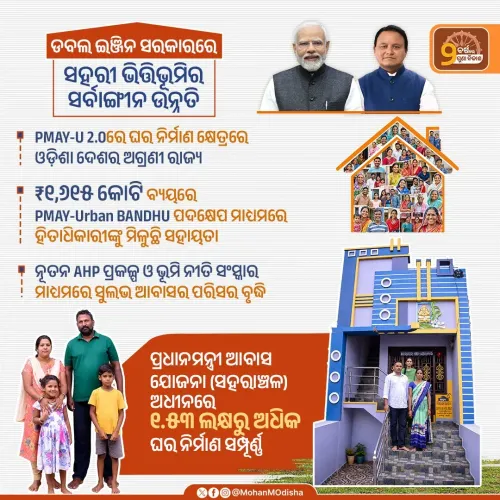
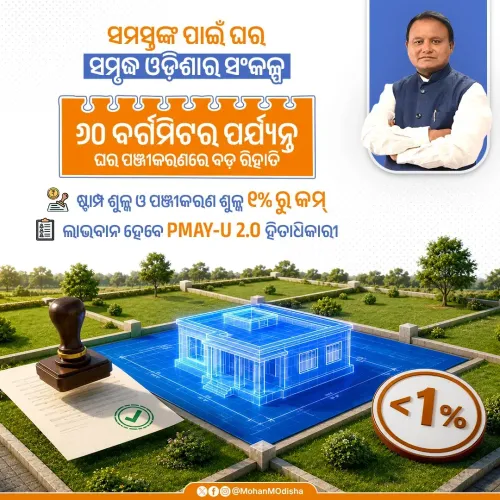
Odisha Chief Minister Mohan Charan Majhi announced on Thursday, 9 July 2026 that the state government will provide up to 90 per cent exemption on registration fees and stamp duty for affordable homes allotted under Pradhan Mantri Awas Yojana (Urban) 2.0 and other state housing schemes, in a significant move aimed at easing the financial burden on economically weaker urban families.
Context
Posting in Odia on 9 July 2026, Chief Minister Majhi described the decision as 'ଲୋକଙ୍କ ସରକାରଙ୍କ ଆଉ ଏକ ବଡ଼ ପଦକ୍ଷେପ' ('yet another big step by the people's government') toward fulfilling every family's dream of owning a home. The post confirmed that the waiver covers both registration fees and stamp duty, with relief of up to 90 per cent for beneficiaries of affordable urban housing schemes.
The announcement applies to homes allotted under PMAY (Urban) 2.0 as well as other state-level housing programmes targeting low-income and economically weaker-section households in Odisha's urban areas.
Policy Backdrop
Pradhan Mantri Awas Yojana (Urban) was launched nationally in 2015 with the goal of ensuring pucca housing for all urban poor. Odisha aligned with the central scheme from its inception, integrating state resources for beneficiary identification and infrastructure support alongside central financial assistance.
The practice of pairing central PMAY subsidies with stamp-duty and registration-fee concessions at the state level is an established approach across multiple Indian states to reduce the effective cost of home ownership for EWS and low-income categories. Odisha's latest waiver follows this broader national pattern of combined central-state fiscal incentives to address urban housing deficits.
Stakeholders and Impact
The primary beneficiaries are economically weaker section (EWS) families and low-income households in Odisha's urban local bodies. Stamp duty and registration costs can represent a significant additional financial barrier for first-time homebuyers in this income segment, often running into several thousand rupees even on subsidised properties.
By cutting these transaction costs by up to 90 per cent, the state government aims to make the final step of property registration — and therefore legal ownership — genuinely accessible. Chief Minister Majhi framed the decision as ensuring 'ସୁଲଭ ଓ ସମ୍ମାନଜନକ ବାସସ୍ଥାନ' ('affordable and dignified housing') for urban families who have historically struggled to absorb ancillary costs even after receiving a subsidised dwelling.
What's Next
The key metric to watch will be the pace of beneficiary registrations and actual housing completions under the waiver across Odisha's urban local bodies over the next two financial years. A surge in completed registrations would indicate that the stamp-duty barrier was indeed a meaningful bottleneck in scheme uptake.
The decision also signals Chief Minister Majhi's intent to use state fiscal levers to complement central housing subsidies — a template that could be replicated or deepened in subsequent budget cycles if registration numbers respond positively.
Point of View
Odisha is effectively de-risking the final step of the housing pipeline. The move fits a pattern of BJP-governed states using state budgets to amplify the optics and outcomes of central welfare schemes ahead of electoral cycles. Whether it translates into measurable gains in completed registrations and occupied homes will be the real test of its policy impact.
NationPress
8 Oct 2026
Frequently Asked Questions
What is the stamp duty waiver announced by Odisha CM Mohan Majhi?
Odisha Chief Minister Mohan Charan Majhi announced up to 90 per cent exemption on registration fees and stamp duty for affordable homes allotted under Pradhan Mantri Awas Yojana (Urban) 2.0 and other state housing schemes, reducing the financial burden on economically weaker urban families.
Who benefits from the Odisha housing stamp duty exemption?
Economically weaker section (EWS) families and low-income households in Odisha's urban areas who are beneficiaries of PMAY (Urban) 2.0 or other state-level affordable housing schemes are the primary beneficiaries of this waiver.
What is PMAY Urban 2.0 and how does it work in Odisha?
Pradhan Mantri Awas Yojana (Urban) 2.0 is a central government scheme providing financial assistance for construction and enhancement of houses for eligible urban households. Odisha has been aligned with the scheme since the original PMAY-U launch in 2015, integrating state resources for beneficiary identification alongside central subsidies.
How much can homebuyers save under the Odisha stamp duty waiver?
Eligible beneficiaries can save up to 90 per cent of the registration fees and stamp duty that would otherwise be payable when registering an affordable home under the covered schemes, significantly lowering the total cost of legal ownership.
Why is stamp duty relief important for affordable housing schemes?
Stamp duty and registration costs represent an additional financial barrier for first-time buyers in the EWS category, often making it difficult to complete legal ownership even after receiving a subsidised dwelling. Reducing these costs by up to 90 per cent helps ensure that scheme beneficiaries can actually register and occupy their homes.