CM Majhi Cabinet Waives Stamp Duty for Street Vendors Under PM SVANidhi
Synopsis
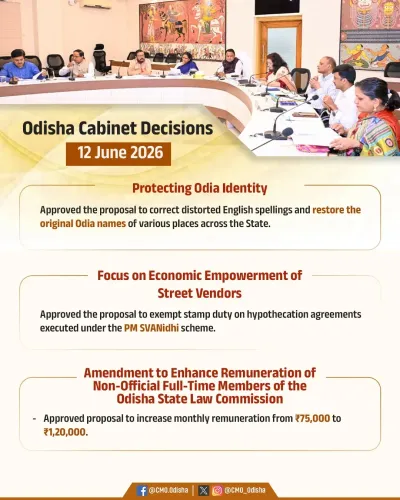
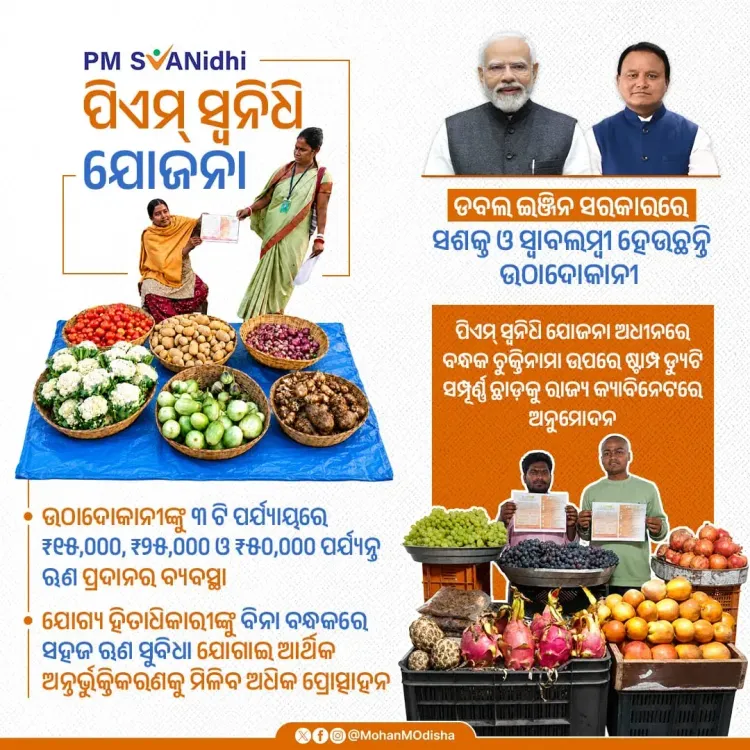
The Odisha State Cabinet has approved a complete stamp duty waiver on mortgage deeds under PM SVANidhi, CM Mohan Charan Majhi announced on June 16, 2026. The decision removes a key cost barrier for street vendors seeking collateral-free credit, advancing financial inclusion in the state's urban informal sector.
Key Takeaways
The Odisha State Cabinet has approved a complete waiver of stamp duty on mortgage deeds under the PM SVANidhi scheme .
CM Mohan Charan Majhi announced the decision on June 16, 2026 , marking two years of the BJP government in Odisha.
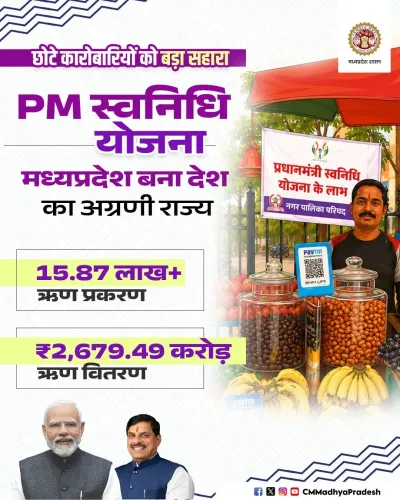
The PM SVANidhi scheme , launched in June 2020 , provides collateral-free working capital loans of up to Rs 50,000 to street vendors.
The stamp duty exemption is designed to reduce transactional costs and barriers for eligible vendors at the point of loan origination.
The move aligns with the BJP's 'double engine government' model, with Odisha having joined this framework after the 2024 state elections .
State-level rollout and subsequent loan disbursement data will determine the real-world impact on Odisha's urban informal sector .
Odisha Chief Minister Mohan Charan Majhi announced on Tuesday, June 16, 2026 that the Odisha State Cabinet has approved a complete waiver of stamp duty on mortgage deeds under the PM SVANidhi scheme, making it easier for street vendors across the state to access collateral-free credit and strengthening financial inclusion in the urban informal sector.
Context
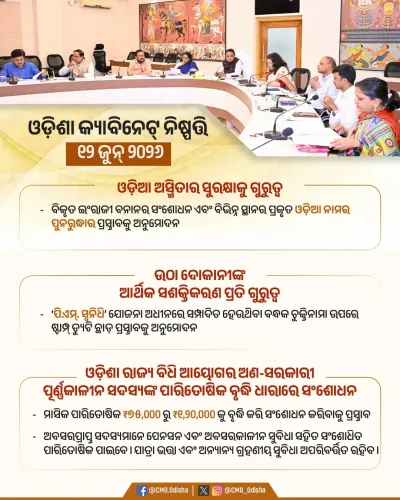
Posting in Odia on X, CM Majhi stated: 'ଡବଲ ଇଞ୍ଜିନ ସରକାରରେ ଉଠାଦୋକାନୀଙ୍କ ସଶକ୍ତିକରଣକୁ ମିଳିଛି ନୂତନ ଗତି' — 'The empowerment of street vendors has gained new momentum under the double-engine government.' The Cabinet decision, he noted, will allow eligible vendors to obtain loans without mortgage hurdles, giving fresh impetus to financial inclusion.
The post was tagged with the hashtags #2YearsofLokankaSarakar and #BikasharaDharaOdishaSara, placing the announcement in the context of the BJP government's second anniversary in Odisha, marking two years since the party came to power in the state in June 2024.
Policy Backdrop
The PM Street Vendor's AtmaNirbhar Nidhi (PM SVANidhi) scheme was launched by the Government of India in June 2020 to provide collateral-free working capital loans of up to Rs 50,000 to street vendors, initially as a COVID-19 pandemic relief measure. The scheme has since evolved into a broader financial inclusion instrument targeting the urban informal economy.
Stamp duty on mortgage deeds had remained a procedural and financial barrier for vendors seeking loans under the scheme. The Cabinet's decision to grant a complete stamp duty exemption on such deeds removes this cost layer, directly lowering the transactional burden on beneficiaries. Several BJP-ruled states have introduced similar state-level add-ons to central welfare schemes to boost uptake among informal workers.
Stakeholders and Impact
Street vendors and urban informal sector workers in Odisha stand to benefit most directly from this decision. By eliminating stamp duty on mortgage agreements, the state government reduces out-of-pocket costs at the point of loan origination, which has historically deterred low-income vendors from formalising credit access.
The move also aligns with the BJP's 'double engine government' narrative — the idea that having the same party in power at the Centre and in the state accelerates scheme implementation and benefit delivery. Odisha joined this framework after the 2024 state assembly elections, when CM Majhi took office as the state's first BJP chief minister.
What's Next
The immediate focus will shift to the state-level rollout of the stamp duty exemption — specifically, how quickly the change is operationalised through banks and urban local bodies that serve as PM SVANidhi disbursement channels. Loan disbursement data and beneficiary enrolment figures from Odisha will be a key indicator of the policy's on-ground impact.
If uptake rises measurably, the Odisha model could serve as a reference point for other states looking to deepen PM SVANidhi penetration through targeted state-level incentives, reinforcing the broader post-2014 pattern of layering state support onto central welfare architecture for the informal economy.
Point of View
High-visibility state-level intervention that reinforces the 'double engine' political brand while addressing a genuine friction point in PM SVANidhi's delivery chain. By timing the announcement to the BJP government's second anniversary in Odisha, CM Majhi is clearly linking welfare delivery to political milestones. The move fits a well-established pattern among BJP-governed states of layering state incentives onto central schemes to drive both uptake and electoral credit. The real test, however, lies in implementation — whether the exemption is operationalised swiftly enough to produce measurable gains in vendor credit access before the next electoral cycle.
NationPress
23 Sept 2026
Frequently Asked Questions
What is the Odisha Cabinet stamp duty waiver for street vendors?
The Odisha State Cabinet has approved a complete exemption from stamp duty on mortgage deeds executed under the PM SVANidhi scheme, reducing the cost burden on street vendors who apply for working capital loans under the programme.
What is the PM SVANidhi scheme and who can benefit?
PM SVANidhi, launched by the Government of India in June 2020, provides collateral-free working capital loans of up to Rs 50,000 to street vendors. Urban informal sector workers and street vendors registered under the scheme are eligible to benefit from Odisha's stamp duty waiver.
How does the stamp duty waiver help street vendors in Odisha?
Stamp duty on mortgage deeds was a procedural and financial barrier when vendors formalised loans under PM SVANidhi. The waiver eliminates this cost, making it easier and cheaper for eligible vendors to access credit without having to pay additional charges on mortgage documentation.
When did the BJP come to power in Odisha?
The BJP came to power in Odisha after the 2024 state assembly elections, with Mohan Charan Majhi taking office as Chief Minister in June 2024 — making him the state's first BJP chief minister.
What is the 'double engine government' model referenced by CM Majhi?
The 'double engine government' is a BJP political framework that argues having the same party in power at both the Centre and in a state accelerates the implementation of central schemes and benefit delivery to citizens. CM Majhi invoked this concept to credit both the state and central governments for the PM SVANidhi stamp duty waiver.