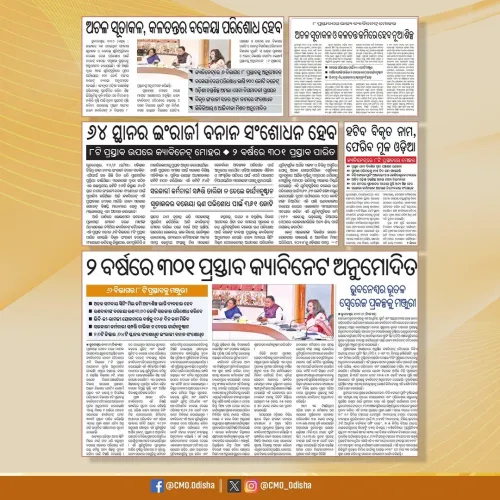
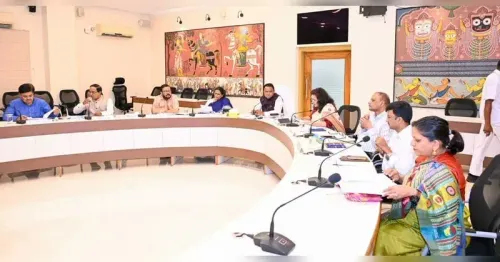
Odisha Cabinet approves place-name restoration, SVANidhi stamp duty relief
Synopsis
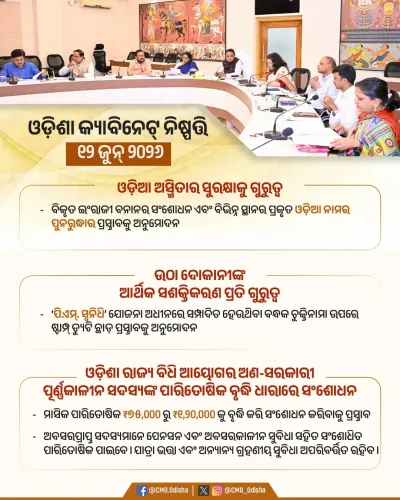
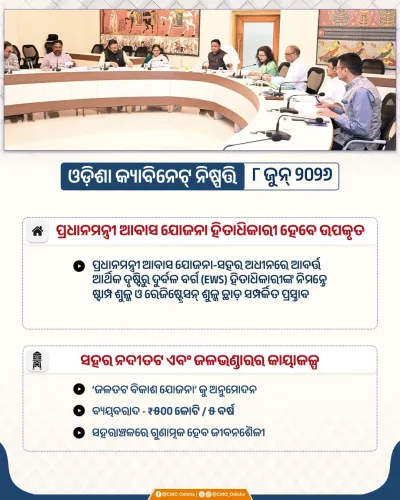
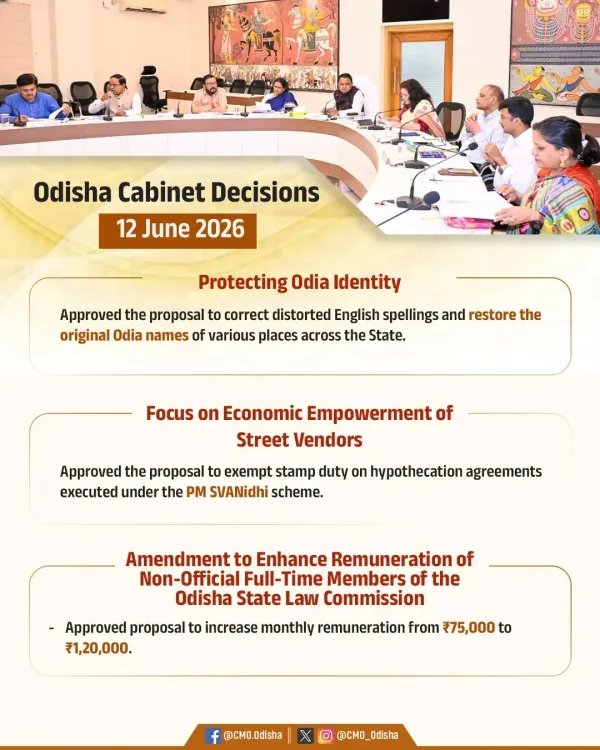
The Odisha Cabinet on 14 June 2026 cleared three decisions: restoring original Odia place names by correcting distorted spellings, granting a stamp duty exemption under PM SVANidhi for street vendors, and raising remuneration for full-time non-official members of the Odisha State Law Commission.
Key Takeaways
The Odisha Cabinet approved three decisions on 14 June 2026 covering culture, livelihoods, and institutional governance.
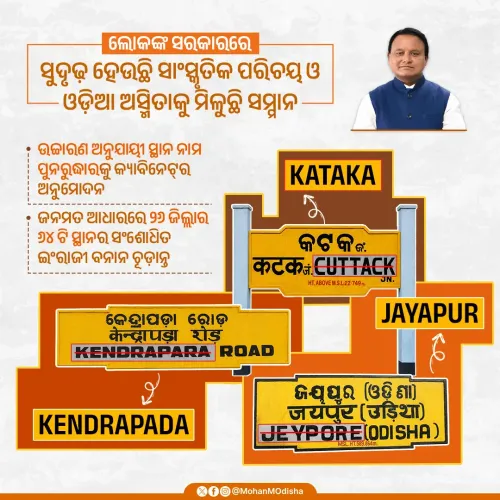
Original Odia place names will be restored by correcting spellings distorted over time; gazette notification is pending.
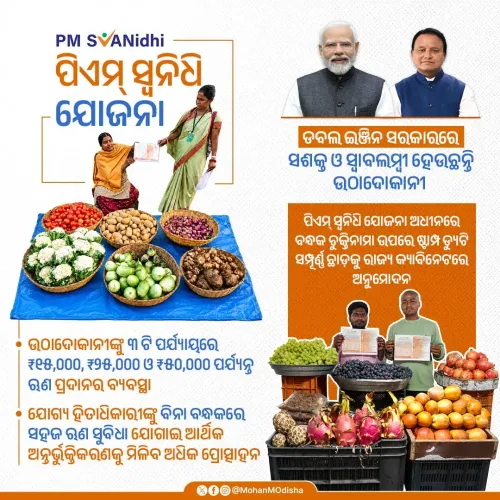
A stamp duty exemption has been approved under the PM SVANidhi scheme to lower credit-access costs for urban street vendors.
Full-time non-official members of the Odisha State Law Commission will receive enhanced remuneration; the revised scale is to be notified separately.
The decisions are tagged under #ViksitOdisha , reflecting the state government's broader development and governance narrative.
Gazette notifications and operational circulars detailing specifics of all three decisions are awaited.
The Chief Minister's Office of Odisha announced on Sunday, 14 June 2026 that the Odisha Cabinet has approved three significant decisions spanning cultural preservation, street-vendor welfare, and institutional reform. The measures cover the restoration of original Odia place names, a stamp duty exemption linked to the PM SVANidhi scheme, and enhanced remuneration for members of the Odisha State Law Commission.
Context
The cabinet communiqué, shared by the official CMO Odisha handle, states that the government will correct 'distorted spellings' of Odia place names to restore their original form. The move is framed as an effort to preserve the state's cultural identity — a concern that has resonated strongly among Odia-speaking communities who have long argued that colonial-era and administrative transliterations eroded the authentic character of local toponyms. Gazette notifications detailing the specific names slated for correction are awaited.
Policy Backdrop
PM SVANidhi — the Pradhan Mantri SVANidhi (Street Vendor's AtmaNirbhar Nidhi) scheme — was launched by the Ministry of Housing and Urban Affairs in June 2020 to extend collateral-free working-capital loans to urban street vendors affected by pandemic-related disruptions. The Odisha Cabinet has now approved a stamp duty exemption under this scheme, reducing the transactional cost burden on vendors who access formal credit for the first time. Indian states have increasingly integrated centrally sponsored schemes into their own fiscal frameworks to improve last-mile delivery, and Odisha's latest decision follows that wider pattern.
On the institutional side, the cabinet has approved enhanced remuneration for full-time non-official members of the Odisha State Law Commission, a statutory advisory body tasked with examining existing laws and recommending legal reforms. The precise revised remuneration scale is expected to be notified separately. Strengthening such advisory bodies is part of a broader state-level push to improve governance quality and attract qualified legal professionals to public service roles.
Stakeholders and Impact
Street vendors stand to benefit most immediately from the stamp duty exemption, as reduced transaction costs lower the barrier to formal credit access under PM SVANidhi. The scheme targets urban informal-sector workers — a large and economically vulnerable population in Odisha — and the state's decision aligns with the Prime Minister's Office's push for wider scheme penetration across states.
The place-name restoration initiative is of symbolic and administrative significance for Odia-speaking communities. Similar exercises in other Indian states have involved revising official maps, signage, and government records — a process that requires coordination across multiple departments. For the Odisha State Law Commission, improved remuneration is expected to make full-time non-official positions more competitive, potentially strengthening the quality of legal advice available to the state government.
What's Next
The government's next steps will be closely watched on three fronts: the official gazette listing corrected place names, the operational circular specifying the stamp duty exemption mechanism for PM SVANidhi beneficiaries, and the revised pay notification for Law Commission members. The cabinet's framing of these decisions under the hashtag #ViksitOdisha — a reference to the 'Developed Odisha' vision — signals that the ruling dispensation intends to present them as part of a cohesive governance narrative ahead of future electoral cycles.
Point of View
Often with strong electoral undertones. The PM SVANidhi stamp duty exemption deepens Odisha's integration with a central scheme, allowing the state to claim credit for improving last-mile delivery without bearing the full fiscal cost. Together, the decisions suggest the ruling dispensation is consciously building a 'Viksit Odisha' narrative that spans heritage, inclusion, and institutional credibility.
NationPress
19 Sept 2026
Frequently Asked Questions
What did the Odisha Cabinet decide on 14 June 2026?
The Odisha Cabinet approved three decisions: restoring original Odia place names by correcting distorted spellings, granting a stamp duty exemption under the PM SVANidhi scheme for street vendors, and enhancing remuneration for full-time non-official members of the Odisha State Law Commission.
What is PM SVANidhi and how does the Odisha stamp duty exemption help?
PM SVANidhi is a central government scheme launched in June 2020 to provide collateral-free working-capital loans to urban street vendors. Odisha's stamp duty exemption under the scheme reduces transaction costs for vendors accessing formal credit, making it easier for them to benefit from the programme.
Which Odia place names will be restored?
The cabinet approved the restoration of original Odia place names by correcting spellings that had been distorted over time, but the specific names will be listed in an official gazette notification that is yet to be issued.
Why is the Odisha State Law Commission remuneration being increased?
The Odisha State Law Commission advises the state government on legal reforms. Enhancing remuneration for its full-time non-official members is intended to make these positions more competitive and improve the quality of legal expertise available to the government.
What is Viksit Odisha?
'Viksit Odisha' translates broadly as 'Developed Odisha' and is the state government's overarching development vision, under which recent policy decisions — including the three cabinet approvals of 14 June 2026 — are being grouped and communicated.