CM Majhi: Odisha Cabinet Approves Revised English Spellings for 64 Places
Synopsis
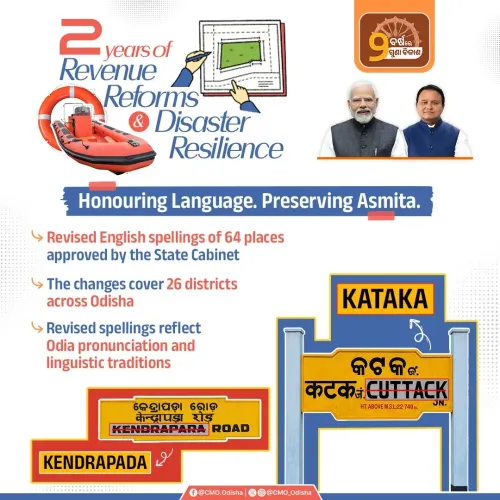
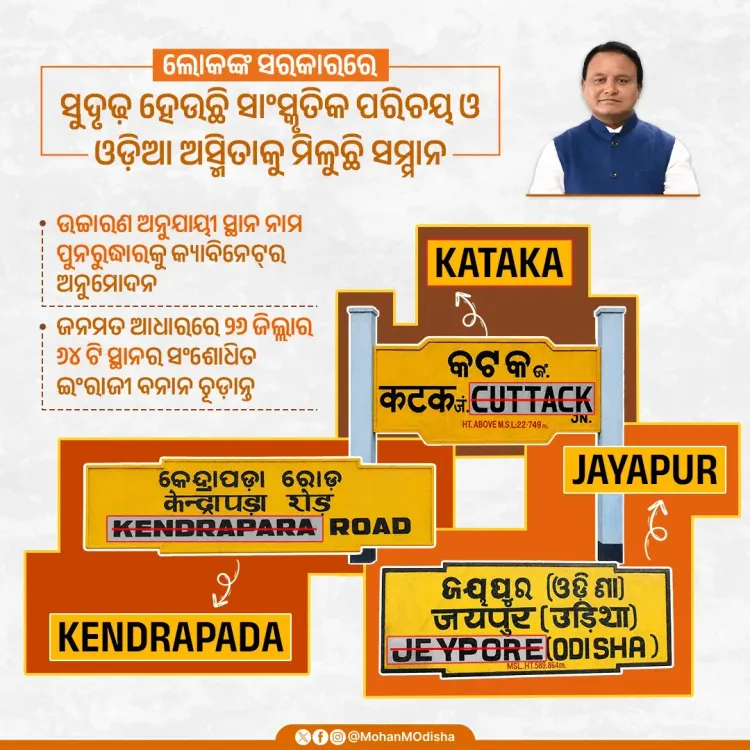
The Odisha state cabinet, under Chief Minister Mohan Charan Majhi, has approved revised English spellings for 64 place names across 26 districts, aligning official nomenclature with authentic Odia pronunciation. The move, announced on 18 June 2026, builds on the state's 2011 name-change from 'Orissa' to 'Odisha' and is framed as a milestone for Odia cultural self-respect.
Key Takeaways
The Odisha state cabinet approved revised English spellings for 64 place names spread across 26 districts .
Chief Minister Mohan Charan Majhi announced the decision on 18 June 2026 via his official X account.
The revision is based on public opinion and is designed to align written spellings with authentic Odia pronunciation .
The move follows the precedent set by the Orissa (Alteration of Name) Act, 2010 , which renamed the state from 'Orissa' to 'Odisha' effective 2011 .
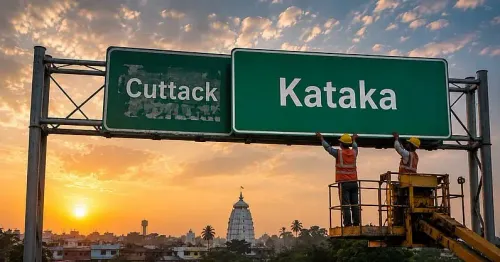
Implementation will require updates to official maps, road signboards, school textbooks, and government records across the state.
Similar place-name revision exercises have been carried out in Tamil Nadu and Maharashtra as part of broader post-independence linguistic assertion.
Odisha Chief Minister Mohan Charan Majhi announced on Thursday, 18 June 2026, that the state cabinet has approved revised English spellings for 64 locations across 26 districts to align written forms with authentic Odia pronunciation and linguistic tradition. The decision, shared by the Chief Minister on his official X account, marks a significant step in the state government's ongoing effort to strengthen Odia cultural identity.
Context
In his post, written in Odia, CM Majhi stated: 'ଓଡ଼ିଆ ଅସ୍ମିତା ଓ ସାଂସ୍କୃତିକ ପରିଚୟକୁ ସୁଦୃଢ଼ କରିବା ପାଇଁ ଆମ ସରକାର ପ୍ରତିଶ୍ରୁତିବଦ୍ଧ' ('Our government is committed to strengthening Odia identity and cultural character'). He added that the cabinet approval was based on public opinion and that the revised spellings honour Odia pronunciation and linguistic heritage. The Chief Minister described the move as 'another milestone in protecting Odisha's language, culture, and self-respect.'
The cabinet decision follows a formal process of gauging public sentiment on how place names in Odisha should be rendered in English, ensuring that official documentation reflects the way residents themselves pronounce and identify their localities.
Policy Backdrop
This is not the first time Odisha has acted to bring English nomenclature in line with local usage. The landmark Orissa (Alteration of Name) Act, 2010, which came into effect in 2011, changed the state's own English name from 'Orissa' to 'Odisha' — a direct correction of a colonial-era transliteration that had long diverged from the native pronunciation.
Across India, states including Tamil Nadu and Maharashtra have undertaken similar exercises, revising English spellings of cities, districts, and institutions to shed colonial-era forms. These efforts are typically driven by a combination of regional cultural assertion and administrative standardisation, ensuring that maps, signboards, and official records carry spellings that resonate with local communities.
Stakeholders and Impact
The revision directly affects residents across 26 districts of Odisha, who will see the names of their localities spelled differently on official government documents, maps, and public signage. For the state's large Odia-speaking population, the change carries both practical and symbolic weight — correcting what many regard as distortions introduced during British administration.
Students, educators, and local government bodies will need to transition to the updated spellings in school textbooks, land records, and administrative correspondence. Cultural organisations that have long advocated for greater respect for the Odia language are expected to welcome the cabinet decision as a tangible policy outcome.
What's Next
The immediate challenge lies in the phased rollout of the 64 revised spellings across official maps, road signboards, government websites, and educational materials in all 26 districts. Consistent implementation across multiple state departments will determine how quickly the changes take practical effect for ordinary citizens.
The cabinet's action could also prompt further review of additional place names across the state, with the government having established both a public-consultation mechanism and a formal approval pathway. CM Majhi's framing of the decision as a 'milestone' suggests the administration views cultural and linguistic standardisation as a continuing policy priority for Odisha.
Point of View
The administration lends the decision democratic legitimacy that is harder to contest. The action fits a broader national pattern where ruling parties use linguistic and cultural standardisation to consolidate regional support while projecting administrative seriousness. How swiftly the revised spellings appear on signboards and in textbooks will be the real test of whether this milestone translates into measurable governance.
NationPress
20 Sept 2026
Frequently Asked Questions
Which 64 places in Odisha have had their English spellings changed?
The Odisha state cabinet approved revised English spellings for 64 locations across 26 districts on 18 June 2026, but the complete official list is yet to be published in full public records. The changes are designed to align spellings with authentic Odia pronunciation.
Why is Odisha changing the English spellings of its place names?
The government says the revision honours Odia pronunciation and linguistic tradition, correcting colonial-era transliterations that did not accurately reflect how residents pronounce their local place names. The decision was based on public opinion.
What is the history behind Odisha's name change from Orissa?
The Orissa (Alteration of Name) Act, 2010, which came into force in 2011, officially changed the state's English name from 'Orissa' to 'Odisha' to match the native Odia pronunciation, making it one of India's most prominent place-name corrections.
How will the revised place-name spellings be implemented in Odisha?
The revised spellings are expected to be rolled out in phases across official maps, road signboards, school textbooks, government websites, and administrative records in all 26 affected districts.
Have other Indian states revised English spellings of their place names?
Yes. States including Tamil Nadu and Maharashtra have undertaken similar exercises to replace colonial-era transliterations with spellings that better reflect local pronunciation, as part of a broader pattern of post-independence linguistic and cultural assertion.