Odisha Cabinet Clears Key Proposals Under CM Majhi
Synopsis
The Odisha Cabinet, chaired by Chief Minister Mohan Majhi, approved multi-departmental proposals on 13 June 2026 targeting rural livelihoods, Odia cultural identity, and handloom sector growth, signalling administrative momentum in the 2026-27 fiscal year.
Key Takeaways
The Odisha Cabinet met on 13 June 2026 under the chairmanship of Chief Minister Mohan Charan Majhi .
Proposals from multiple departments were approved in a single sitting, covering rural livelihoods, cultural identity, and the weaving industry.
The government specifically cited protection of Odia identity ( Odia Asmita ) as a key objective of the approved measures.
Handloom weavers and rural households are identified as primary beneficiaries of the decisions.
Public services are to be made more people-centric , indicating a push for improved last-mile administrative delivery.
Rollout details and budget allocations are expected to emerge in the 2026-27 fiscal year framework.
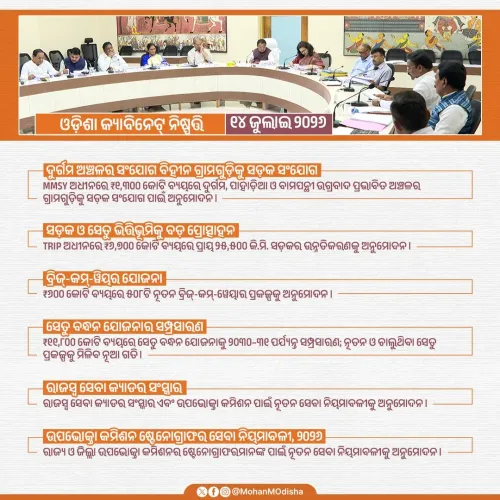
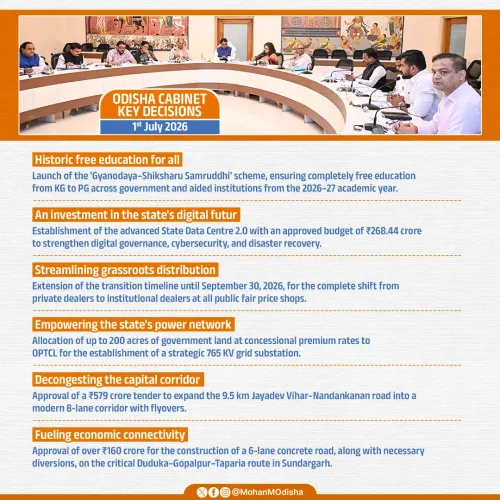
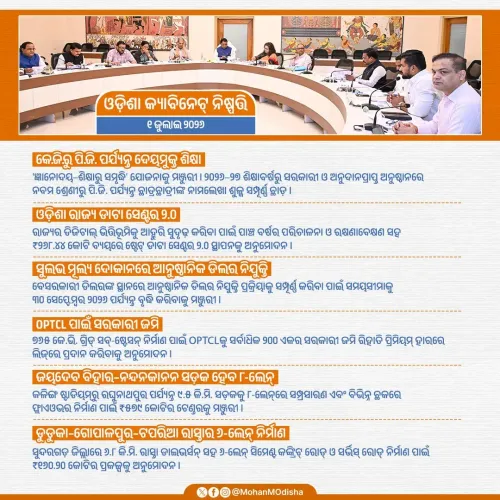
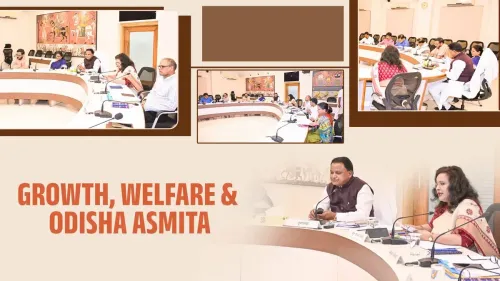
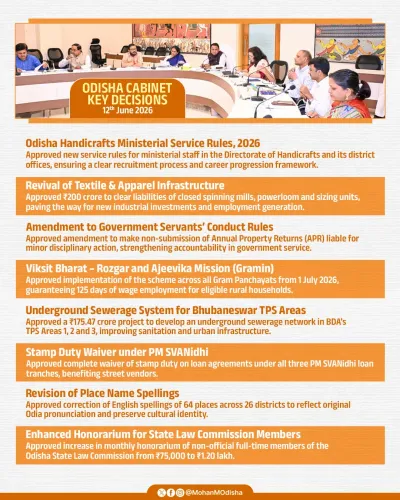
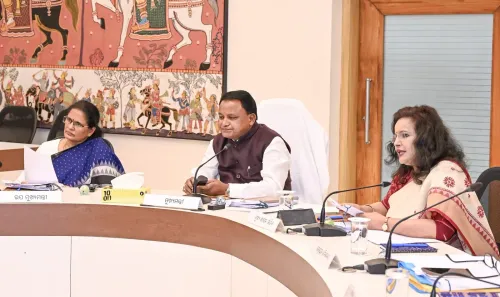
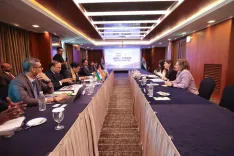
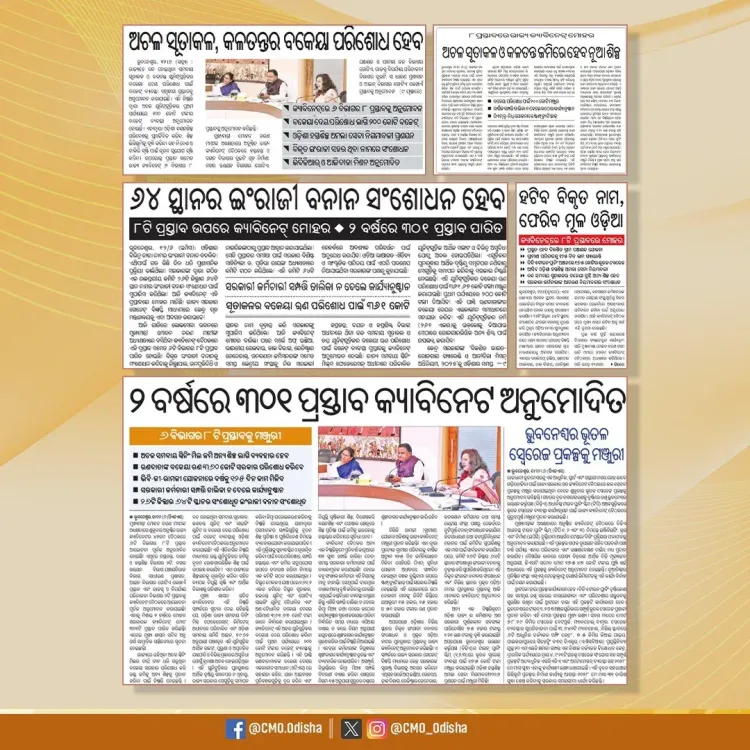
The Chief Minister's Office of Odisha announced on Saturday, 13 June 2026 that the state cabinet, chaired by Chief Minister Mohan Charan Majhi, approved a set of significant proposals spanning multiple departments, with a focus on rural livelihoods, Odia cultural identity, and the handloom sector.
The official post, written in Odia, stated that the cabinet meeting held under the chairmanship of Manyabar Mukhyamantri Shri Mohan Majhi (Honourable Chief Minister Shri Mohan Majhi) approved 'important proposals from various departments.' It added that these measures would play a 'crucial role in improving rural livelihoods, protecting Odia identity, developing the weaving industry, and making public services more people-centric, thereby accelerating the development of the state.'
Context
Chief Minister Majhi took office in June 2024 following the BJP's victory in the Odisha assembly elections, ending over two decades of BJD rule. Since then, his administration has sought to signal administrative momentum through multi-sectoral cabinet clearances. The 13 June 2026 meeting follows this established pattern of bundling welfare, cultural, and industrial proposals in a single sitting to project policy urgency. The post specifically references three thematic pillars: rural livelihoods, the preservation of Odia cultural identity, and the growth of the handloom and weaving industry — all of which carry significant electoral and social weight in the state.Policy Backdrop
Odisha has a long tradition of handloom weaving, with products such as Sambalpuri and Ikat textiles recognised nationally and internationally. State-level handloom policy frameworks have been updated periodically since the 2010s to protect weaver communities and promote Odia cultural products in domestic and export markets. The emphasis on 'Odia identity' (Odia Asmita) reflects a broader political and cultural assertion that has gained prominence since the 2024 transition. Protecting the Odia language, heritage, and traditional industries has been a recurring commitment of the current government. Rural livelihood improvements, meanwhile, remain central to the state's development agenda given that a large share of Odisha's population depends on agriculture and allied activities.Stakeholders and Impact
The proposals, once implemented, are expected to benefit rural households across the state, particularly those engaged in agriculture and cottage industries. Handloom weavers — a community historically vulnerable to market fluctuations and competition from power looms — stand to gain from any targeted sectoral support. The Odia-speaking population at large is the intended beneficiary of cultural identity measures. The cabinet's decision to make public services 'more people-centric' suggests administrative reforms aimed at improving last-mile delivery, though specific scheme names and budget allocations were not detailed in the official communication.What's Next
The approved proposals will now move toward implementation, with rollout timelines and budget allocations expected to be clarified in the context of the 2026-27 fiscal year. Specific scheme-level announcements or legislative backing, if required, may follow in the next session of the Odisha Legislative Assembly. Observers will watch whether the government translates these broad approvals into measurable outcomes for weavers and rural communities before the next electoral cycle.Point of View
Cultural, and industrial approvals into a single high-visibility announcement. For the Majhi government, the explicit invocation of 'Odia Asmita' is politically deliberate, positioning the BJP administration as a custodian of regional identity in a state where cultural pride runs deep. The handloom focus also signals continuity with long-standing state priorities while allowing the new government to stamp its own branding on them. The real test will be whether scheme-level implementation matches the breadth of the cabinet's stated ambitions.
NationPress
27 Oct 2026
Frequently Asked Questions
What did the Odisha Cabinet decide on 13 June 2026?
The Odisha Cabinet, chaired by Chief Minister Mohan Majhi, approved important proposals from multiple departments on 13 June 2026, focusing on rural livelihoods, Odia cultural identity, handloom sector development, and more people-centric public services.
Who is the Chief Minister of Odisha in 2026?
Mohan Charan Majhi is the Chief Minister of Odisha. He took office in June 2024 after the BJP won the state assembly elections, ending over two decades of BJD rule.
What is Odia Asmita and why is it significant?
'Odia Asmita' means Odia identity or pride, encompassing the Odia language, culture, and traditional heritage. It is a politically significant concept in Odisha and the Majhi government has made its protection a stated policy objective.
How does the Odisha government plan to help handloom weavers?
The cabinet has approved proposals aimed at developing the weaving industry, building on Odisha's existing handloom policy frameworks. Specific scheme details and budget allocations are expected to be announced as part of the 2026-27 fiscal year rollout.
What are the main beneficiaries of the Odisha Cabinet decisions in June 2026?
The primary beneficiaries are rural households, handloom weavers, and the broader Odia-speaking population, along with citizens who rely on state public services.