Giriraj Singh highlights weaver J. Lalmuaanpuii's loom-aided income rise
Synopsis
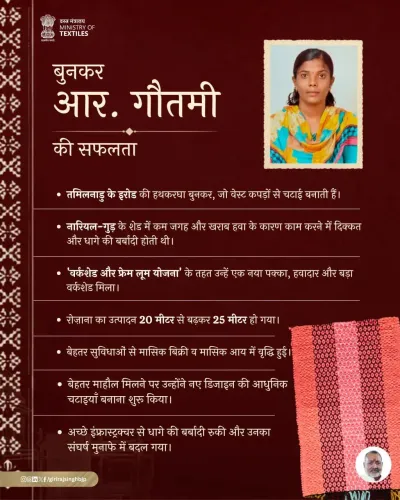
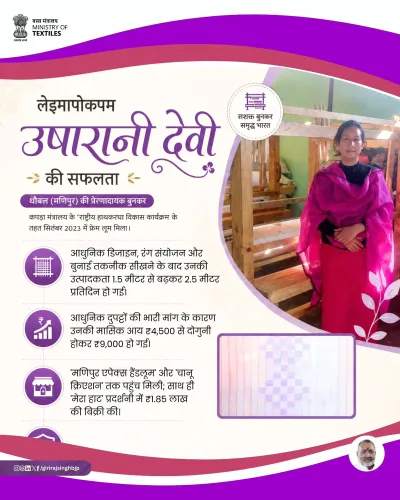
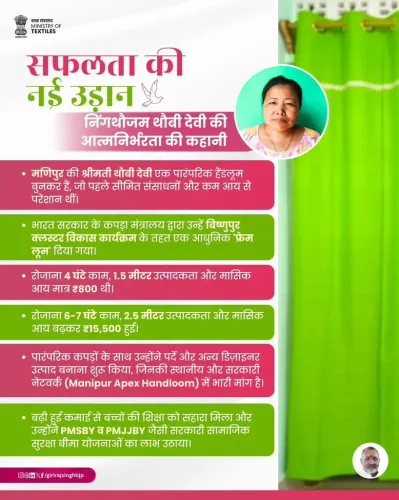
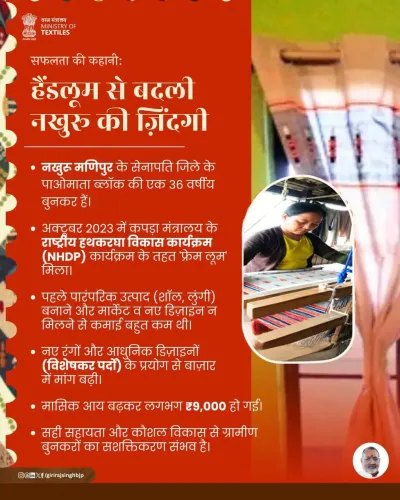
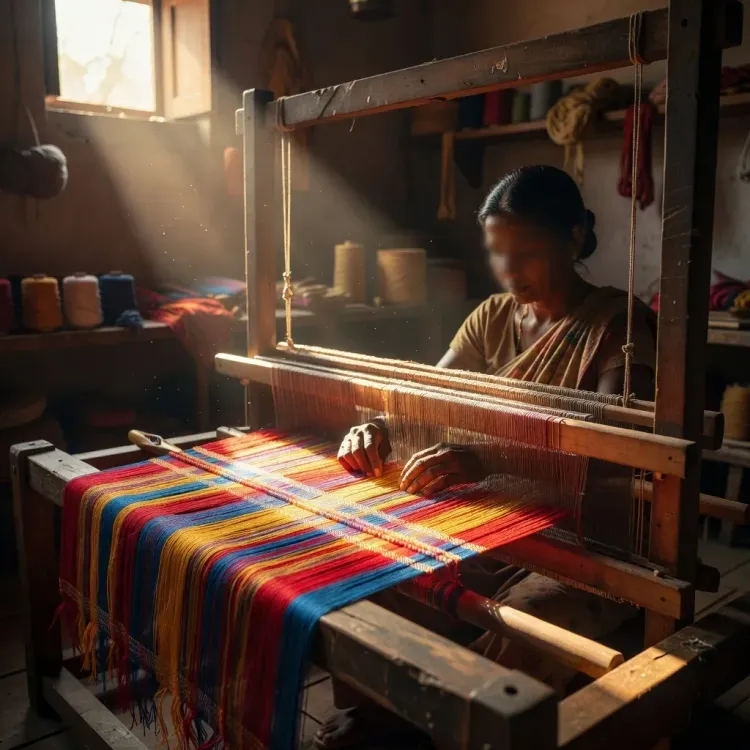
Union Textiles Minister Giriraj Singh shared the story of weaver J. Lalmuaanpuii, whose daily output and monthly earnings rose after receiving a government-assisted ergonomic frame loom, framing it as proof of his ministry's artisan-welfare push under the slogan 'Empowered weaver, prosperous India.'
Key Takeaways
Union Textiles Minister Giriraj Singh spotlighted weaver J.
Lalmuaanpuii as a beneficiary of government-assisted ergonomic loom support on 27 October 2026 .
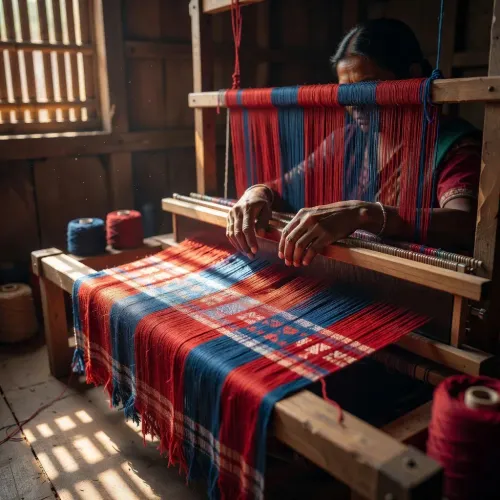
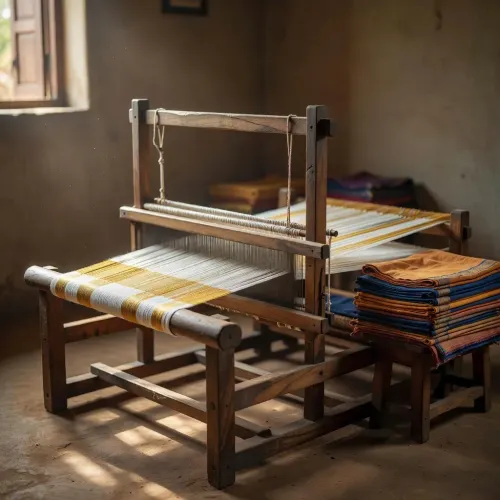
The ergonomic frame loom raised Lalmuaanpuii's work efficiency, increased her daily production , and grew her monthly income , according to the minister's post.
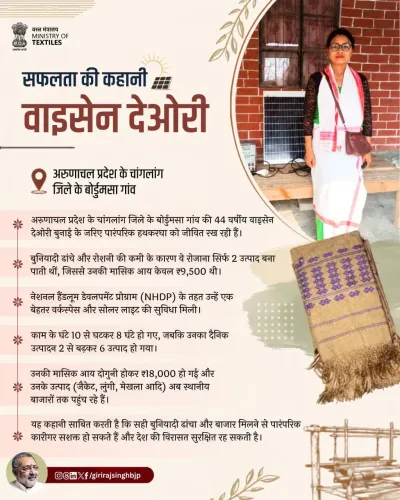
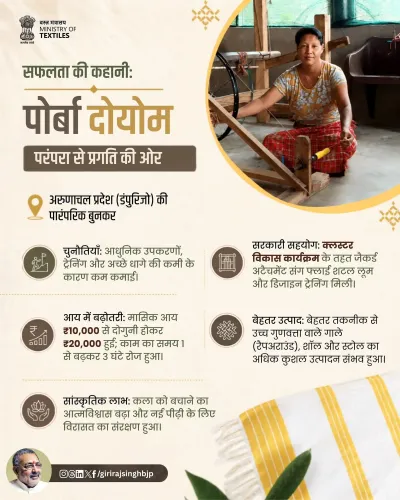
The intervention aligns with the National Handloom Development Programme , which funds loom modernisation and technology upgrades for weavers.
The ministry's outreach to a weaver with a northeastern name underscores its stated intent to extend scheme benefits beyond traditional textile-belt clusters.
Singh closed with the slogan 'सशक्त बुनकर, समृद्ध भारत' — 'Empowered weaver, prosperous India' — linking individual artisan welfare to national prosperity.
One ergonomic frame loom, supplied through government support, changed the daily arithmetic of a weaver's life — and Union Textiles Minister Giriraj Singh is making sure the country knows it. On Tuesday, 27 October 2026, the Minister shared the story of J. Lalmuaanpuii, a handloom weaver whose productivity and monthly earnings climbed after she received an ergonomic loom under a state-assisted intervention.
Posting in Hindi, Singh wrote: 'जे. लालमुआनपुई जी की कहानी कौशल, मेहनत और सही सहयोग से आगे बढ़ने की मिसाल है' — 'The story of J. Lalmuaanpuii is an example of moving forward with skill, hard work, and the right support.' He added that the government-assisted ergonomic frame loom raised her work efficiency, increased her daily output, and pushed up her monthly income. He closed with a rallying phrase: 'सशक्त बुनकर, समृद्ध भारत' — 'Empowered weaver, prosperous India.'
From a single loom to a larger argument
The Ministry of Textiles has anchored part of its weaver-welfare strategy on exactly this kind of tool upgrade. Under the National Handloom Development Programme, the government has channelled funds toward loom modernisation, cluster development, and technology interventions aimed at lifting productivity among artisans — particularly women weavers in smaller clusters and northeastern states. Lalmuaanpuii's profile fits squarely into that target group.
Ergonomic frame looms reduce physical strain and allow a weaver to sustain longer working hours, translating directly into higher yardage per day. For weavers operating in informal settings without institutional credit or bulk orders, even a modest rise in daily output can meaningfully shift monthly household income. That is the chain of cause and effect the Ministry is putting on display.
Why the Northeast weaver story carries weight
The handloom sector employs millions across India, with a significant concentration in the northeastern states where weaving is both livelihood and cultural identity. Spotlighting a beneficiary whose name signals a northeastern origin — likely Mizoram — is a deliberate signal that the Ministry's reach extends beyond the traditional textile belts of Varanasi, Kanchipuram, or Pochampally. It is a quiet but pointed rebuttal to any perception that scheme benefits cluster in politically prominent regions.
Singh, who represents Begusarai in Bihar, has consistently used individual beneficiary stories to put a human face on ministry programmes — turning scheme data into personal narratives that communicate impact without requiring the audience to read a policy brief.
What the 'empowered weaver' slogan signals
The closing phrase 'सशक्त बुनकर, समृद्ध भारत' echoes the broader government vocabulary of empowerment-as-development — a framing that ties individual artisan welfare to national economic aspiration. It is the same rhetorical architecture seen in schemes from PM Vishwakarma to Skill India: the idea that upgrading a single tool in a single pair of hands is, aggregated across millions of workers, a growth strategy. Whether loom-distribution targets and verified income-change data back that argument at scale remains the question policymakers and evaluators will need to answer in parliamentary oversight sessions ahead.
Point of View
Prosperous India' framing also consciously mirrors the language of flagship artisan schemes, attempting to build a coherent welfare brand across sectors. The real test, however, will be whether parliamentary oversight and independent evaluations confirm income gains at scale — not just in featured cases.
NationPress
27 Oct 2026
Frequently Asked Questions
Who is J. Lalmuaanpuii and why is she in the news?
J. Lalmuaanpuii is a handloom weaver cited by Union Textiles Minister Giriraj Singh as a beneficiary of government-assisted ergonomic loom support; her story gained attention after Singh posted about her improved productivity and income on 27 October 2026 .
What is an ergonomic frame loom and how does it help weavers?
An ergonomic frame loom is a redesigned weaving device that reduces physical strain and allows weavers to work more efficiently for longer periods, typically resulting in higher daily output and therefore greater earnings.
Which government scheme provides looms to handloom weavers in India?
The National Handloom Development Programme run by the Ministry of Textiles funds loom modernisation, technology upgrades, and cluster development to improve weaver productivity and incomes across India.
What does 'Sashakt Bunkar, Samridh Bharat' mean?
'सशक्त बुनकर, समृद्ध भारत' translates to 'Empowered weaver, prosperous India' — a slogan used by the Textiles Ministry to link artisan welfare with national economic development.
What is Giriraj Singh's role in the textiles sector?
Giriraj Singh is India's Union Minister of Textiles, a senior BJP leader and Lok Sabha MP from Begusarai, Bihar , responsible for overseeing handloom, handicraft, and broader textile-sector policy.