Giriraj Singh spotlights Mizoram weaver Lalhriatdiki's modern loom success
Synopsis
Union Textiles Minister Giriraj Singh spotlighted Mizoram weaver Lalhriatdiki on 22 October 2026, noting how her shift to a modern loom raised her speed, production quality, and income — framing her story under the slogan 'Empowered weavers, prosperous India.'
Key Takeaways
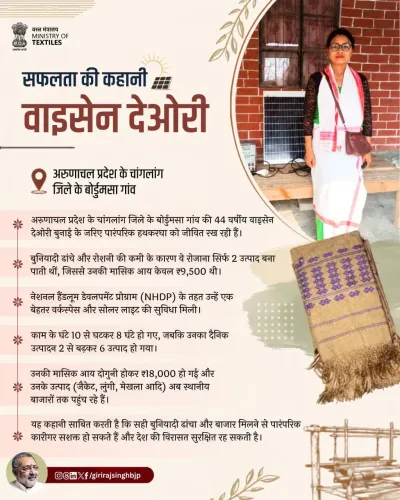
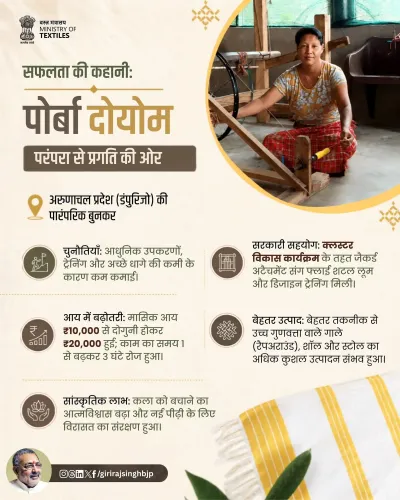
Lalhriatdiki , a weaver from Mizoram , adopted a modern loom and improved her weaving speed, production volume, and fabric quality.
The upgrade directly increased her income, demonstrating the economic case for technology integration in traditional crafts.
Union Textiles Minister Giriraj Singh shared her story on 22 October 2026 , framing it under the slogan 'सशक्त बुनकर, समृद्ध भारत' (Empowered weavers, prosperous India).
The Ministry of Textiles has promoted handloom technology upgradation and weaver welfare through central schemes since the early 2010s, with a recurring focus on northeastern states.
Mizoram has a strong indigenous tribal weaving tradition, primarily practised by women artisans in rural households.
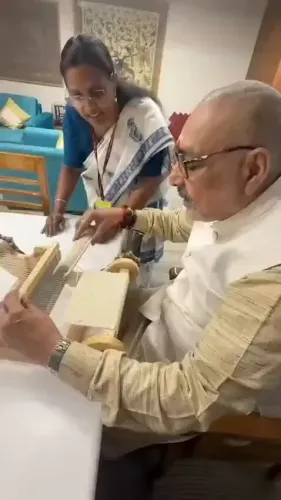
A single modern loom has changed the arithmetic of a Mizoram weaver's life — and Union Textiles Minister Giriraj Singh wants the country to know it. On Thursday, 22 October 2026, the Minister shared the story of Lalhriatdiki, a weaver from Mizoram, whose adoption of modern looms has measurably lifted her speed, output, and earnings while keeping her traditional craft alive.
Posting in Hindi, the Minister wrote: 'सशक्त बुनकर, समृद्ध भारत' — 'Empowered weavers, prosperous India' — framing Lalhriatdiki's story as proof that technology and tradition need not be rivals.From traditional craft to modern output: Lalhriatdiki's transformation
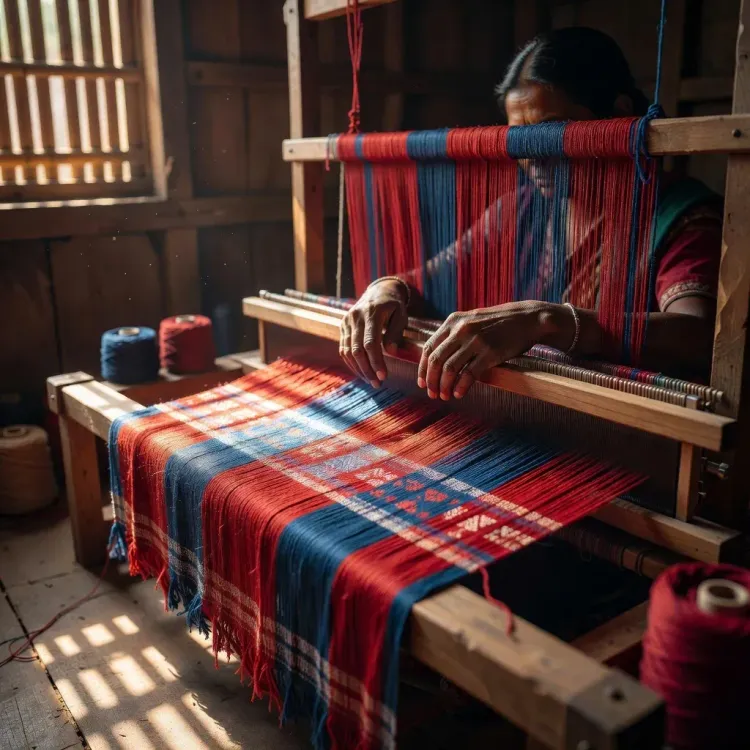
Lalhriatdiki's shift to a modern loom, according to the Minister's post, has improved three things simultaneously: the pace of weaving, the volume of production, and the quality of the finished fabric. The result is a higher income — a material change in the life of a craftsperson whose skills are rooted in Mizoram's centuries-old indigenous textile traditions.
The northeastern state has long been home to distinctive tribal weaving, where motifs and techniques pass through generations of women artisans. What Lalhriatdiki's story illustrates is that upgrading the tool does not erase the tradition — it amplifies it.
Northeast weavers at the centre of the Textiles Ministry's push
The Ministry of Textiles has, since the early 2010s, run central schemes aimed at technology upgradation and welfare for handloom weavers across India. The Northeast has been a recurring focus, given its rich but economically fragile artisan base — predominantly women working in rural households.
The ministry's messaging consistently pursues a dual goal: raise incomes through productivity, and preserve cultural identity through continued practice of traditional crafts. Lalhriatdiki's profile fits squarely into that frame — a rural woman weaver who has gained economically without abandoning her heritage.
Minister Singh's post is part of a broader pattern of the ministry amplifying individual success stories from the handloom sector, using them as ground-level evidence that policy-backed technology distribution is delivering results in states far from the national capital.
For the thousands of weavers still working on conventional looms across Mizoram, Manipur, Nagaland and the wider Northeast, Lalhriatdiki's story signals what a single equipment upgrade can unlock — and sets the floor for what further state-level rollouts could achieve.
Point of View
Minister Singh personalises what could otherwise be dry policy communication. This approach also serves a political purpose: it signals attention to a region the BJP has increasingly tried to cultivate, where traditional livelihoods and cultural identity are deeply intertwined. Watch whether such spotlights accelerate formal announcements on modern loom distribution in northeastern states.
NationPress
22 Oct 2026
Frequently Asked Questions
Who is Lalhriatdiki the Mizoram weaver?
Lalhriatdiki is a weaver from Mizoram who was highlighted by Union Textiles Minister Giriraj Singh for adopting a modern loom, which improved her weaving speed, production volume, and income while sustaining her traditional craft.
What did Giriraj Singh say about Mizoram weavers?
On 22 October 2026, Minister Giriraj Singh shared the story of weaver Lalhriatdiki from Mizoram, noting her improved income and output after shifting to a modern loom, under the motto 'Empowered weavers, prosperous India.'
What is the government's scheme for handloom weavers in India?
The Ministry of Textiles has run central schemes for handloom technology upgradation and weaver welfare since the early 2010s, focusing on raising productivity and incomes while preserving traditional crafts, with particular attention to northeastern states.
Why is Mizoram significant for handloom weaving in India?
Mizoram has a long-established tradition of indigenous tribal weaving, primarily practised by women artisans in rural households, making it a key focus for government schemes that aim to modernise production while preserving cultural heritage.
How does a modern loom help traditional weavers in the Northeast?
Modern looms allow weavers to increase their speed and output, improve the consistency and quality of fabrics, and earn higher incomes — all without abandoning the traditional motifs and techniques central to northeastern textile heritage.