Sonowal meets Cyprus Shipping Deputy Minister in Busan
Synopsis
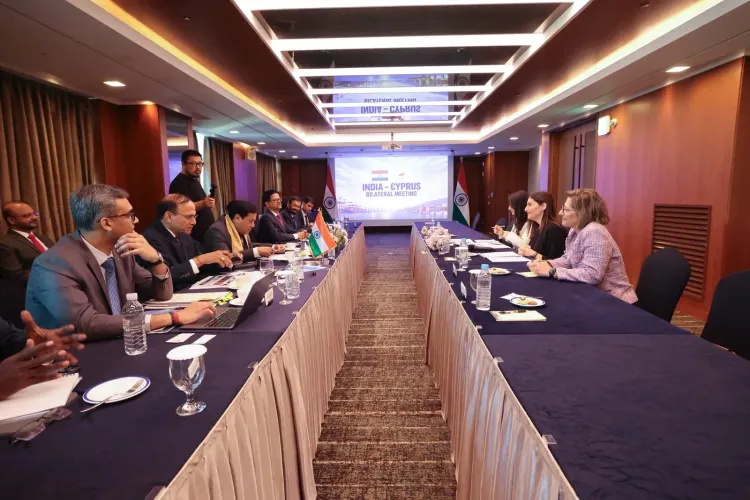
Union Ports Minister Sarbananda Sonowal met Cyprus Shipping Deputy Minister Marina Hadjimanolis in Busan on 27 October 2026, holding talks on sustainable shipping, vessel flagging and maritime investments under India's Maritime India Vision 2030 framework.
Key Takeaways
Sarbananda Sonowal met Cyprus Shipping Deputy Minister Marina Hadjimanolis in Busan on 27 October 2026 .
Discussions covered three pillars : sustainable shipping, vessel flagging, and maritime investments.
Cyprus runs one of the world's largest ship registries, making it a strategically important partner for India's fleet-growth agenda.
The meeting aligns with India's Maritime India Vision 2030 , which targets port modernisation, fleet expansion, and international maritime cooperation.
Busan's role as a global shipping hub provided a multilateral backdrop for the bilateral exchange.
Possible follow-up MoUs or joint working groups could emerge at future bilateral visits or IMO-related forums.
On the sidelines of Busan, South Korea's busiest port city, Union Minister of Ports, Shipping and Waterways Sarbananda Sonowal sat down on Tuesday, 27 October 2026 with H.E. Marina Hadjimanolis, Shipping Deputy Minister of Cyprus — a meeting that signals India's steady push to build maritime alliances with Europe's most registry-savvy nations.
Why Cyprus at a South Korean port city?
Cyprus operates one of the world's largest ship registries, making it a powerhouse in vessel flagging, maritime services, and shipping investment far beyond its physical size. Busan, the venue, regularly draws senior shipping officials from across the globe for international maritime forums, giving both delegations a natural rendezvous point outside the usual bilateral capitals.
Sonowal described the exchange as 'excellent interactions,' noting a 'good discussion on strengthening the India-Cyprus Strategic Partnership across sustainable shipping, vessel flagging and maritime investments.' Those three pillars — sustainability, flagging, investment — are not incidental. They map almost exactly onto India's stated priorities under Maritime India Vision 2030, the framework launched in 2021 that sets ambitious targets for fleet expansion, port modernisation, and deeper international maritime cooperation.
Flagging, green shipping, and the fleet-growth ambition
India has long sought to grow its merchant fleet — currently modest relative to the country's trade volumes — and vessel flagging is a key lever. A partnership with Cyprus on flagging norms could help Indian shipowners navigate international registration frameworks and attract foreign tonnage under Indian colours. On sustainable shipping, both nations face the same decarbonisation deadlines set by the International Maritime Organisation (IMO), giving them common ground to develop green corridors or share technical standards.
The broader pattern here is deliberate: India has intensified bilateral maritime diplomacy with European nations that hold deep expertise in ship management and registry operations. Sonowal has been the face of that outreach, using multilateral venues to stack bilateral meetings that might otherwise require separate trips. Cyprus, with its established role as a global shipping hub, fits that template precisely.
What could follow the Busan handshake
Diplomatic meetings of this kind typically seed working groups or Memoranda of Understanding that formalise cooperation on technical standards, crew certification, and investment facilitation. Whether the India-Cyprus conversation in Busan produces a concrete document — at an IMO-related forum or a future bilateral visit — will be the measure of its weight. For now, the minister's public framing of the meeting as 'excellent' and the direct tagging of the Cypriot minister on social media suggests both sides are invested in keeping the momentum visible.
India's maritime ambitions are large, the timeline is fixed, and the partnerships needed to deliver them have to be built one port city at a time.
Point of View
But the real test will be whether these conversations produce binding instruments. The emphasis on vessel flagging also hints at a longer-term Indian ambition: attracting foreign tonnage to fly the Indian flag and boosting the country's standing in global shipping rankings.
NationPress
27 Oct 2026
Frequently Asked Questions
Why did Sarbananda Sonowal meet the Cyprus shipping minister in Busan?
Sonowal met Cyprus Shipping Deputy Minister Marina Hadjimanolis in Busan to discuss strengthening the India-Cyprus Strategic Partnership in sustainable shipping, vessel flagging, and maritime investments. Busan, a major South Korean port city, serves as a hub for international shipping diplomacy.
What is Cyprus's significance in global shipping?
Cyprus operates one of the world's largest ship registries, offering vessel flagging, maritime services, and shipping investment expertise that far exceed its geographic size, making it a key partner for countries seeking to expand their merchant fleets.
What is Maritime India Vision 2030?
Maritime India Vision 2030 is a policy framework launched in 2021 that sets targets for port modernisation, expansion of India's merchant fleet, sustainable shipping practices, and deeper international maritime cooperation.
What could come out of the India-Cyprus maritime talks in Busan?
Possible outcomes include Memoranda of Understanding, joint working groups on vessel flagging standards, or cooperation on green shipping corridors, potentially formalised at a future bilateral visit or an IMO-related forum.
What is India's interest in vessel flagging partnerships?
India seeks to grow its merchant fleet and attract foreign tonnage under Indian colours. Partnering with established flagging nations like Cyprus can help Indian shipowners access international registration frameworks and boost India's standing in global shipping.