Sonowal Meets KOMERI in Busan to Boost India's Shipbuilding
Synopsis
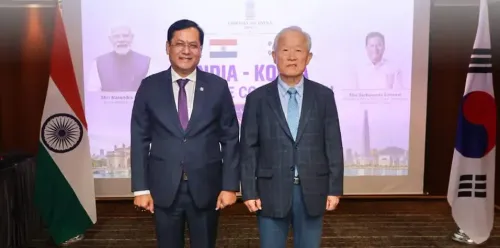
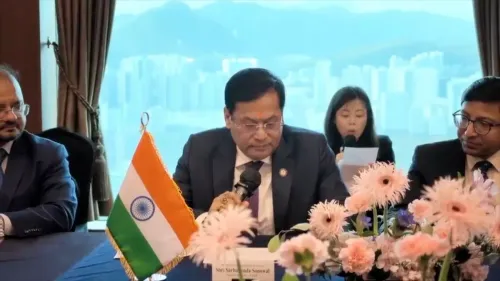
Union Minister Sarbananda Sonowal met KOMERI President Yang Won-chang and Korean marine industry leaders in Busan on October 27, 2026, to explore R&D, certification, and green and smart ship technology partnerships — a key move under Maritime India Vision 2030.
Key Takeaways
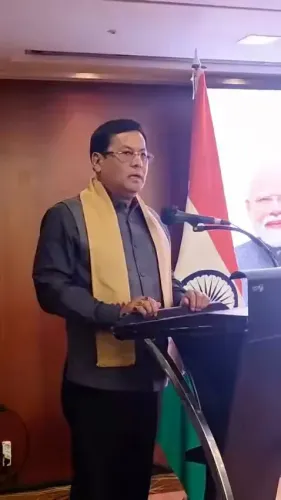
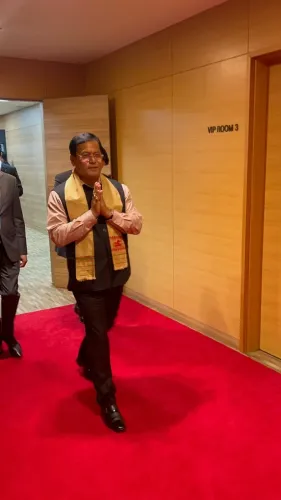
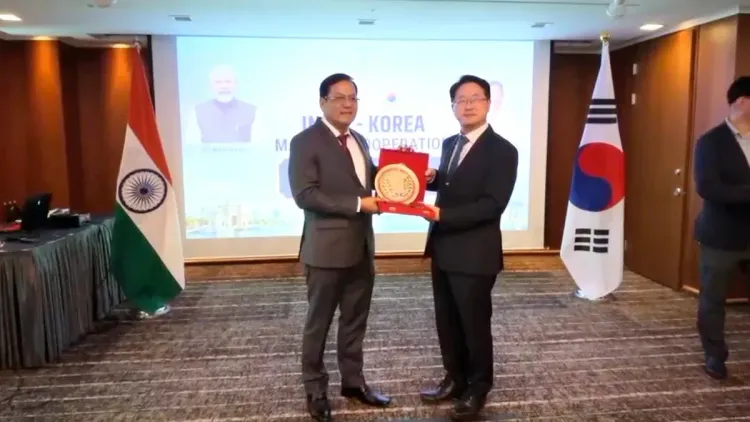
Union Minister Sarbananda Sonowal held talks in Busan, South Korea on October 27, 2026 with the Korea Marine Equipment Research Institute (KOMERI) .
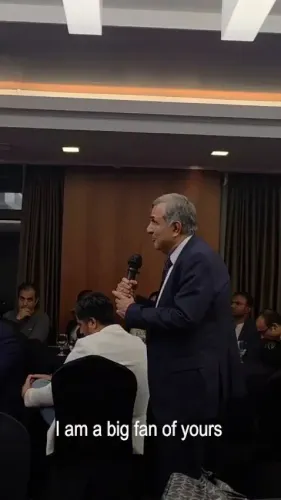
KOMERI President Yang Won-chang and Korean marine equipment industry leaders participated in the discussions.
Talks covered forging R&D and global certification partnerships to strengthen India's domestic maritime manufacturing.
Sonowal formally invited KOMERI to collaborate on green and smart ship technologies .
The engagement aligns with Maritime India Vision 2030 and the Make in India maritime manufacturing push.
Possible follow-up MoUs or joint projects on green shipping are now being watched as the next milestone.
India's ambitions in global shipbuilding got a boost on Tuesday, October 27, 2026, when Union Minister of Ports, Shipping and Waterways Sarbananda Sonowal held discussions in the South Korean port city of Busan with the Korea Marine Equipment Research Institute (KOMERI) — a meeting that zeroed in on R&D partnerships, international certification, and the next frontier of green shipping.
What Sonowal and KOMERI's Yang Won-chang Discussed
Sonowal met KOMERI President Yang Won-chang alongside leaders from South Korea's broader marine equipment industry. The agenda was focused and forward-looking: explore concrete partnerships in maritime research and development, align on global certification frameworks, and invite KOMERI into India's growing push for green and smart ship technologies. The minister described the talks as 'fruitful discussions' that could 'elevate domestic maritime manufacturing.'
KOMERI is no peripheral body — it is South Korea's specialised industrial technology institute for maritime R&D, testing, and global certification, sitting at the heart of one of the world's most formidable shipbuilding ecosystems. Accessing its expertise means Indian manufacturers could potentially shorten the long road to international-grade certification for vessels and equipment built at home.
Why Busan, Why Now
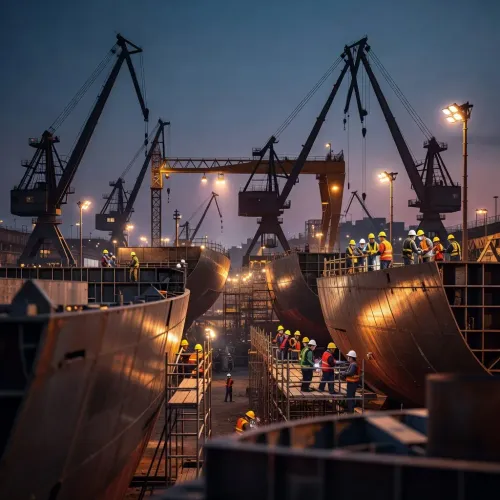
Busan is South Korea's second-largest city and its maritime capital — home to shipyards, port infrastructure, and research institutions that have made the country a perennial top-three shipbuilding nation globally. Sonowal choosing Busan as the venue signals that this engagement is industry-level, not merely diplomatic.
The backdrop is Maritime India Vision 2030, the government's blueprint released in 2021 for expanding domestic shipbuilding capacity and green technologies. Combined with the Make in India drive — which has flagged maritime manufacturing as a priority sector since 2014 — there is a clear policy mandate to reduce India's reliance on foreign-built vessels and equipment. The gap between that ambition and ground reality, however, remains wide. That is precisely what partnerships like this one are designed to close.
The Green and Smart Ship Angle
Sonowal's specific invitation to KOMERI to collaborate on green and smart ship technologies is the most consequential element of the Busan visit. The global maritime industry faces a hard decarbonisation deadline — the International Maritime Organization has set net-zero emission targets for international shipping that are reshaping every major shipbuilding nation's R&D priorities. India, if it is to compete seriously for a larger share of global shipbuilding orders, must develop or license these capabilities fast.
South Korea's advanced marine equipment sector has been a recurring focus for India under the Atmanirbhar Bharat framework — the philosophy of building self-reliance through strategic technology transfers rather than indefinite import dependence. A formal R&D and certification partnership with KOMERI would directly serve that goal, giving Indian shipbuilders access to testing infrastructure and certification pathways that currently require expensive overseas engagement.
What Comes Next
The Busan discussions now set the stage for what analysts will watch closely: whether a formal Memorandum of Understanding or joint project agreement between Indian maritime agencies and KOMERI follows. The minister's public framing — 'explored forging strong R&D and certification partnerships' — suggests talks are at the exploratory stage, but the explicit invitation on green and smart ships gives negotiators a clear deliverable to work toward.
India's share of global shipbuilding remains a fraction of South Korea's or China's. Closing that gap demands exactly the kind of institution-to-institution technology linkage that Sonowal is now pursuing in person — on the docks, so to speak, of the country that helped write the modern shipbuilding playbook.
Point of View
Institution-to-institution approach to plugging India's shipbuilding deficit — moving beyond bilateral declarations to target specific technical gaps in R&D infrastructure and international certification. South Korea is a deliberate choice: its shipbuilding ecosystem is not just large but deeply specialised, and KOMERI sits at the certification and testing chokepoint that Indian manufacturers struggle to navigate on their own. The green and smart ship angle is also strategically timed — as global decarbonisation mandates tighten, nations that lock in technology partnerships now will define the next generation of shipbuilding order books. Whether this translates into a formal MoU will be the real test of whether the Atmanirbhar Bharat maritime push is gaining institutional traction.
NationPress
27 Oct 2026
Frequently Asked Questions
What is KOMERI and why is it important for India?
KOMERI, the Korea Marine Equipment Research Institute, is South Korea's specialised body for maritime R&D, testing, and global certification. For India, a partnership with KOMERI could give domestic shipbuilders access to world-class testing infrastructure and international certification pathways, reducing reliance on costly overseas processes.
What did Sarbananda Sonowal discuss in Busan?
Minister Sonowal met KOMERI President Yang Won-chang and Korean marine equipment industry leaders to explore R&D and certification partnerships, and to invite KOMERI to collaborate on green and smart ship technologies to strengthen India's domestic maritime manufacturing.
What is Maritime India Vision 2030?
Maritime India Vision 2030, released in 2021, is the Indian government's policy blueprint for expanding domestic shipbuilding capacity, promoting green technologies in shipping, and increasing India's share in global maritime trade and manufacturing.
Why is South Korea significant for India's shipbuilding ambitions?
South Korea is consistently among the world's top three shipbuilding nations, with advanced R&D institutes, testing facilities, and a highly specialised marine equipment industry. India has identified technology transfers from South Korea as a key route to closing its own shipbuilding capability gap under Atmanirbhar Bharat.
What could follow from the Sonowal-KOMERI meeting?
The most likely follow-up would be a formal Memorandum of Understanding or joint project agreement between Indian maritime agencies and KOMERI, particularly focused on green and smart ship technology development, which the minister specifically flagged during the Busan talks.