CM Siddaramaiah Brokers Sugarcane Truce in Belagavi
Synopsis
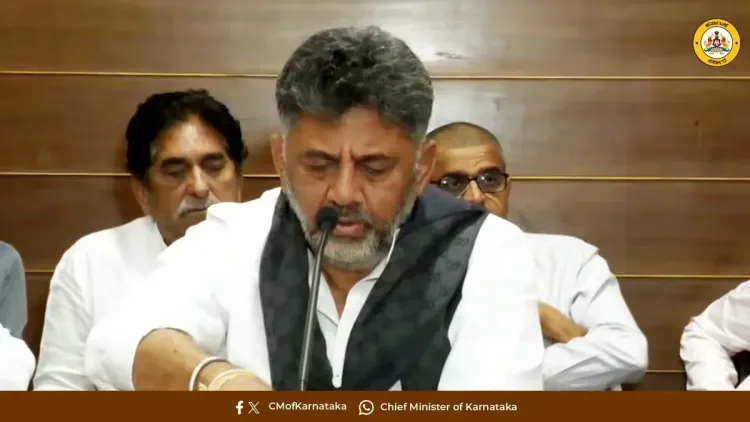
Karnataka CM DK Shivakumar personally mediated five rounds of talks in Belagavi between sugarcane growers and 79 sugar mill owners, brokering an agreement in principle to link cane payment rates to the Central Government's sugar MSP, with final positions due within two days.
Key Takeaways
CM DK Shivakumar personally chaired five consecutive rounds of talks in Belagavi on 27 October 2026 .
79 of 80 Karnataka sugar mill owners participated alongside sugarcane farmer representatives.
Both sides agreed that cane payment rates will be anchored to the Central Government's Minimum Selling Price (MSP) for sugar once notified.
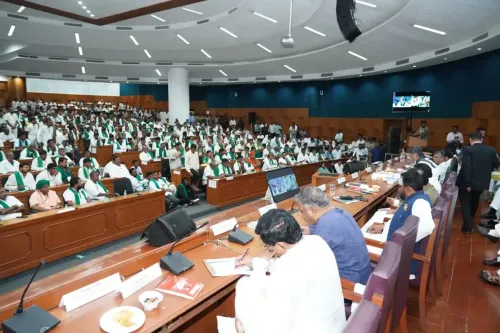
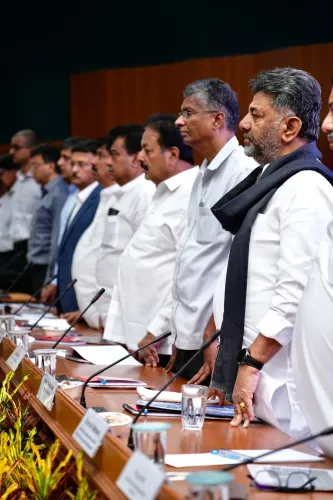
9 ministers and 70 MLAs took part in the day-long deliberations at Suvarna Soudha and Circuit House.
Farmers and mill owners will present their final positions within two days ; the state government committed to supporting both sides in talks with New Delhi.
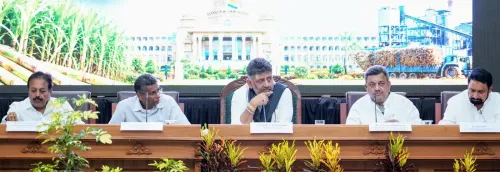
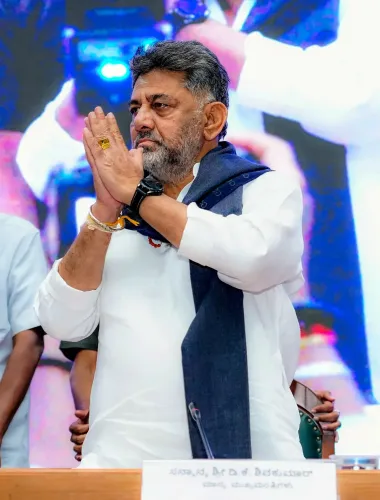
Five rounds of talks, nine ministers, seventy legislators, and a full day inside Belagavi's Suvarna Soudha and Circuit House — and Karnataka's bitter standoff between sugarcane farmers and sugar mill owners is finally edging toward a settlement. Chief Minister DK Shivakumar, personally chairing the negotiations on Tuesday, 27 October 2026, declared that both sides have reached an agreement in principle, with a final decision expected within two days.
Five rounds, seventy voices, one table
The day-long marathon at Belagavi was unprecedented in scale. 79 of Karnataka's 80 sugar mill owners attended, alongside representatives of sugarcane growers, making it one of the most broadly attended sector consultations the state government has convened. The CM kept all parties in the room across multiple sessions, threading through competing demands with each passing round.
The core dispute: what price should mills pay farmers per tonne of cane? The agreement reached on Tuesday ties that figure directly to the Minimum Selling Price (MSP) for sugar set by the Central Government. Once New Delhi notifies the sugar MSP, Karnataka will use that as the reference base to finalise what factories must pay growers — a framework mill owners have now accepted.
Central ministers in the picture
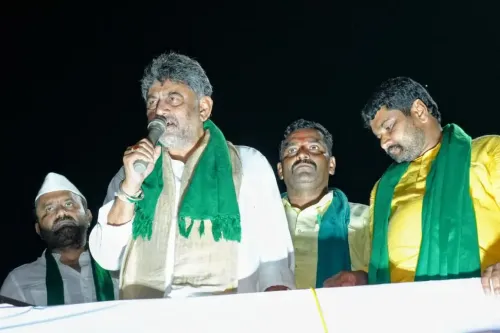
Farmers did not limit their lobbying to the state capital. They held separate discussions with central government ministers, who gave assurances that the forthcoming sugar MSP notification would reflect ground realities. Shivakumar, speaking after the final session, committed that the state would back farmers in any parallel negotiations with New Delhi. 'Raitarilllade nāvilla, nāvilllade raitarilla' — 'Without farmers there is no us; without us there is no farmer' — he said, crystallising the government's declared position.
Both parties have asked for two days to consult internally before announcing their final stands. The CM framed that not as a stall, but as a sign that the two sides are now close enough to reach consensus on their own terms.
Why this dispute keeps returning to Karnataka
Sugarcane pricing conflicts are a structural feature of Karnataka's political economy. The state is a significant sugar producer, and the revenue divide between growers — who bear input costs — and mills — who sell into a price-capped market — repeatedly creates friction whenever national sugar prices soften. State governments have historically convened exactly these kinds of tripartite talks, linking cane prices to central MSP levels so that neither side absorbs a disproportionate shock. The participation of nine cabinet ministers alongside the Chief Minister signals how politically sensitive the outcome is, particularly in the sugarcane-dense belt around Belagavi and north Karnataka.
A settlement here would ease pressure on thousands of growers heading into the crushing season and give mills the pricing certainty they need to begin procurement. The clock is now with the farmers and factory owners — and the central government's MSP desk.
Point of View
CM Shivakumar has turned a perennial pricing standoff into a high-visibility mediation win ahead of the crushing season. Tying cane rates to the central sugar MSP is a standard state-government playbook move, but the scale of participation signals that the political cost of failure this cycle is unusually high — particularly in Belagavi's sugarcane belt, a key electoral geography. The two-day cooling period also neatly defers the harder arithmetic to the parties themselves, letting the CM claim credit for the framework while insulating the government from any residual grievance over the final number. Watch whether the Central Government's eventual MSP notification matches farmer expectations — if it undershoots, the truce could unravel as quickly as it was assembled.
NationPress
27 Oct 2026
Frequently Asked Questions
What is the sugarcane price dispute in Karnataka about?
Sugarcane farmers in Karnataka have been in conflict with sugar mill owners over how much mills must pay per tonne of cane. The disagreement centres on whether payments adequately reflect farmers' production costs, especially when national sugar market prices are under pressure.
What did CM DK Shivakumar decide at the Belagavi talks?
CM Shivakumar brokered an agreement in principle that cane payment rates will be finalised once the Central Government announces the Minimum Selling Price (MSP) for sugar. Mill owners accepted this framework, and both sides are expected to declare their final positions within two days.
What is the sugar MSP and why does it matter to farmers?
The Minimum Selling Price (MSP) for sugar is a floor price set by the Central Government below which refined sugar cannot be sold. Mills use it as a reference for the revenue they expect to earn, and Karnataka's new framework makes cane farmer payments directly dependent on it.
How many sugar mills participated in the Belagavi meeting?
79 of Karnataka's 80 sugar mill owners participated in the day-long, five-round talks held at Belagavi's Suvarna Soudha and Circuit House on 27 October 2026.
When will the final decision on Karnataka sugarcane prices be announced?
Both sugarcane farmers and mill owners have asked for two days to consult internally before announcing their final positions. The ultimate cane rate will also depend on when the Central Government formally notifies the sugar MSP.