CM Shivakumar Calls for Patience on Sugarcane Crisis
Synopsis
Karnataka CM D.K. Shivakumar holds separate talks with sugarcane farmers and mill owners in Belagavi, links any solution to a central sugar MSP hike, plans to appear before a central committee arriving on 29 October, and seeks a joint front with Maharashtra's CM to pressure New Delhi.
Key Takeaways
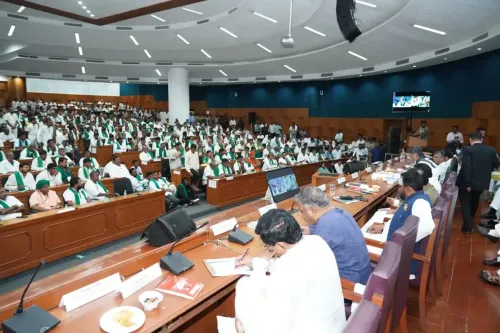
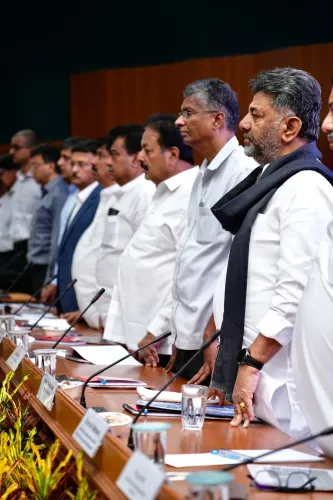
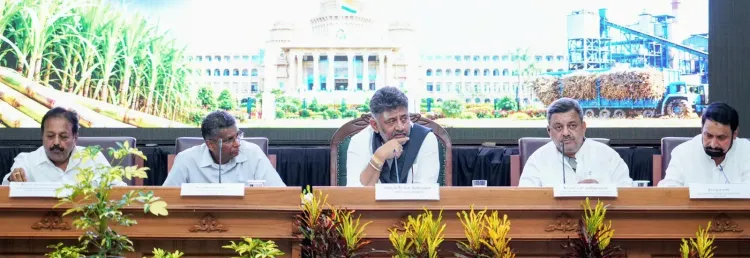
Shivakumar chaired separate meetings with sugarcane farmers and sugar mill owners at Suvarna Soudha, Belagavi on 26 October 2026 .
Mill owners say they cannot accept higher cane prices until the Central Government raises the sugar MSP ; Shivakumar acknowledged this constraint publicly.
A Central Government committee is due in Karnataka on 29 October ; the CM will personally appear before it to argue the farmers' case.
Shivakumar has written to the Prime Minister and plans to meet the Maharashtra Chief Minister to build inter-state pressure on the Centre for an MSP revision.
The CM warned against allowing Karnataka cane to be crushed in Maharashtra , urging farmers to permit local mills to begin crushing immediately.
Last year, the state government negotiated an additional Rs 300 per tonne payment to cane growers in consultation with mill owners.
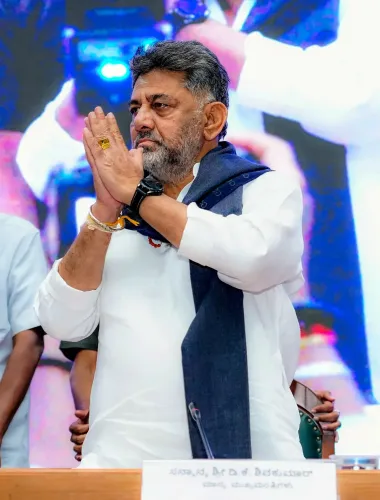
Karnataka's sugarcane farmers are in the middle of a high-stakes standoff — and Chief Minister D.K. Shivakumar is asking them to hold their nerve while he works every lever available. Speaking on Monday, 26 October 2026, after back-to-back meetings with cane growers and sugar mill owners at Suvarna Soudha in Belagavi, Shivakumar delivered a blunt message: a permanent fix is possible, but it cannot come in a single day.
The Chief Minister's Office of Karnataka posted a detailed summary of the proceedings, quoting Shivakumar directly: 'ಕಬ್ಬು ಬೆಳೆಗಾರರ ಸಮಸ್ಯೆಗಳಿಗೆ ಶಾಶ್ವತ ಪರಿಹಾರ ಸಿಗುವಂತೆ ಮಾಡುವುದು ನಮ್ಮ ಅಚಲ ನಿರ್ಧಾರ' — 'Providing a permanent solution to the problems of sugarcane farmers is our unwavering resolve.'
Why the MSP question has Karnataka's mills locked in a stalemate
The immediate trigger is a standoff between two positions that cannot move independently of each other. Sugar mill owners have told the state government they will not agree to higher cane purchase prices unless the Central Government first raises the Minimum Support Price (MSP) for sugar. Without that price signal flowing upstream, mills say they cannot absorb the additional cost. Shivakumar did not dispute that logic — he acknowledged it plainly: 'Sugar factory owners will not agree without a sugar MSP hike.' At the same time, farmers are watching input costs — diesel, fertilisers, and pesticides — climb with no corresponding rise in the price they receive for cane. The CM validated their grievance directly: 'Your demand is not wrong.' The state government had previously worked with mill owners to provide an additional Rs 300 per tonne to growers, but that arrangement is now under strain amid the wider pricing deadlock. Adding to the pressure is the Central Government's directive barring the diversion of sugarcane to ethanol production, which has squeezed mill economics further. Sugarcane yields and sugar output have declined, tightening the revenue base from which mills would have to fund any price increase.The 29 October committee visit and Shivakumar's multi-front push
The CM outlined a clear near-term sequence. A Central Government-constituted committee is scheduled to arrive in Karnataka on 29 October, and Shivakumar said he will personally appear before it to argue the farmers' case. He ruled out any rushed announcement before that: 'I will not make a hasty decision in a single day. We will discuss with mill owners, officials, the central government and the committee before deciding.' Beyond the committee visit, Shivakumar has already written to the Prime Minister and plans talks with Union Ministers. Crucially, he also signalled an inter-state front: he intends to meet the Chief Minister of Maharashtra to build joint pressure on New Delhi for an MSP revision. His reasoning is economic and urgent — crushing has already begun in Maharashtra, and Karnataka cane being transported across the border would hurt both farmers and the state's own revenue. 'Our cane crop going to Maharashtra should not be allowed. It will cause trouble for farmers and the government,' he warned, urging growers to permit crushing to begin in Karnataka's own mills without further delay.A personal appeal from Kitturu to Belagavi
Shivakumar reminded farmers that he had already travelled to Kitturu to meet them in a gesture of respect for their agitation — an unusual step for a sitting Chief Minister — and that he had promised then to consult all parties before calling a formal meeting. Monday's session in Belagavi was that promised meeting. 'Your voice will become my voice. I am with you,' he told them, before asking them to extend the same trust in return: 'You must understand my position and the government's position.' The CM's closing question cut to the heart of the political tension: 'When we are on the side of farmers, why the protest?' It is a question that will hang over the next 72 hours — until the central committee lands in Karnataka and the real negotiation begins.Point of View
A personal appearance before the central committee, and a proposed Karnataka-Maharashtra axis — is calibrated to shift moral and political pressure upward to New Delhi rather than absorb it locally. The 29 October committee visit is the real inflection point; if it produces no MSP commitment from the Centre, the CM's holding position becomes harder to sustain in the face of ongoing farmer agitation. The inter-state coordination angle is worth watching: a joint representation by two large sugarcane states would carry significantly more weight with the Union government than Karnataka's request alone.
NationPress
27 Oct 2026
Frequently Asked Questions
Why are Karnataka sugarcane farmers protesting in 2026?
Farmers are protesting because input costs — diesel, fertilisers, pesticides — have risen sharply while the price they receive for cane has not kept pace, and sugar mills have refused to commit to higher prices without a central government hike in sugar MSP.
What did CM D.K. Shivakumar decide at the Belagavi meeting on 26 October?
Shivakumar did not announce an immediate financial package; instead he ruled out a hasty decision, said he would appear before the central government committee arriving on 29 October, and appealed to farmers to allow crushing to begin in local mills.
What is the sugar MSP and why does it matter to Karnataka cane farmers?
The Minimum Support Price for sugar is set by the Central Government and directly determines how much revenue mills earn per unit of sugar sold; mill owners say they cannot pay higher cane prices unless this MSP is raised first, making it the central bottleneck in Karnataka's pricing dispute.
Why is CM Shivakumar meeting the Maharashtra Chief Minister over sugarcane?
Crushing has already begun in Maharashtra, creating a risk that Karnataka cane will cross the border; Shivakumar wants to build a joint inter-state case to pressure New Delhi for a sugar MSP hike, and prevent cane diversion that would hurt Karnataka's own mills and farmers.
What happens on 29 October in Karnataka's sugarcane dispute?
A committee formed by the Central Government is scheduled to visit Karnataka on 29 October; CM Shivakumar has committed to personally appearing before it to represent the interests of cane farmers and push for an MSP revision.