Karnataka CM Shivakumar holds Belagavi talks with sugarcane farmers, mill owners today
Synopsis
Karnataka CM D.K. Shivakumar personally travelled to Belagavi on 26 October to hold back-to-back talks with sugar mill owners and protesting farmers demanding ₹5,500 per tonne — double the Central FRP. With a Karnataka Bandh threatened for 27 October and a November 26 deadline for the Centre, Monday's discussions could either defuse one of the state's most volatile farm crises or escalate it sharply.
Key Takeaways
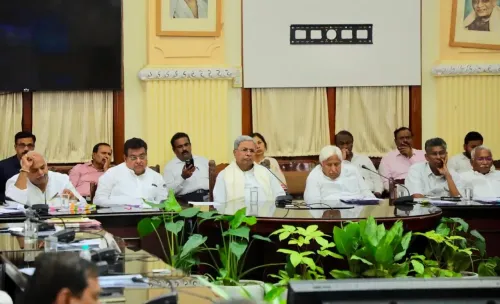
Shivakumar arrived in Belagavi on 26 October to meet sugar mill owners at 11 a.m. and farmer representatives at 3.30 p.m. at Suvarna Vidhana Soudha .
Farmers are demanding a total price of ₹5,500 per tonne , an additional state subsidy of ₹1,000 per tonne , and a dedicated fund of ₹500 crore .
The Centre fixed the Fair and Remunerative Price at ₹365 per quintal for 2026-27, up from ₹355 — a hike growers say is inadequate.
Farmer groups Karnataka Rajya Raitha Sangha and Hasiru Sene have blocked highways including the Pune-Bengaluru and Bengaluru-Mysuru routes.
A Karnataka Bandh on 27 October has been threatened if no concrete decisions emerge from Monday's talks.
BJP has urged the state government to urgently address grower distress amid drought and cultivation debt.
Karnataka Chief Minister D.K. Shivakumar arrived in Belagavi on Monday, 26 October to chair back-to-back meetings with sugar mill owners and protesting sugarcane farmers, as growers across North Karnataka intensified highway blockades demanding a remunerative price for the 2026-27 crushing season. The talks, held at the Suvarna Vidhana Soudha, are being watched closely as a potential turning point for a standoff that has already spilled onto the Pune-Bengaluru and Bengaluru-Mysuru highways.
Schedule of Meetings
Shivakumar is scheduled to meet sugar factory owners at 11 a.m., followed by a separate session with sugarcane farmer representatives at 3.30 p.m., both at the Suvarna Vidhana Soudha in Belagavi. The Chief Minister chose to travel to Belagavi rather than summon stakeholders to Bengaluru, signalling the urgency he attaches to the crisis.
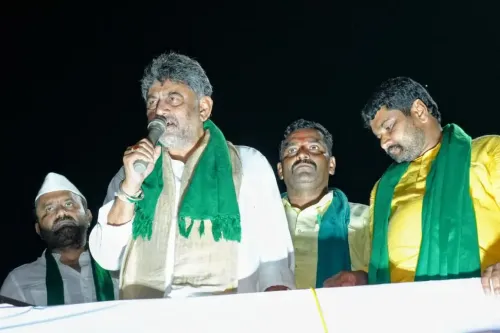
Speaking to reporters in Kittur, Belagavi district, Shivakumar said: 'I will not talk about what governments in other states are offering their sugarcane farmers. First, our farmers in Karnataka must survive. I will discuss this issue. That is why I have come here, rather than holding a meeting in Bengaluru.'
What Farmers Are Demanding
Farmer organisations — chiefly the Karnataka Rajya Raitha Sangha and Hasiru Sene — have outlined three core demands: a total sugarcane price of ₹5,500 per tonne, an additional State Advised Price (SAP) of ₹1,000 per tonne from the Karnataka government, and a higher Minimum Support Price (MSP) for sugar from the Centre. They have also called for a dedicated fund of ₹500 crore to address grower distress.
The Central government fixed the Fair and Remunerative Price (FRP) at ₹365 per quintal for 2026-27, up from ₹355 the previous year — a revision farmers argue is insufficient to offset rising fertiliser, labour, and transport costs.
The Government's Position
Shivakumar acknowledged the complexity of the issue, noting that mill owners must be financially viable before any additional payout to farmers can be enforced. 'I will speak to sugar mills and farmers. I must also listen to their views. Earlier, we gave farmers an additional amount of ₹300 per quintal, and the previous Siddaramaiah government provided ₹50. We have also asked mill owners to contribute,' he said, adding that consultations with other states had already been conducted.
This is not the first time Belagavi has been the site of sugarcane agitations; the region's heavy dependence on the crop — and the cyclical pricing disputes between growers and mills — have made such confrontations a recurring feature of Karnataka's agricultural calendar.
Protest Situation on Ground
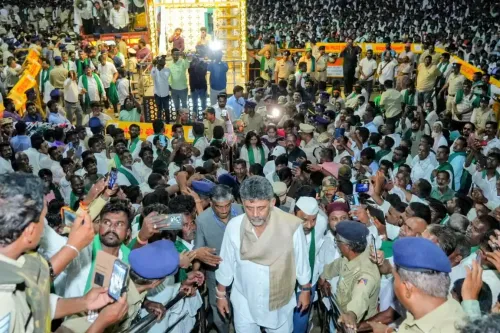
Even as talks were being arranged, farmers blocked a state highway in Belagavi, disrupting traffic. Farmer leaders have warned of a Karnataka Bandh on 27 October if Monday's discussions yield no concrete outcome, and have set a broader deadline of 26 November for the Union government to respond to MSP and committee demands. The Karnataka Bharatiya Janata Party (BJP) has separately urged the state government to act swiftly, citing ongoing drought conditions and mounting cultivation debt among growers.
What Happens Next
The outcome of Monday's dual-track meetings is expected to determine whether the protests — including the threat of a state-wide shutdown — are de-escalated or intensified. With the crushing season underway and growers already strained by drought, any delay in resolution risks compounding economic losses for one of Karnataka's most economically significant agricultural communities.
Point of View
500 per tonne is not a rounding error; it reflects a fundamental mismatch between a Centre-fixed floor and the actual cost of cultivation in drought-hit North Karnataka. The threat of a Karnataka Bandh within 24 hours of the talks signals how little trust farmers have that this round of discussions will be different from previous ones. Unless Monday's meetings produce a time-bound, verified commitment on the SAP differential — rather than another promise of further deliberation — the agitation is likely to resume, with added political cost for the Congress-led state government.
NationPress
26 Oct 2026
Frequently Asked Questions
Why are Karnataka sugarcane farmers protesting in Belagavi?
Karnataka sugarcane farmers are protesting because they consider the current prices paid by sugar mills — and the Central government's Fair and Remunerative Price of ₹365 per quintal — inadequate to cover rising input costs. They are demanding a total price of ₹5,500 per tonne, an additional state subsidy of ₹1,000 per tonne, and a ₹500 crore relief fund for the 2026-27 crushing season.
What is CM Shivakumar's plan to resolve the sugarcane dispute?
Chief Minister D.K. Shivakumar travelled to Belagavi on 26 October and scheduled separate meetings with sugar mill owners at 11 a.m. and farmer representatives at 3.30 p.m. at the Suvarna Vidhana Soudha. He has said he will listen to both sides before deciding on the way forward, while noting that mill owners' financial capacity is a key factor in any price revision.
What is the Karnataka Bandh threat and when could it happen?
Farmer organisations have threatened to call a Karnataka Bandh on 27 October if Monday's talks between the Chief Minister, mill owners, and farmer representatives do not yield concrete decisions. A separate deadline of 26 November has been set for the Union government to respond to MSP and committee demands.
What is the Fair and Remunerative Price (FRP) for sugarcane in 2026-27?
The Central government fixed the FRP at ₹365 per quintal for the 2026-27 crushing season, up from ₹355 the previous year. Karnataka farmers argue this increase is insufficient to offset higher fertiliser, labour, and transport costs, and are demanding a state-level SAP of ₹1,000 per tonne on top of the FRP.
Which farmer organisations are leading the protests in North Karnataka?
The protests are primarily led by the Karnataka Rajya Raitha Sangha and Hasiru Sene, which have organised highway blockades on major routes including the Pune-Bengaluru and Bengaluru-Mysuru highways. These groups are pushing for higher sugarcane prices and broader policy changes for the ongoing crushing season.