Karnataka CM Shivakumar in Belagavi for sugarcane talks; urges farmers to allow crushing
Synopsis
Karnataka CM Shivakumar spent an entire day in Belagavi meeting sugar factory owners and cane growers but left without a resolution — because he legally cannot act without a federal MSP hike. With Karnataka's cane already at risk of migrating to Maharashtra and a Central Government committee arriving on 29 October, the next 72 hours could define the season for the state's sugarcane belt.
Key Takeaways
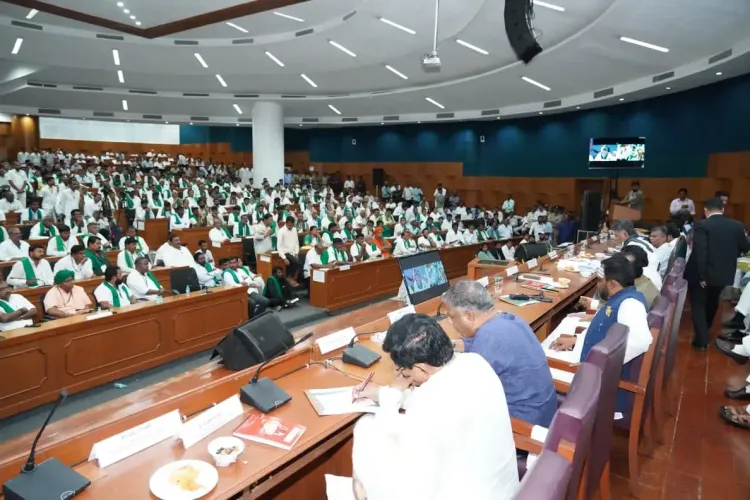
Shivakumar held separate and joint meetings with sugar factory owners and sugarcane growers at Suvarna Soudha, Belagavi on 26 October 2026 .
No final decision was taken; Shivakumar said a resolution requires the Centre's involvement and a hike in sugar MSP .
A Central Government committee is scheduled to visit Karnataka on 29 October ; the CM will appear before it on behalf of farmers.
Shivakumar warned that Karnataka's cane could migrate to Maharashtra , where crushing has already started, if local factories do not begin soon.
The state faces an annual power subsidy burden of ₹22,000 crore for farm pump sets, plus an additional ₹9,000 crore this drought year, limiting fiscal headroom.
Shivakumar has written to Prime Minister Modi and plans to meet the Maharashtra CM to coordinate a joint approach.
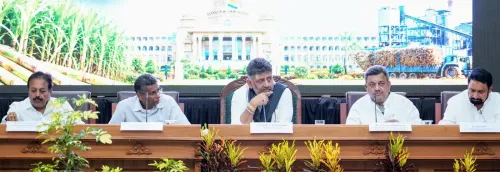
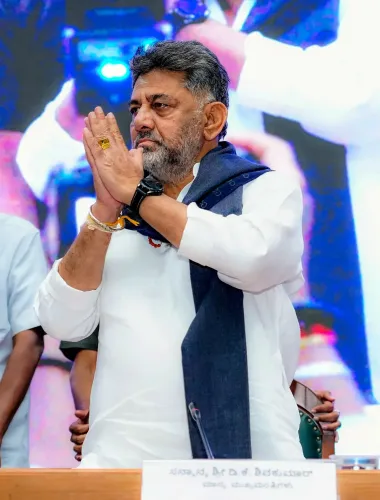
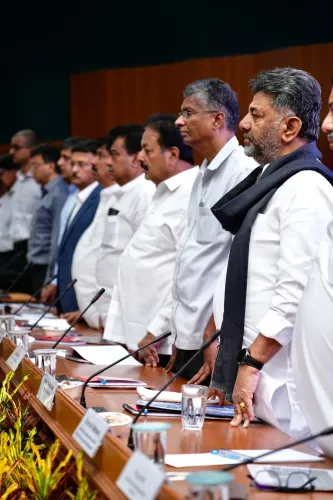
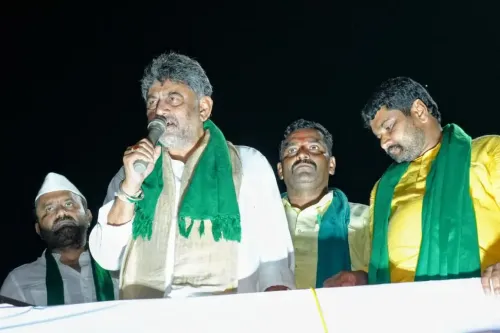
Karnataka Chief Minister D. K. Shivakumar held a series of meetings at the Suvarna Soudha in Belagavi on Monday, 26 October, bringing together sugar factory owners and sugarcane growers in a bid to break a deadlock over cane pricing and crushing. The day-long consultations culminated in a joint session of both sides, after which Shivakumar addressed the media and appealed to farmers to allow cane crushing to begin without delay.
Key Developments from the Belagavi Talks
Shivakumar made clear that a final resolution cannot be reached without the Centre's involvement. 'We have discussed with sugar factory owners and sugarcane growers. We cannot decide without taking the Centre into confidence. Factory owners will not agree unless sugar MSP is increased. Farmers should allow cane crushing to happen. Otherwise, farmers themselves will face problems,' he told reporters.
He also revealed that he has already written a letter to Prime Minister Narendra Modi and plans to meet the Union Minister concerned. He indicated he will also meet the Maharashtra Chief Minister to build a coordinated response across the two states, which share significant sugarcane belt geography.
Central Government Committee Visit on 29 October
A committee constituted by the Central Government is scheduled to visit Karnataka on 29 October. Shivakumar said he will personally appear before the committee and speak on behalf of sugarcane growers. 'I will not take a hasty decision in a single day. We will take a decision after discussing once again with sugar factory owners, officials, the Central Government and the committee,' he said, urging farmers to exercise patience.
Notably, this visit comes after Shivakumar had earlier met farmer leaders in Kittur, where he had promised a structured round of consultations before any decision. Monday's meeting fulfilled that commitment, even as the underlying dispute — chiefly around the sugarcane Minimum Support Price (MSP) — remains unresolved.
Why Karnataka Cannot Act Unilaterally
The CM cited multiple fiscal and structural constraints that limit the state's room to manoeuvre. The Karnataka government currently spends ₹22,000 crore annually to provide free electricity to farmers' pump sets, ₹7,000 crore on the Gruha Jyothi scheme, and faces an additional ₹9,000 crore burden this year due to drought-driven power consumption spikes.
He added that a severe drought has reduced power generation, forcing the state to purchase electricity at ₹23 and ₹33 per unit from Kerala. 'Last year we discussed with factory owners and decided to give ₹300. The electricity bill used for lift irrigation projects has to be paid. Sugar price has not increased. If we do politics and fight, we will not get a solution,' he said.
The Cross-State Cane Migration Risk
One of the CM's most pressing arguments to farmers was the risk of Karnataka's cane crop being diverted to Maharashtra, where crushing has already begun following recent rains that filled the Krishna dam. 'Cane crushing has already started in Maharashtra. We should not allow our cane crop to go to Maharashtra. This will cause problems for farmers and the government,' he warned.
This cross-border migration of cane is not a new phenomenon — it has recurred in previous seasons when Karnataka factories delayed crushing — but the scale of the current drought makes the risk more acute, according to farmer leaders present at the meeting.
Who Was Present
The meetings were attended by a wide range of political and farmer representatives, including Ministers Satish Jarkiholi, Laxman Savadi, Chalavara Swamy, M. B. Patil, Santosh Lad, Rudrappa Lamani, S. S. Mallikarjun, and Vijayanand Kashappanavar; Deputy Leader of the Opposition Aravind Bellad; MP Priyanka Jarkiholi; MLAs H. K. Patil and R. B. Thimmapur; and farmer leaders including Badagalapura Nagendra, Sunanda Jayaram, Chunappa Poojari, and Kuruburu Shanthakumar.
All eyes now turn to the Central Government committee's visit on 29 October, which will likely determine the pace and shape of any formal resolution for Karnataka's embattled sugarcane sector.
Point of View
Yet the optics of a day-long meeting with no binding outcome will test farmer patience. The cross-border cane migration warning is the sharpest pressure point — once Karnataka cane reaches Maharashtra mills, the season's revenue loss is irreversible. The 29 October committee visit is the real inflection point, and Shivakumar's decision to front-run it with a public appeal rather than wait quietly suggests he is managing farmer expectations as much as negotiating with Delhi.
NationPress
26 Oct 2026
Frequently Asked Questions
Why did Karnataka CM Shivakumar hold talks on sugarcane in Belagavi?
Shivakumar convened the meetings at Suvarna Soudha on 26 October to resolve a standoff between sugar factory owners and sugarcane growers over cane pricing and the delayed start of the crushing season. Factory owners are unwilling to proceed without a higher sugar MSP from the Central Government, while farmers are pressing for better prices and relief on input costs.
Why was no decision taken at the Belagavi sugarcane meeting?
Shivakumar said the state cannot act unilaterally because any meaningful price relief for farmers depends on the Central Government increasing the sugar MSP. He has written to Prime Minister Modi and is awaiting the arrival of a Central Government committee on 29 October before finalising any announcement.
When will the Central Government committee visit Karnataka on sugarcane?
The Central Government committee is scheduled to visit Karnataka on 29 October 2026. Chief Minister Shivakumar has said he will personally appear before it and present the case for sugarcane growers.
What is the risk of Karnataka's sugarcane going to Maharashtra?
Cane crushing has already begun in Maharashtra following good rains that filled the Krishna dam. If Karnataka factories delay further, farmers may sell their cane to Maharashtra mills, depriving Karnataka of the season's processing revenue and leaving local factories underutilised. Shivakumar specifically warned farmers against allowing this to happen.
What financial constraints limit the Karnataka government's ability to help sugarcane farmers?
The state currently spends ₹22,000 crore annually on free electricity for farm pump sets and ₹7,000 crore on the Gruha Jyothi scheme, and faces an additional ₹9,000 crore power cost this year due to drought-driven consumption. Shivakumar cited these pressures to explain why direct state-funded relief is not immediately feasible without federal support.