CM Dhami pays floral tribute to Khanduri, Bisht at Gairsain session
Synopsis
Chief Minister Pushkar Singh Dhami opened the Gairsain Vidhan Sabha session on 27 October 2026 by offering floral tributes to former CM Major General Bhuvan Chandra Khanduri and ex-Cabinet Minister Heera Singh Bisht, honouring two pillars of Uttarakhand's early political history.
Key Takeaways
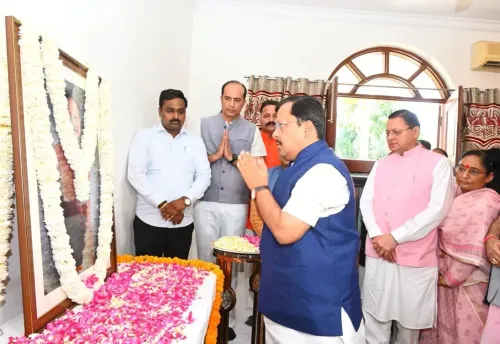
CM Pushkar Singh Dhami offered floral tributes at the Gairsain Vidhan Sabha before the session commenced on 27 October 2026 .
Tributes honoured Major General (Retd.) Bhuvan Chandra Khanduri , former Chief Minister of Uttarakhand ( 2007–2009 ), and Heera Singh Bisht , former Cabinet Minister.
The session was held at Bharaḍīsaiṇ (Gairsain) in Chamoli district, Uttarakhand's designated summer-capital venue.
Gairsain sessions reflect a long-standing demand to recognise the hill town as a seat of government alongside Dehradun .
Floral tributes to departed leaders before assembly sessions are standard legislative protocol across Indian states.
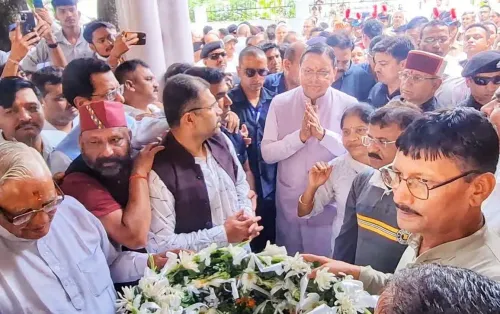
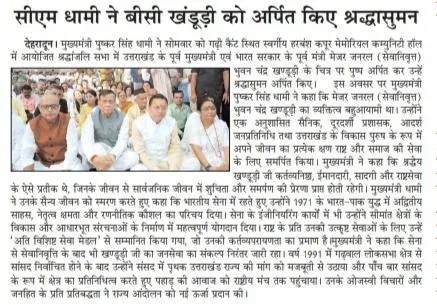
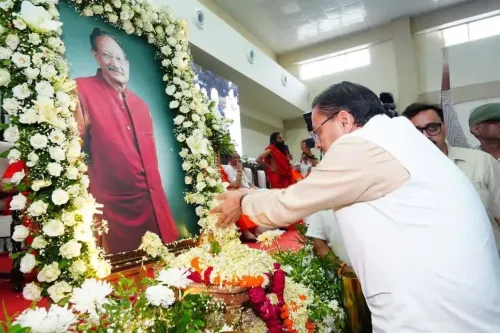
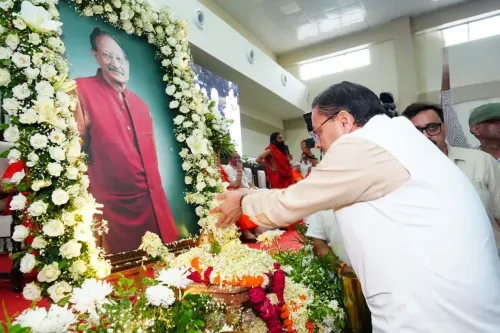
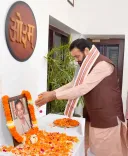
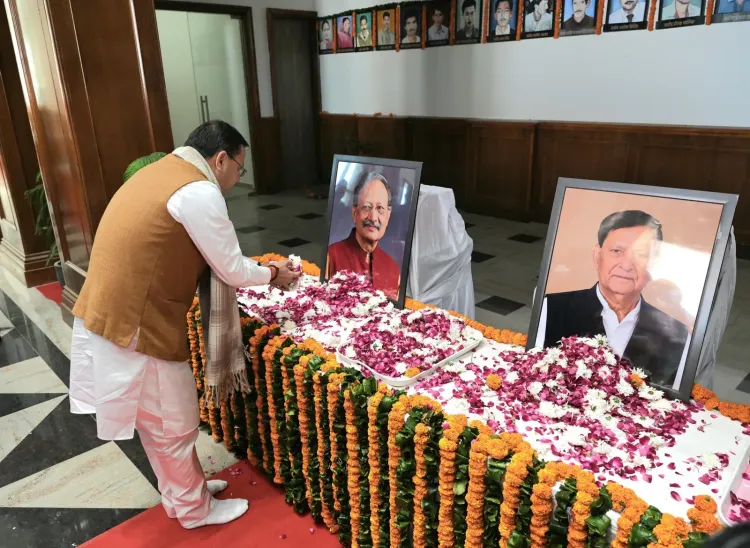
Before the first gavel fell on Tuesday's assembly session in the hills, Chief Minister Pushkar Singh Dhami paused to honour two leaders who shaped Uttarakhand's political landscape. At the Vidhan Sabha building in Bharaḍīsaiṇ (Gairsain), he offered flowers at the portraits of former Chief Minister Major General (Retd.) Bhuvan Chandra Khanduri and former Cabinet Minister Heera Singh Bisht before proceedings got under way on Tuesday, 27 October 2026.
Two figures, one solemn moment
Major General (Retd.) Bhuvan Chandra Khanduri served as Uttarakhand's Chief Minister from 2007 to 2009, bringing to the office a rare combination of military discipline and legislative experience. A decorated army officer before entering electoral politics, he remains one of the most recognisable figures in the young state's BJP history. Heera Singh Bisht served the state as a Cabinet Minister, and his passing represents another link to Uttarakhand's formative political generation.
The tribute was brief but deliberate — offered not in a ceremonial hall far from the hills, but inside the parvataiya (mountain) assembly building that both men once walked, making the gesture carry particular resonance for lawmakers gathered there.
Why Gairsain, and why it matters
Gairsain, nestled in Chamoli district of the Kumaon-Garhwal divide, has been the site of periodic Vidhan Sabha sessions since the early 2010s. The move to convene legislature here reflects a long-standing popular demand to acknowledge Gairsain as a symbolic second seat of power alongside Dehradun — a demand that predates Uttarakhand's formation as a state in 2000. Holding sessions here is itself a political statement of continuity with that aspiration.
Beginning a session with floral tributes to departed leaders is standard legislative protocol across Indian states, but in Uttarakhand — a state barely two-and-a-half decades old — the ritual carries extra weight. Each such tribute is also a quiet act of state-building, anchoring institutional memory in a place still writing its own political biography.
The session ahead
With the tribute complete, the Gairsain assembly session formally opened. The legislative agenda and any bills or resolutions to be taken up in this sitting will define the session's policy footprint in the coming days. The mountain venue, as always, adds both symbolism and logistical significance to whatever decisions emerge from its floor.
For the families of Khanduri and Bisht, and for the lawmakers who knew them, the Chief Minister's gesture was the first order of the day — a reminder that governance in Uttarakhand still draws a deliberate line from its present to its founding figures.
Point of View
A soldier-turned-statesman who embodied the Garhwali identity in national BJP politics, CM Dhami reinforces a continuity narrative that is useful ahead of any electoral cycle. The pairing of institutional ritual with a symbolically charged venue is deliberate statecraft, not mere ceremony — it tells voters in the mountains that their capital, and their leaders, are remembered.
NationPress
27 Oct 2026
Frequently Asked Questions
Who is Bhuvan Chandra Khanduri and why is he significant to Uttarakhand?
Major General (Retd.) Bhuvan Chandra Khanduri served as Chief Minister of Uttarakhand from 2007 to 2009. A retired army officer turned BJP politician, he is one of the most prominent figures in the state's early political history.
Why is the Uttarakhand Vidhan Sabha session held in Gairsain?
Gairsain in Chamoli district holds periodic assembly sessions to honour a long-standing popular demand to recognise it as a symbolic seat of power for the hill regions, alongside the winter capital Dehradun.
Who is Heera Singh Bisht?
Heera Singh Bisht was a former Cabinet Minister in the Uttarakhand government and a significant figure from the state's early political era.
What is the significance of paying floral tributes before an assembly session?
Paying floral tributes to departed leaders before a legislative session commences is a standard ceremonial protocol in Indian state legislatures, marking respect for those who contributed to the state's political history.
When was Uttarakhand formed as a state?
Uttarakhand was carved out as a separate state from Uttar Pradesh on 9 November 2000.