CM Bhupendra Patel's Gujarat: Always First to Stand by Farmers in Crisis

Synopsis
The Chief Minister's Office of Gujarat on October 27, 2026 shared a video showcasing CM Bhupendra Patel's government standing with farmers and rural communities during disasters, invoking the state's long-established reputation for rapid, sensitive crisis response.
Key Takeaways
The Gujarat CMO posted a video on October 27, 2026 spotlighting the state's disaster-response support for farmers and rural communities.
CM Bhupendra Patel , in office since September 2021 , is highlighted as the leader ensuring 'complete sensitivity' during calamities.
The Gujarat State Disaster Management Authority (GSDMA) was established after the 2001 Bhuj earthquake and remains a national model for disaster coordination.
Gujarat faces recurring threats from cyclones, floods, and earthquakes , making rapid relief to farmers a core governance benchmark.
The campaign hashtag #AgressarGujarat frames proactive disaster response as central to the state's governance identity.
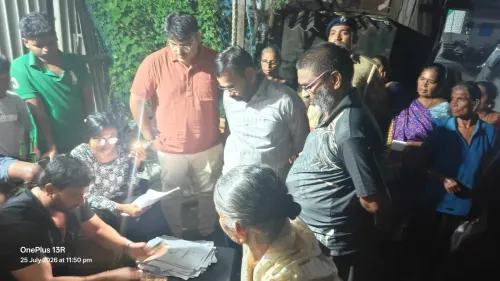
When disaster strikes Gujarat's farmlands and villages, the state's administrative machinery does not wait — it moves. The Chief Minister's Office of Gujarat on Tuesday, October 27, 2026 shared a video highlighting how the government under Chief Minister Bhupendra Patel stands beside the state's 'dhartiputras' — sons of the soil — with full sensitivity during times of calamity.
The post, carrying the hashtag #અગ્રેસર_ગુજરાત ('Agreshar Gujarat' — 'Gujarat Always Forward'), frames the state's disaster response not as routine administration but as an act of solidarity with rural communities. The Gujarati text translates to: 'Gujarat, always ahead — come, let us know the news of Gujarat, which stands beside the sons of the soil at every moment of crisis with complete sensitivity, under the leadership of Chief Minister Shri Bhupendrabhai Patel.'
A State Forged by Disaster, Sharpened by Response
Gujarat's disaster-management credentials were written in hard lessons. The Bhuj earthquake of January 2001 — one of the deadliest in India's post-Independence history — killed over 20,000 people and prompted the establishment of the Gujarat State Disaster Management Authority (GSDMA), a model that became a national template. Since then, successive governments have built on that institutional foundation, and rapid relief deployment has become a defining expectation of Gujarat governance.
The state's geography makes that expectation non-negotiable. Sitting on India's western coast and sharing a long border with Pakistan's Sindh, Gujarat faces a recurring triple threat: cyclones from the Arabian Sea, seasonal floods that inundate Saurashtra and the Kutch borderlands, and seismic activity along fault lines that cross some of its most densely farmed districts. Farmers and rural communities bear the sharpest edge of each event.
Bhupendra Patel's 'Sensitivity' Pitch to Rural Gujarat
Bhupendra Patel, who took charge as Chief Minister in September 2021, has consistently positioned his administration's outreach to disaster-affected farmers as a marker of responsive governance. The official communication's repeated use of the word sanvedanshilta — sensitivity — is deliberate: it signals not just logistical relief but an emotional register of governance that the state's rural base expects from Gandhinagar.
Gujarat's government has historically emphasised the speed of ex-gratia payments, crop-loss assessments, and direct-benefit transfers to affected cultivators following floods or cyclones — measures that translate political intent into visible, ground-level action.
As the state watches upcoming legislative sessions for fresh budget allocations to disaster relief funds, the message from the CMO is clear: in Gujarat's governance vocabulary, standing beside the farmer in a crisis is not optional. It is the first chapter of every official playbook.
Point of View
And the Patel administration is consciously extending that legacy. The 'Agreshar Gujarat' campaign positions the state as a proactive governance model — relevant as states across India compete on welfare delivery metrics. Watch for this narrative to intensify ahead of any budget session that revisits disaster-relief fund allocations.
NationPress
27 Oct 2026
Frequently Asked Questions
What is the Gujarat CMO's 'Agreshar Gujarat' campaign about?
'Agreshar Gujarat' — meaning 'Gujarat Always Forward' — is a communications campaign by the Chief Minister's Office of Gujarat highlighting the state government's proactive governance, particularly its disaster-response support for farmers and rural communities under CM Bhupendra Patel.
How does Gujarat respond to natural disasters affecting farmers?
Gujarat's disaster response is coordinated through the Gujarat State Disaster Management Authority (GSDMA), established after the 2001 Bhuj earthquake. The state deploys rapid ex-gratia payments, crop-loss assessments, and direct-benefit transfers to affected cultivators following floods, cyclones, or earthquakes.
Who is Bhupendra Patel and when did he become Gujarat's Chief Minister?
Bhupendra Patel became Chief Minister of Gujarat in September 2021. He oversees state administration and has emphasized sensitive, rapid outreach to rural and farming communities during natural calamities.
What is the Gujarat State Disaster Management Authority (GSDMA)?
The GSDMA was established in 2001 in the aftermath of the devastating Bhuj earthquake to coordinate disaster relief and preparedness in Gujarat. It became a model adopted by other Indian states and the national government for disaster management frameworks.
Why is Gujarat particularly vulnerable to natural disasters?
Gujarat faces a recurring triple threat: cyclones from the Arabian Sea, seasonal floods across Saurashtra and Kutch, and seismic activity along fault lines that run through heavily farmed districts — making disaster readiness a non-negotiable governance priority.