CM Bhupendra Patel Leads Gujarat's Heavy Rain Precautions

Synopsis
The Chief Minister's Office of Gujarat on 25 July 2026 announced that CM Bhupendra Patel's administration is taking all necessary precautionary steps to keep the state safe amid heavy rainfall, invoking Gujarat's long-standing disaster management framework built after the 2001 earthquake.
Key Takeaways
The Chief Minister's Office of Gujarat posted an official update on 25 July 2026 about the state's response to heavy rainfall conditions.
CM Bhupendra Patel is personally overseeing precautionary measures under the state's established disaster management framework.
Gujarat's disaster response infrastructure traces back to the Gujarat State Disaster Management Authority (GSDMA) , set up after the 2001 Bhuj earthquake .
The state has standard operating procedures for early warnings, evacuations, and relief distribution activated during monsoon flooding.
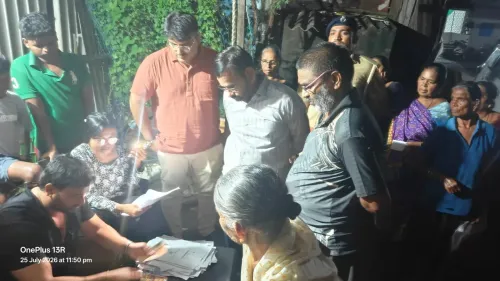
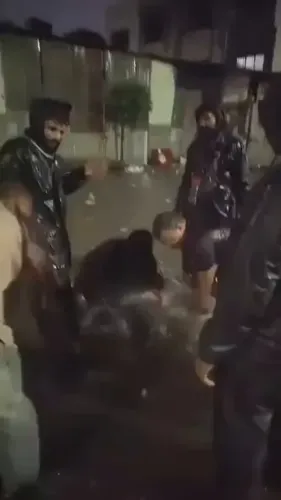
The post was accompanied by a video detailing on-ground safety measures, shared under the hashtag #અગ્રેસર_ગુજરાત ('Gujarat Always Ahead').
Follow-up announcements on relief camps and compensation distribution are expected as the monsoon situation develops.
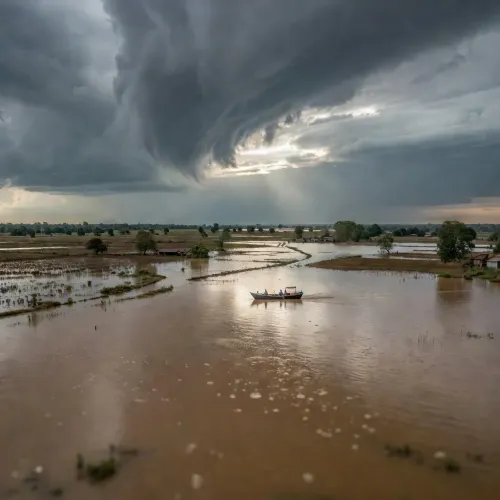
The Chief Minister's Office of Gujarat on Saturday, 25 July 2026 shared an update highlighting the precautionary measures being taken under Chief Minister Bhupendra Patel's leadership to keep the state safe amid heavy rainfall and flood-like conditions.
The post, shared under the hashtag #અગ્રેસર_ગુજરાત ('Gujarat Always Ahead'), stated: 'Always ahead, Gujarat. Let us know the news of Gujarat staying safe by taking all necessary precautionary steps in the face of a calamity like heavy rainfall under the leadership of Chief Minister Shri Bhupendrabhai Patel.'
Context
Gujarat enters a period of heightened administrative vigilance every monsoon season, given its historical vulnerability to heavy rainfall and flooding. The state government's communication apparatus routinely uses official channels to keep citizens informed about emergency preparedness and ongoing response efforts. The 25 July 2026 post is part of this established pattern of real-time public outreach during weather events.
Policy Backdrop
Gujarat's institutional memory of disaster response was fundamentally shaped by the 2001 Bhuj earthquake, after which the state established the Gujarat State Disaster Management Authority (GSDMA). The GSDMA has since developed standard operating procedures covering early warnings, evacuations, and relief distribution — systems that are now activated routinely during monsoon flooding. Successive governments have embedded these protocols into routine administration, making coordinated response a defining feature of Gujarat's governance model.
Chief Minister Bhupendra Patel, who has led the state since September 2021, has continued this institutional approach, with the CMO using digital platforms to broadcast safety advisories and government action directly to citizens during emergencies.
Stakeholders and Impact
The most directly affected stakeholders are residents of Gujarat's flood-prone districts, who depend on timely government communication for evacuation guidance and relief information. Farmers, urban communities in low-lying areas, and infrastructure managers are among those who track official advisories closely during the monsoon. The government's proactive communication posture is intended to reduce panic and enable orderly precautionary action.
The accompanying video shared in the post is expected to detail specific measures being undertaken on the ground, from deployment of National Disaster Response Force (NDRF) teams to the activation of control rooms across affected districts.
What's Next
Observers will watch for follow-up announcements from the state government on relief camp operations, compensation distribution for affected families, and district-level rainfall assessments. Updates from the India Meteorological Department (IMD) on monsoon intensity over Gujarat will also shape the scale and duration of the state's response. The government's continued use of the #અગ્રેસર_ગુજરાત campaign signals an intent to keep public communication active throughout the weather event.
Point of View
Not merely an administrative obligation. This fits a broader pattern across Indian states where monsoon response has become an arena of competitive governance signalling. The real test, as always, will be in post-event assessments of relief delivery and infrastructure resilience.
NationPress
23 Oct 2026
Frequently Asked Questions
What precautions is the Gujarat government taking during heavy rainfall in 2026?
The Gujarat government, under CM Bhupendra Patel, has activated its standard disaster management protocols including early warning systems, evacuation procedures, and relief distribution mechanisms developed through the Gujarat State Disaster Management Authority.
Who is the Chief Minister of Gujarat handling the flood response?
Chief Minister Bhupendra Patel, who has led Gujarat since September 2021, is overseeing the state's precautionary measures and emergency response during the heavy rainfall situation.
What is Gujarat's disaster management history?
Gujarat established the Gujarat State Disaster Management Authority (GSDMA) after the devastating 2001 Bhuj earthquake, creating robust systems for flood warnings, evacuations, and relief that are now routinely activated every monsoon season.
What does #AgressarGujarat or #અગ્રેસર_ગુજરાત mean?
The Gujarati hashtag translates to 'Gujarat Always Ahead' and is used by the state government's official accounts to highlight proactive governance initiatives, including disaster preparedness and emergency response.
Which districts in Gujarat are most at risk during heavy monsoon rainfall?
Several low-lying and coastal districts of Gujarat are historically flood-prone during the monsoon. The state government activates district-level control rooms and NDRF deployments in these areas during heavy rainfall alerts.