CM Bhupendra Patel Leads Gujarat's Collective Fight Against Heavy Rains

Synopsis
The Chief Minister's Office of Gujarat on 26 July 2026 credited CM Bhupendra Patel's leadership for the state's coordinated collective response to severe excessive rainfall, invoking Gujarat's long-standing disaster management reforms and community-level mobilisation to frame the government's handling of the monsoon crisis.
Key Takeaways
The Chief Minister's Office of Gujarat posted on 26 July 2026 highlighting the state's response to excessive rainfall under CM Bhupendra Patel .
The post emphasised 'collective efforts' ( સામૂહિક પ્રયાસ ) as the defining approach to overcoming the natural calamity.
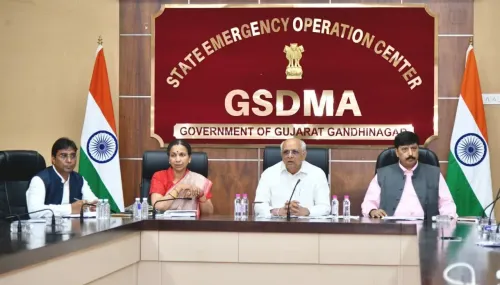
Gujarat's disaster management framework traces its origins to the Bhuj earthquake of 2001 and the subsequent creation of the Gujarat State Disaster Management Authority (GSDMA) .
Key stakeholders include flood-affected residents , farmers facing crop damage, and district and taluka-level administrative officials .
Post-event steps expected include monsoon review meetings, damage assessment, and potential announcements on agricultural relief and flood-mitigation infrastructure .
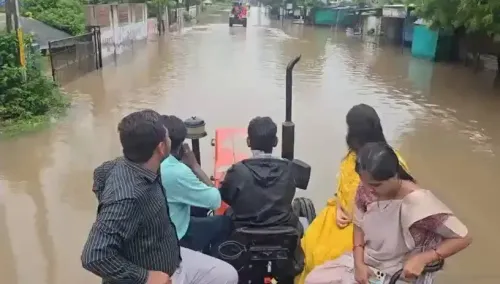
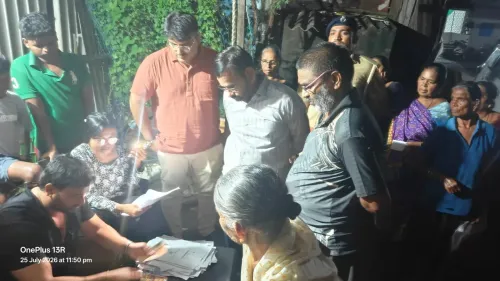
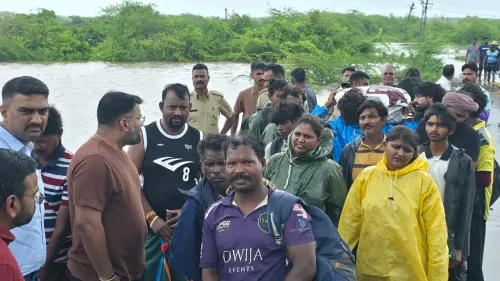
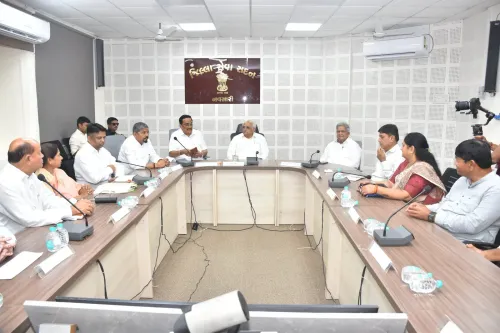
The Chief Minister's Office of Gujarat, on Sunday, 26 July 2026, highlighted the state government's coordinated response to severe monsoon flooding, crediting Chief Minister Bhupendra Patel's leadership for enabling Gujarat to overcome the challenges posed by excessive rainfall through collective community and administrative effort.
The post, shared under the hashtag #અગ્રેસર_ગુજરાત ('Always Ahead, Gujarat'), declared: 'Always ahead, Gujarat! Let us know the news of Gujarat overcoming a natural calamity like excessive rainfall through collective efforts under the leadership of Chief Minister Shri Bhupendrabhai Patel.' The message was accompanied by a video, underscoring the government's intent to document and communicate on-ground relief and response work.
Context
Gujarat's western geography makes it particularly vulnerable to heavy monsoon rainfall, with flooding recurring as a seasonal challenge for coastal and riverine districts. The state's administration has historically mobilised quickly during such events, coordinating across district collectors, the Gujarat State Disaster Management Authority (GSDMA), and local bodies to deploy rescue teams and relief materials. The July 2026 excessive rainfall event prompted the Chief Minister's Office to publicly acknowledge the scale of the challenge and the collective response mounted against it.Policy Backdrop
Gujarat's disaster management framework was fundamentally restructured after the devastating Bhuj earthquake of 2001, which claimed over 20,000 lives and prompted the creation of the GSDMA — one of India's earliest dedicated state disaster management bodies. Since then, the state has periodically updated its Gujarat Disaster Management Plan, incorporating early warning systems, pre-positioned relief stockpiles, and community-level preparedness drills. These reforms, refined further in 2016-17 following heavy rainfall events, form the institutional backbone of the current response. Gujarat's approach is frequently cited as a template within India's broader framework under the National Disaster Management Act, 2005.Stakeholders and Impact
The communities most directly affected by excessive rainfall in Gujarat include flood-hit residents in low-lying areas, farmers facing crop damage from waterlogging, and local administrative machinery — taluka and district officials — responsible for last-mile rescue and relief delivery. The government's public communication, framing the response as a 'collective effort' (સામૂહિક પ્રયાસ), signals an intent to project unity between state agencies, elected representatives, and citizens. For farmers in particular, timely assessment of crop loss and swift disbursement of compensation remain critical concerns in the aftermath of any excessive rainfall event.What's Next
State-level monsoon review meetings are expected to follow such public communications, with the government likely to assess district-wise damage, relief distribution, and infrastructure repair needs. Announcements regarding rehabilitation packages, agricultural relief, or upgrades to flood-mitigation infrastructure — such as drainage systems and early warning networks — will be closely watched by affected communities and opposition legislators alike. Gujarat's ability to sustain and institutionalise its disaster-response model will be a key measure of the state's governance credentials heading into the post-monsoon legislative session.Point of View
Particularly in the run-up to review sessions and budget cycles. Gujarat's post-2001 disaster management reforms give the state a credible institutional foundation for such claims, but the proof will lie in the speed and scale of relief reaching farmers and displaced families. How quickly the government moves from communication to concrete rehabilitation announcements will determine whether this narrative holds public scrutiny.
NationPress
25 Oct 2026
Frequently Asked Questions
What did the Chief Minister's Office of Gujarat post on 26 July 2026?
The Chief Minister's Office of Gujarat posted about the state government's collective efforts to overcome excessive rainfall under the leadership of CM Bhupendra Patel, sharing a video under the hashtag 'Always Ahead, Gujarat'.
How is Gujarat managing the 2026 monsoon flooding?
Gujarat is relying on its established disaster management framework, including the Gujarat State Disaster Management Authority, district-level coordination, and community mobilisation to respond to the excessive rainfall event.
Who is Bhupendra Patel and what is his role in Gujarat's flood response?
Bhupendra Patel is the Chief Minister of Gujarat since September 2021. The CMO's post credits his leadership for steering the state's coordinated, collective response to the natural calamity caused by heavy monsoon rains.
What is the Gujarat State Disaster Management Authority?
The Gujarat State Disaster Management Authority (GSDMA) was established after the 2001 Bhuj earthquake to coordinate the state's response to natural calamities, including floods, and has since been a model for disaster preparedness in India.
What relief measures can flood-affected farmers in Gujarat expect?
While specific measures for the July 2026 event are yet to be announced, Gujarat's standard post-flood process includes crop damage assessment, agricultural relief disbursement, and infrastructure repair — decisions typically taken at state-level monsoon review meetings.