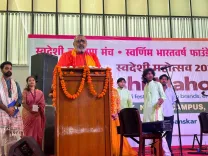
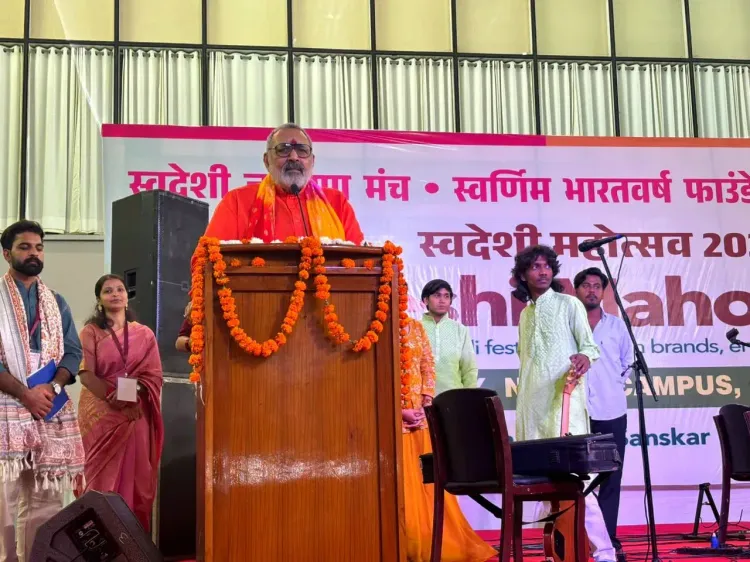
Giriraj Singh opens Swadeshi Mahotsav 2026 at Delhi University
Synopsis
Union Textiles Minister Giriraj Singh inaugurated the three-day Swadeshi Mahotsav 2026 at Delhi University's North Campus Sports Complex, pledging to connect weavers and artisans to new markets and advance PM Modi's Vocal for Local and Atmanirbhar Bharat vision.
Key Takeaways
Swadeshi Mahotsav 2026 is a three-day festival inaugurated at Delhi University Sports Complex, North Campus on 25 October 2026 .
Union Textiles Minister Giriraj Singh attended the inauguration and spoke on promoting handloom, handicraft, and indigenous products.
The event aims to connect weavers, artisans, and entrepreneurs to new domestic and global markets.
The festival advances PM Modi's 'Vocal for Local' campaign and the Atmanirbhar Bharat Abhiyan , both launched in 2020 .
The government has pursued GI-tag recognition, handloom cluster development, and e-commerce linkages for artisans since 2014 .
Possible expansion of the mahotsav format to other states and campuses is being watched as a next step.
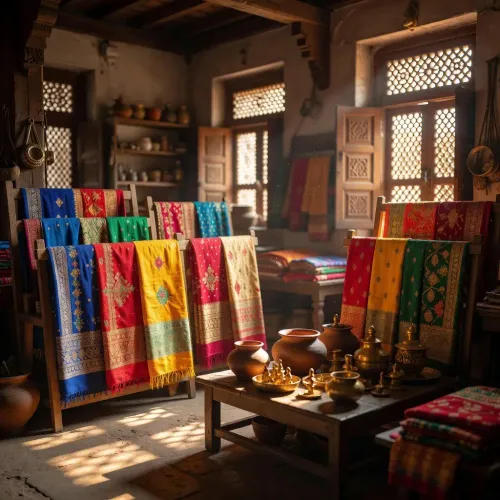
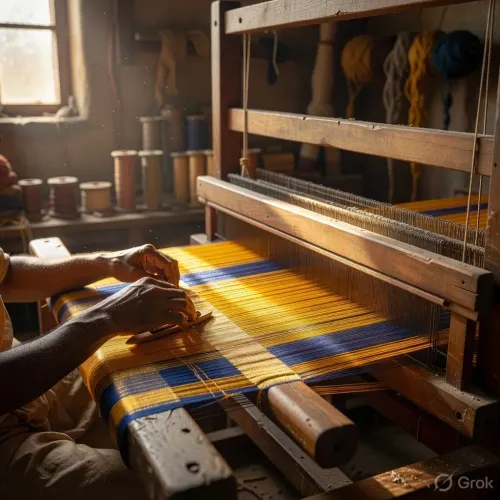
A three-day celebration of Indian looms, crafts, and artisan enterprise opened at Delhi University's Sports Complex, North Campus on Saturday, 25 October 2026 — and Union Textiles Minister Giriraj Singh was there for the first thread. The Swadeshi Mahotsav 2026 brings weavers, handicraft artisans, and entrepreneurs onto a university stage, with a clear mission: connect indigenous makers to new markets and give Indian textile heritage a global address.
What the minister said — and what it signals
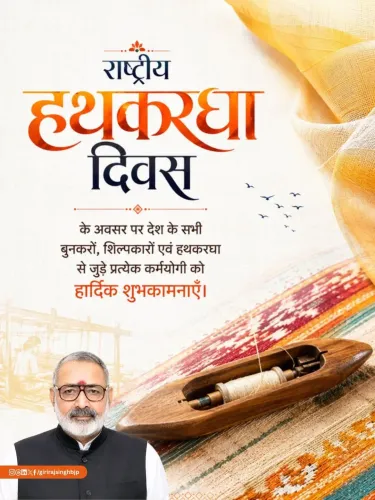
Posting on X in Hindi, Giriraj Singh described the inauguration as a moment to advance Prime Minister Narendra Modi's 'Vocal for Local' call. 'भारत की वस्त्र एवं हस्तकला विरासत को वैश्विक पहचान मिले' — 'India's textile and handicraft heritage must receive global recognition' — was the resolve he articulated. He added that indigenous products should give fresh momentum to Atmanirbhar Bharat, framing the festival not as a cultural showcase alone but as an economic accelerator for artisans.
The discussion at the event centred on two concrete goals: promoting handloom and handicraft products, and plugging weavers and craftspeople into new market channels. A university campus as the venue is deliberate — it places indigenous craft in front of a young, urban audience that global brands already compete hard to reach.
Vocal for Local and the policy thread running since 2020
PM Modi launched the 'Vocal for Local' campaign in 2020, intertwined with the Atmanirbhar Bharat Abhiyan announced in May 2020. Both initiatives carried specific provisions for handloom revival and handicraft sector support. Since 2014, the government has pursued GI-tag recognition for regional crafts, handloom cluster development, and e-commerce linkages for artisans — a multi-year effort that events like Swadeshi Mahotsav are designed to amplify at the grassroots level.
The Textiles Ministry has used similar public and campus-based outreach programmes before, combining cultural promotion with market-access goals. The North Campus venue extends that template to one of India's most prominent university ecosystems, where footfall and visibility are high.
Why weavers and artisans are watching this space
For handloom weavers and handicraft artisans — communities that have historically struggled with middlemen, thin margins, and shrinking domestic demand — a government-backed platform at a high-profile venue represents a direct market opportunity. The three-day format allows for buyer-seller interactions, not just exhibitions. Whether that translates into sustained order pipelines will determine how much the mahotsav moves the needle beyond symbolism.
The next indicator to watch: whether the forthcoming Union Budget carries fresh handloom cluster development funds or revised textile policy targets that give the Swadeshi Mahotsav a financial backbone. If the festival format is replicated across other states and campuses, it could become a recurring national circuit for indigenous craft commerce — not a one-off event, but a structural market bridge.
Point of View
A demographic that global fast-fashion brands have aggressively targeted. The real test of this approach is whether market linkages forged at such festivals generate durable revenue for weavers, or remain ceremonial. Budget allocations for handloom cluster development in the next fiscal cycle will reveal how seriously the government backs the rhetoric with resources.
NationPress
25 Oct 2026
Frequently Asked Questions
What is Swadeshi Mahotsav 2026?
Swadeshi Mahotsav 2026 is a three-day festival held at Delhi University's North Campus Sports Complex focused on promoting indigenous products, handloom, and handicrafts, and connecting weavers and artisans to new markets.
Who inaugurated Swadeshi Mahotsav 2026?
Union Textiles Minister Giriraj Singh inaugurated the Swadeshi Mahotsav 2026 at Delhi University North Campus on 25 October 2026.
What is the Vocal for Local campaign?
Vocal for Local is a campaign launched by Prime Minister Narendra Modi in 2020 to encourage Indians to buy and promote domestically made goods, including handloom textiles and handicrafts.
How does Swadeshi Mahotsav help weavers and artisans?
The festival provides weavers, handicraft artisans, and entrepreneurs a platform to showcase their products and connect directly with buyers, helping them access new domestic and global markets without depending solely on middlemen.
What is Atmanirbhar Bharat and its link to textiles?
Atmanirbhar Bharat, announced in May 2020, is India's self-reliance initiative that includes specific support for handloom revival and handicraft sector development, making indigenous textile promotion a core component of the policy.