Giriraj Singh: Weavers Carry India's Heritage Forward
Synopsis
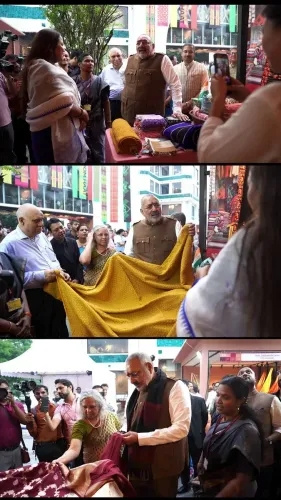
Union Textiles Minister Giriraj Singh marked National Handloom Day week by honouring India's weavers and artisans, pledging that the Modi government remains committed to giving their craft respect, opportunity, and a global stage.
Key Takeaways
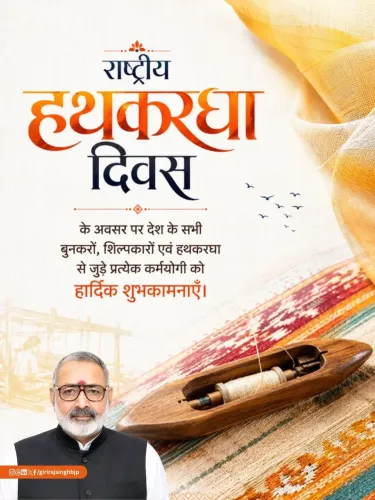
Giriraj Singh posted on 8 August 2026 saluting India's handloom weavers and artisans under hashtags #IndianHandloom and #WeaversOfIndia .
The minister framed weavers' craft as a generational bridge and a foundation of India's national identity, not merely a cultural relic.
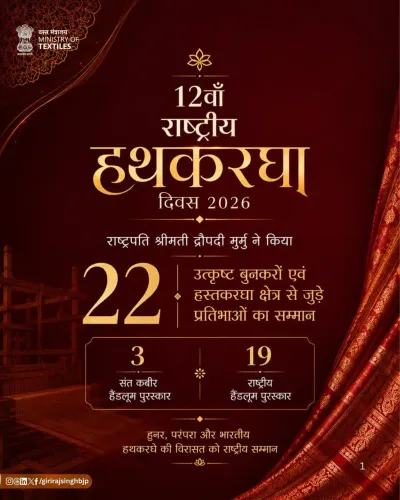
National Handloom Day is observed on 7 August every year, a date instituted by the Modi government in 2015 .
The Ministry of Textiles has historically combined cultural preservation with rural livelihood support through cluster programmes and GI protections.
Singh's key line — 'when skill gets a stage, heritage forges India's new identity' — signals an ambition beyond preservation toward global projection of Indian craft.
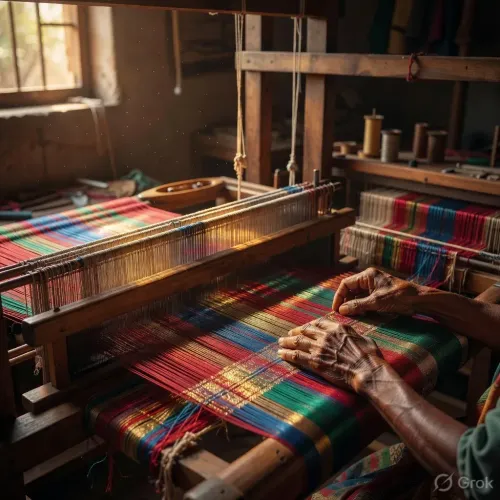
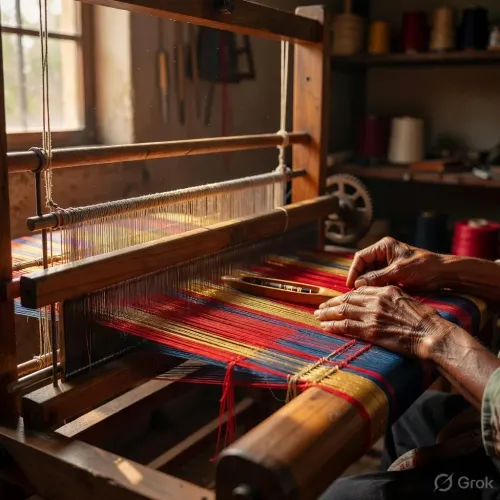
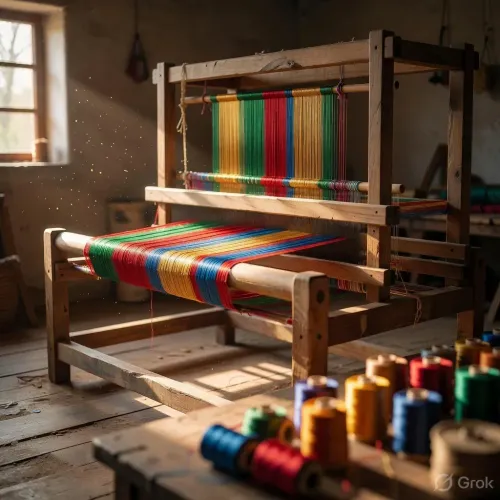
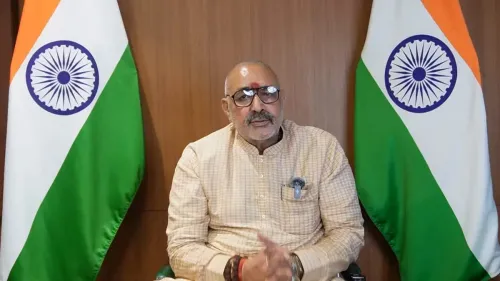
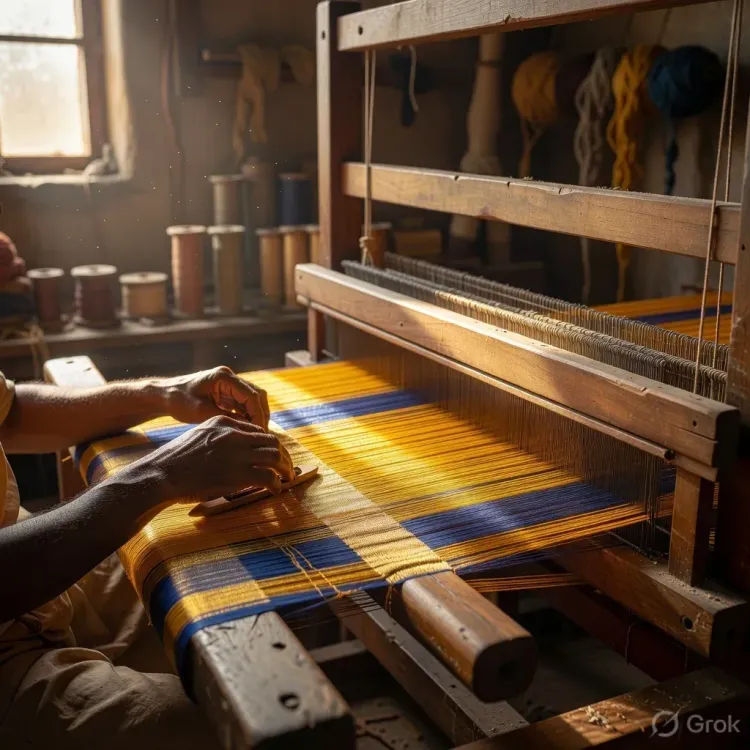
Threads do not merely make cloth — they carry civilisations forward. On Saturday, 8 August 2026, Union Textiles Minister Giriraj Singh invoked that idea in a post saluting India's handloom weavers and artisans, framing their craft as a living bridge between generations and a cornerstone of the nation's emerging identity.
Writing in Hindi, the minister said: 'धागों से केवल कपड़े नहीं, सपने भी बुने जाते हैं' — 'Threads weave not just cloth, but dreams.' He described India's weavers and artisans as the custodians of a heritage passed down generation after generation, and reaffirmed the government's commitment to giving that heritage 'respect, opportunity, and new heights' under Prime Minister Narendra Modi.
National Handloom Day and a Decade of Official Recognition
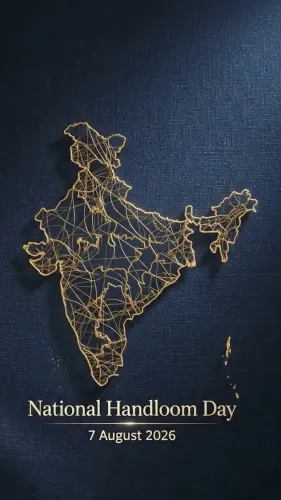
The post lands in the shadow of National Handloom Day, observed every 7 August — a date the Modi government instituted in 2015 to honour the sector's contribution to culture and rural livelihoods. The choice of that annual moment is deliberate: it transforms a ministerial social-media post into a policy signal, reminding the sector that official attention does not expire after the calendar event.
The Ministry of Textiles has long framed handloom promotion as a dual mission — cultural preservation and economic uplift. Cluster development programmes, Geographical Indication protections for iconic weaves, and market-access platforms have been the recurring instruments. Singh's message, tagged #IndianHandloom and #WeaversOfIndia, fits squarely in that established arc.
When Skill Gets a Stage
The minister's sharpest line was also his most forward-looking: 'जब हुनर को मंच मिलता है, तो विरासत केवल सहेजी नहीं जाती, वह भारत की नई पहचान गढ़ती है' — 'When skill gets a stage, heritage is not merely preserved; it forges India's new identity.' That framing matters. It shifts the conversation from nostalgia to ambition — from protecting a dying craft to projecting a living one onto the world stage.
For the country's millions of handloom weavers, that distinction is everything. Preservation keeps a craft in a museum. Recognition — backed by market access, branding, and sustained government attention — puts it in a global retail window.
The question the sector will be watching is whether the sentiment translates into the next budget cycle's cluster allocations and export incentive lines. Words are the opening bid; the numbers that follow are the real weave.
Point of View
A day after National Handloom Day, is not incidental; it extends the political visibility of an annual milestone. What distinguishes this message is its pivot from preservation to aspiration: framing weavers not as a vulnerable community needing protection but as architects of India's future identity. The real test, as always, will be whether upcoming budget allocations and export-promotion schemes match the rhetorical elevation.
NationPress
22 Sept 2026
Frequently Asked Questions
What did Giriraj Singh say about handloom weavers?
Union Textiles Minister Giriraj Singh said that threads weave not just cloth but dreams, and that India's weavers and artisans carry the nation's heritage forward generation after generation. He pledged that the government under PM Modi is committed to giving this heritage respect, opportunity, and new heights.
When is National Handloom Day in India?
National Handloom Day is observed on 7 August every year. It was first instituted by the Modi government in 2015 to honour the contribution of handloom weavers to India's culture and rural economy.
What is the Ministry of Textiles doing for handloom weavers?
The Ministry of Textiles has supported handloom weavers through cluster development programmes, Geographical Indication protections for iconic weaves, and market-access platforms. Minister Giriraj Singh has reaffirmed the government's commitment to expanding these opportunities.
Who is Giriraj Singh?
Giriraj Singh is the Union Minister of Textiles in the Government of India, a senior BJP leader, and a Lok Sabha MP representing Begusarai, Bihar .
What is India's handloom sector's significance?
India's handloom sector is one of the largest in the world, supporting millions of weavers and artisans in rural areas. It is considered both a cultural heritage and a source of rural livelihoods, with successive governments promoting it through policy schemes and GI-tag protections for distinctive regional weaves.