CM Bhupendra Patel Hails Gujarat Flood Relief Volunteers

Synopsis
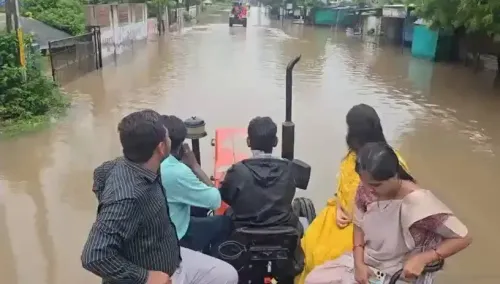
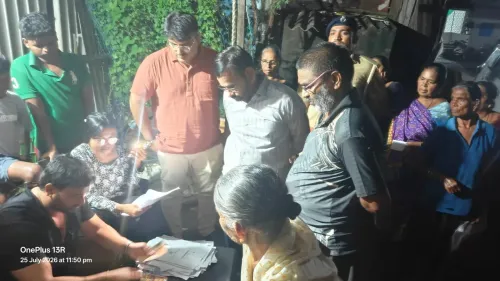
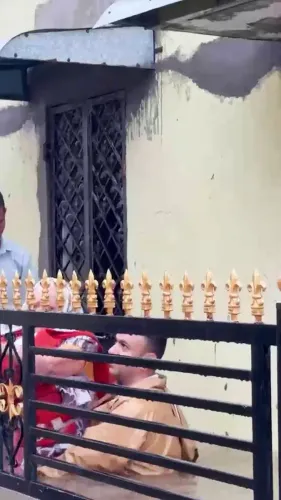
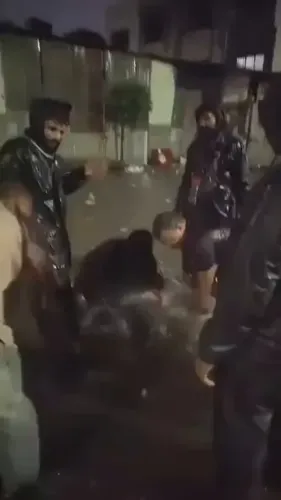
Gujarat Chief Minister Bhupendra Patel on 25 July 2026 commended volunteers, service organisations, and community leaders for joining state machinery in flood rescue and relief operations across multiple Gujarat districts hit by heavy monsoon rains, calling their spirit of service exemplary.
Key Takeaways
Gujarat CM Bhupendra Patel publicly praised volunteers and civil society groups aiding flood relief on 25 July 2026 .
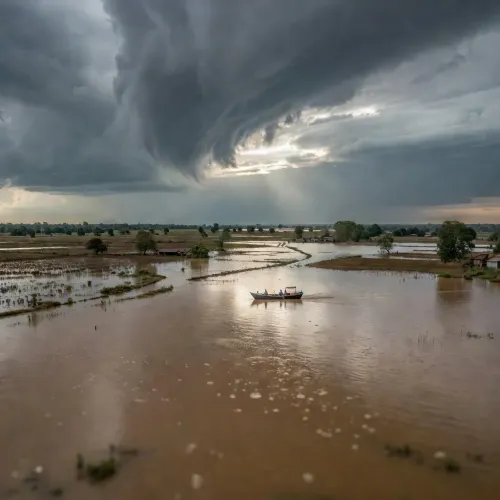
Heavy monsoon rainfall has created an emergency situation across multiple districts of Gujarat .
Volunteers, service-oriented organisations, and community leaders are working alongside government machinery in rescue and relief operations.
CM Patel described the collective spirit as 'exemplary and praiseworthy' in a Gujarati-language post on X.
Gujarat's integrated disaster response model traces back to the Gujarat State Disaster Management Authority , established after the 2001 Bhuj earthquake .
State government relief updates, compensation disbursals, and further coordination steps are expected as the monsoon season continues.
Gujarat Chief Minister Bhupendra Patel on Saturday, 25 July 2026, publicly commended volunteers, civil society organisations, and community leaders across flood-affected districts of Gujarat for joining hands with government machinery in rescue and relief operations triggered by heavy monsoon rains.
Posting in Gujarati on X, CM Patel wrote: 'ગુજરાતના વિવિધ જિલ્લાઓમાં ભારે વરસાદના લીધે ઉભી થયેલી સ્થિતિ' — 'the situation arising due to heavy rainfall in various districts of Gujarat' — had seen volunteers and service-minded organisations work shoulder to shoulder with the state administration. He called their spirit of service 'exemplary and praiseworthy.'
Context
Heavy monsoon rainfall has affected multiple districts across Gujarat, prompting coordinated rescue and relief efforts. The Chief Minister's acknowledgement signals that the situation is serious enough to require mobilisation beyond routine government channels, drawing in non-governmental volunteers and community leaders at scale.
Gujarat's western coastal geography and river systems make it one of India's most flood-prone states during the southwest monsoon season, which typically peaks between July and August.
Policy Backdrop
Gujarat's integrated approach to disaster response has institutional roots going back to the 2001 Bhuj earthquake, after which the state established the Gujarat State Disaster Management Authority (GSDMA) to coordinate official and community-led responses to natural calamities.
Under the national Disaster Management Act framework, state administrations are encouraged to partner with local volunteers and non-governmental organisations for rapid first-response. Gujarat has consistently applied this model in prior monsoon flood events, making civil society participation a structured, rather than ad hoc, element of disaster relief.
Stakeholders and Impact
Flood-affected residents across the named districts stand as the primary beneficiaries of the combined government-volunteer effort. Volunteer organisations and sevaabhaavi sansthao — service-oriented bodies — are playing a frontline role in reaching communities where official machinery may face logistical constraints.
Community leaders and samaj na agranio — social leaders — have also been specifically acknowledged by the Chief Minister, reflecting the importance of local networks in mobilising rapid, ground-level relief in rural and semi-urban areas.
What's Next
The state government is expected to issue updates on relief measures, compensation disbursals to affected families, and the status of district-level coordination as the monsoon season progresses. The degree to which volunteer networks are formally integrated into subsequent relief phases will be a key indicator of the administration's disaster-response capacity this season.
With the monsoon still active, authorities and civil society groups are likely to remain on heightened alert across vulnerable districts of Gujarat through the coming weeks.
Point of View
And invoking that tradition reinforces the BJP's governance narrative. The shout-out to 'samaj na agranio' — community leaders — also suggests the administration is leaning on local social networks, which often reach flood-hit populations faster than formal channels. How swiftly compensation and long-term rehabilitation follow this symbolic gesture will ultimately determine the political and administrative verdict on this monsoon season's response.
NationPress
24 Oct 2026
Frequently Asked Questions
Why did CM Bhupendra Patel post about Gujarat floods on 25 July 2026?
CM Bhupendra Patel posted to publicly acknowledge and commend volunteers, civil society organisations, and community leaders who joined government machinery in rescue and relief operations following heavy monsoon rainfall across multiple Gujarat districts.
Which districts in Gujarat were affected by heavy rainfall in July 2026?
CM Patel's post referred to 'various districts' of Gujarat without naming specific ones. The research background confirms the situation spans multiple districts, but specific district names were not stated in the post.
What is the Gujarat State Disaster Management Authority?
The Gujarat State Disaster Management Authority (GSDMA) was established after the devastating 2001 Bhuj earthquake to coordinate government and community responses to natural disasters in Gujarat.
How does Gujarat involve volunteers in flood relief?
Under the national Disaster Management Act framework, Gujarat integrates volunteers and NGOs with official disaster machinery as a structured part of its response protocol — a model refined since the 2001 Bhuj earthquake.
What will happen next after CM Patel's flood relief statement?
The state government is expected to announce relief measures, compensation disbursals for affected families, and updates on district-level coordination as the monsoon season continues through July and August 2026.