CM Bhupendra Patel lauds Surat flood response teams
Synopsis
Gujarat Chief Minister Bhupendra Patel on 9 July 2026 commended the joint flood-response effort in Surat, praising the Surat Municipal Corporation, NDRF, SDRF, police, district administration, fire brigade, and citizen volunteers for their coordinated action against the monsoon crisis.
Key Takeaways
CM Bhupendra Patel publicly praised Surat's flood-response operations on 9 July 2026 .
The response involves six agencies : Surat Municipal Corporation, police, district administration, NDRF , SDRF , and the fire brigade.
Community volunteers and service-minded citizens of Surat are cooperating alongside government machinery, which the CM called 'praiseworthy'.
Surat lies along the Tapi river and has a documented history of severe monsoon flooding.
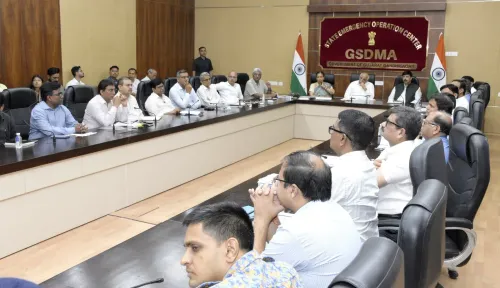
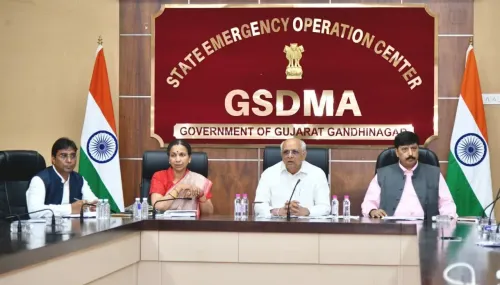
The GSDMA , established after the 2001 Bhuj earthquake , underpins Gujarat's multi-agency disaster coordination framework.
Post-flood relief packages and infrastructure upgrades by the Surat Municipal Corporation are expected to follow.
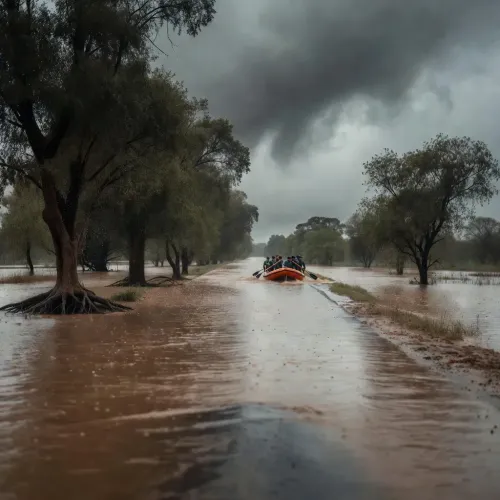
Gujarat Chief Minister Bhupendra Patel on Thursday, 9 July 2026 praised the coordinated flood-response effort in Surat, commending civic agencies, security forces, and citizen volunteers for working shoulder-to-shoulder to tackle the monsoon crisis gripping the city.
Context
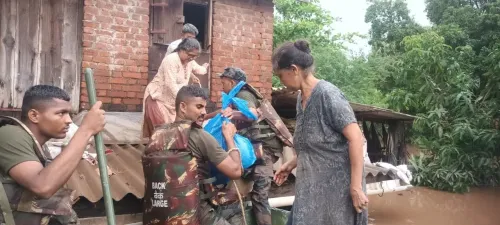
Writing in Gujarati, CM Patel noted that the Surat Municipal Corporation, the police machinery, the district administration, the National Disaster Response Force (NDRF), the State Disaster Response Force (SDRF), and fire-brigade teams had been operating in full coordination to counter the flood emergency. His post — 'ખભેખભા મિલાવીને કામગીરી કરી છે' (working shoulder to shoulder) — underscored the integrated command structure the state has championed during monsoon crises.
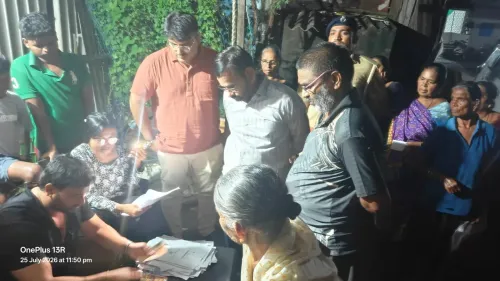
He also highlighted that service-minded citizens and volunteers of Surat city were extending their cooperation alongside the government machinery, calling it 'praiseworthy' (સરાહનીય છે).
Policy Backdrop
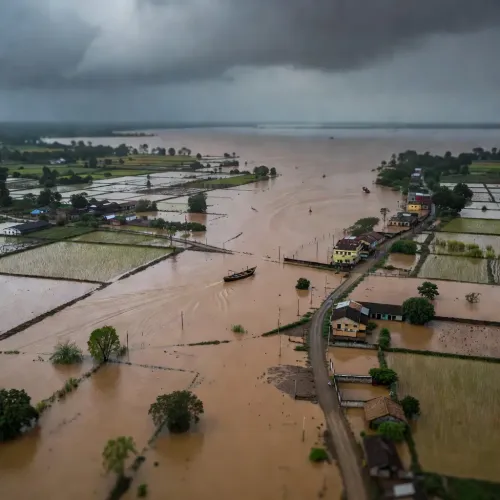
Surat, Gujarat's second-largest city and a major industrial and textile hub, sits along the Tapi river and has historically been vulnerable to severe flooding during the southwest monsoon. The city witnessed devastating floods in 2006 that prompted significant investment in drainage infrastructure and early-warning systems.
The Gujarat State Disaster Management Authority (GSDMA), established after the 2001 Bhuj earthquake, provides the institutional backbone for multi-agency disaster coordination in the state. The National Disaster Management Act, 2005 further formalised the roles of NDRF and state-level forces, creating the legal framework under which joint operations like the one in Surat are conducted. Since 2015, Gujarat's annual monsoon preparedness reviews have specifically emphasised joint drills between municipal bodies, police, and SDRF teams.
Stakeholders and Impact
For Surat's residents — estimated in the millions — rapid multi-agency deployment is a direct lifeline during urban flooding, which can inundate low-lying areas, disrupt transport, and damage property within hours of heavy rainfall. The involvement of community volunteers and civil-society groups alongside government teams has been recognised in NDMA guidelines as a critical force-multiplier in urban disaster settings.
Emergency workers from the Surat Municipal Corporation, fire brigade, NDRF, and SDRF bear the frontline burden of rescue, evacuation, and relief distribution. CM Patel's public acknowledgement reinforces the morale of these teams and signals state-level attention to the unfolding situation.
What's Next
Authorities and residents will be watching for announcements on post-flood relief packages, compensation for affected households, and longer-term infrastructure measures such as embankment reinforcement and drainage upgrades by the Surat Municipal Corporation and the state government. The GSDMA typically conducts post-event audits that feed into the following year's monsoon preparedness plan. How swiftly normalcy returns to affected neighbourhoods will be the most immediate measure of the response's effectiveness.
Point of View
And such statements reinforce that brand ahead of any formal relief announcements. The inclusion of citizen volunteers in the acknowledgement is also politically significant: it frames disaster management as a whole-of-society effort, aligning with the national narrative of 'Jan Bhagidari' (people's participation). Observers will note whether concrete relief measures follow swiftly enough to match the tone of the Chief Minister's praise.
NationPress
8 Oct 2026
Frequently Asked Questions
Why is Surat experiencing floods in July 2026?
Surat is situated along the Tapi river in south Gujarat and is historically prone to flooding during the southwest monsoon season, typically June to September. Heavy monsoon rainfall in July 2026 triggered the current flood situation that prompted a multi-agency response.
What agencies are involved in Surat flood relief?
According to CM Bhupendra Patel's post, the Surat Municipal Corporation, the city police, the district administration, the National Disaster Response Force (NDRF), the State Disaster Response Force (SDRF), and the fire brigade are all actively engaged in flood-response operations.
What is the SDRF and how does it differ from NDRF?
The State Disaster Response Force (SDRF) is Gujarat's own disaster response unit trained for localised emergencies, while the National Disaster Response Force (NDRF) is a central force under the Ministry of Home Affairs deployed for major calamities across India. Both often operate jointly during large-scale floods.
What is the Gujarat State Disaster Management Authority (GSDMA)?
The GSDMA was established in 2001 following the Bhuj earthquake to coordinate multi-agency disaster response across Gujarat. It provides the institutional framework under which bodies like the SDRF, municipal corporations, and district administrations work together during emergencies such as the Surat floods.
What relief measures are expected after the Surat floods?
Post-flood measures typically include state government relief packages for affected households, compensation assessments by the district administration, and infrastructure reviews such as drainage upgrades and embankment repairs by the Surat Municipal Corporation, in line with GSDMA post-event audit processes.