Gujarat deploys 36 NDRF, SDRF teams for monsoon, eyes ‘zero casualty’ goal
Synopsis
Gujarat is going into the 2025 monsoon with 36 disaster response teams pre-positioned and a ‘zero casualty’ pledge from the top. With Sardar Sarovar and Ukai under close watch, and control rooms ordered live before the rains, the state is betting that early deployment plus inter-agency coordination can break the cycle of monsoon fatalities.
Key Takeaways
Gujarat has positioned 14 NDRF and 22 SDRF teams ahead of the 2025 monsoon .
Das chaired the pre-monsoon review in Gandhinagar on 3 June .
CM Bhupendra Patel has set a stated goal of ‘zero casualty’ during heavy rain and floods.
Control rooms at state, district, and taluka levels to be operational before monsoon onset.
Water levels at Sardar Sarovar and Ukai dams to be closely monitored.
Response teams equipped with boats, life jackets, and advanced communication systems.
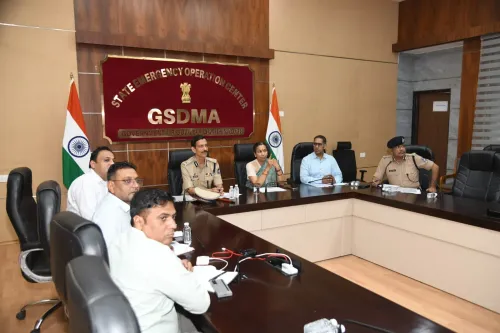
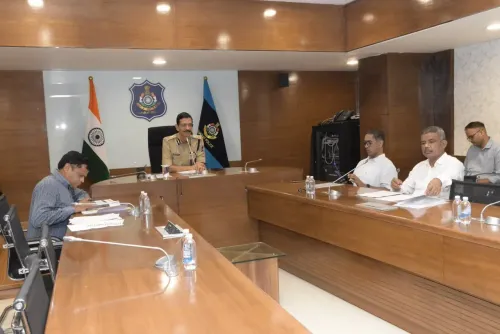
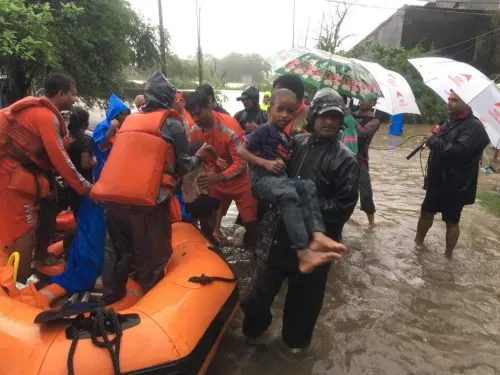
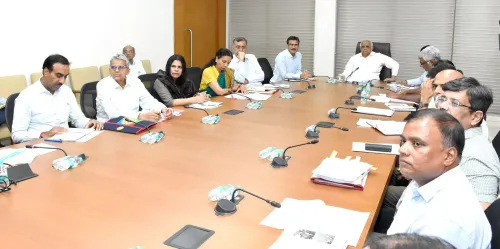
Gujarat has positioned 14 National Disaster Response Force (NDRF) teams and 22 State Disaster Response Force (SDRF) teams across the state ahead of the 2025 monsoon, with the administration setting a stated target of ‘zero casualty’ during heavy rain and flood events. The preparedness blueprint was finalised at a high-level review chaired by Chief Secretary M. K. Das in Gandhinagar on Wednesday, 3 June.
Key Developments
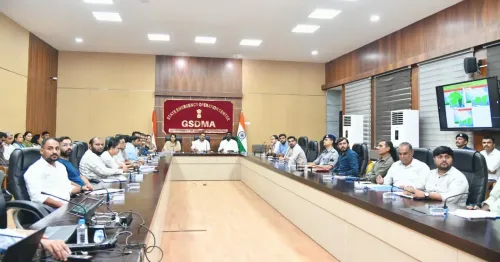
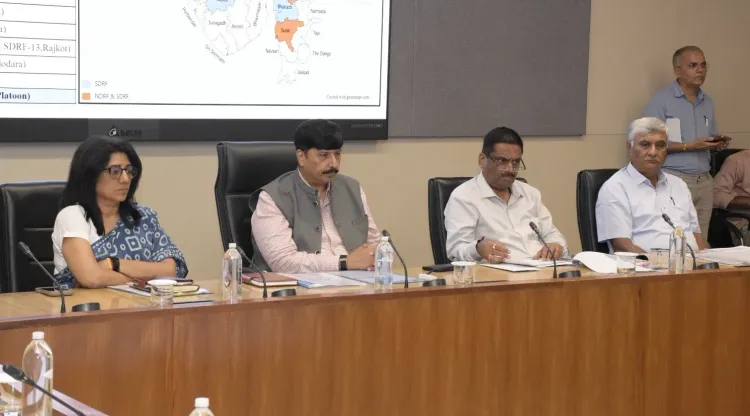
The pre-monsoon meeting brought together senior state officials, the Director General of Police, the Principal Chief Conservator of Forests, and heads of multiple departments, alongside representatives of central agencies and security forces. Das said the state administration was fully prepared for the season and directed every department to operationalise its disaster management plan without delay.
He ordered the immediate activation of control rooms at the state, district, and taluka levels before the rains set in, and instructed officials to maintain adequate stocks of essential commodities, medicines, and relief supplies to shield citizens from disruption during heavy rainfall or flooding.
What the Chief Secretary Said
Citing directions from Chief Minister Bhupendra Patel, Das told the meeting: ‘The administration should remain fully prepared to prevent any loss of life during the rainy season.’ He pressed for the completion of pending road and drainage works in both urban and rural areas at the earliest, and asked the Roads and Buildings Department to undertake repairs on roads and bridges that carry heavy traffic.
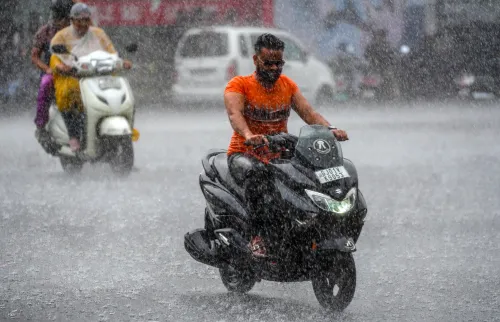
The Forest Department was directed to begin tree-trimming work in coordination with local authorities to reduce the risk of trees collapsing during the first spells of rain and strong winds — a recurring cause of traffic congestion and casualties in earlier monsoons.
Response Teams and Equipment
Revenue Department's Additional Chief Secretary Jayanti Ravi told the meeting that the 14 NDRF and 22 SDRF teams would be deployed across Gujarat for rescue and emergency response operations during periods of heavy rainfall. The teams will be equipped with boats, life jackets, and advanced communication systems.
‘Under the State Monsoon Disaster Plan, officers from all departments would be required to work in close coordination with district administrations to ensure a swift response to emergencies,’ Ravi added. Das also instructed officials to closely monitor water inflows and storage at major reservoirs, including the Sardar Sarovar and Ukai dams.
Inter-Agency Coordination
The review covered disaster management plans presented by key departments coordinated with the State Emergency Operation Centre (SEOC), including meteorological authorities, central security forces, urban development, health, roads and buildings, and supply departments. Officials from the armed forces, Border Security Force, Coast Guard, Central Reserve Police Force, Central Water Commission, Rapid Action Force, Railways, BSNL, Doordarshan, ISRO, and All India Radio attended the meeting.
What Happens Next
Control rooms are expected to be operational before the southwest monsoon makes landfall over Gujarat, with district administrations tasked to relay real-time updates to the SEOC. Reservoir-level monitoring at Sardar Sarovar and Ukai will be central to flood-risk calls in the weeks ahead.
Point of View
Tree falls, and reservoir-linked releases. Pre-positioning 36 teams is meaningful, but the harder problem is municipal — stormwater drains, low-lying settlements, and last-mile evacuation — areas where Gujarat's record has been uneven. The real test will be how quickly SEOC alerts translate into ground action in cities like Surat, Vadodara, and Ahmedabad once the first heavy spells arrive. Equipment-readiness is necessary; it is rarely sufficient.
NationPress
20 Oct 2026
Frequently Asked Questions
How many disaster response teams has Gujarat deployed for the 2025 monsoon?
Gujarat has positioned 36 teams in total — 14 National Disaster Response Force (NDRF) teams and 22 State Disaster Response Force (SDRF) teams — across the state for rescue and emergency response during heavy rainfall. The teams are equipped with boats, life jackets, and advanced communication systems.
What is Gujarat's ‘zero casualty’ monsoon goal?
It is a stated administrative target, set on the directions of Chief Minister Bhupendra Patel, to prevent any loss of life during the rainy season. The plan combines pre-positioned response teams, activated control rooms, and inter-departmental coordination through the State Emergency Operation Centre.
Which reservoirs are under close monitoring?
Chief Secretary M. K. Das has directed officials to closely monitor water inflows and storage conditions at major reservoirs, including the Sardar Sarovar and Ukai dams. Reservoir-level trends will guide flood-risk decisions through the season.
Which agencies are coordinating with the Gujarat government?
Coordination spans the armed forces, Border Security Force, Coast Guard, Central Reserve Police Force, Central Water Commission, Rapid Action Force, Railways, BSNL, Doordarshan, ISRO, and All India Radio, alongside state departments handling urban development, health, roads and buildings, and supplies.
When will the control rooms be operational?
Control rooms at the state, district, and taluka levels have been ordered to be operationalised before the onset of the monsoon. They will feed real-time inputs to the State Emergency Operation Centre for coordinated response.