Amit Shah meets kin of slain anti-drug activist Vikramjeet Singh in Gurdaspur
Synopsis
Home Minister Amit Shah flew to Punjab to meet the families of activists killed for opposing drug trafficking — a visit that within hours forced the AAP government to hand over one murder case to the CBI. The political optics are pointed: the Centre is visibly stepping in where the state is seen to have failed, and Punjab's drug-related violence is now squarely a national issue.
Key Takeaways
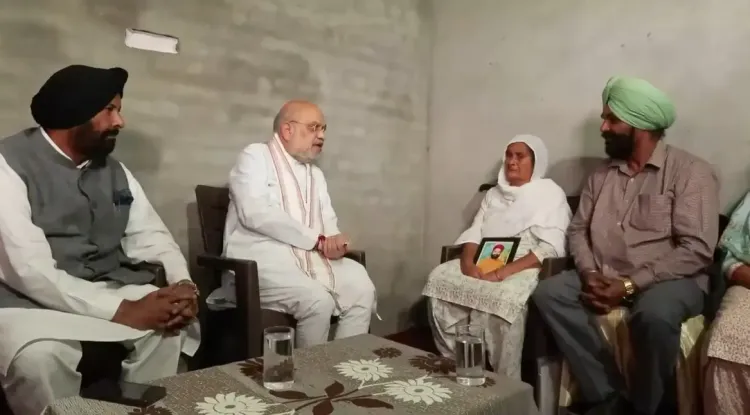
Home Minister Amit Shah met the family of slain anti-drug activist Vikramjeet Singh in Gurdaspur, Punjab on 20 October 2026 .
Vikramjeet Singh was allegedly shot dead on 15 October in Mari Pannwan village , Gurdaspur, reportedly for opposing local drug sales.
The family submitted a list of demands including a fair probe, a government job, and financial aid.
The AAP government announced transfer of the Parminder Singh Jhota murder case to the CBI ahead of Shah's visit.
Former Punjab BJP President Sunil Jakhar accused the AAP government of acting only under public pressure and called for a broader CBI probe.
Shah is also scheduled to meet families in Mansa and Sangrur , and attend Dussehra celebrations in Ludhiana .
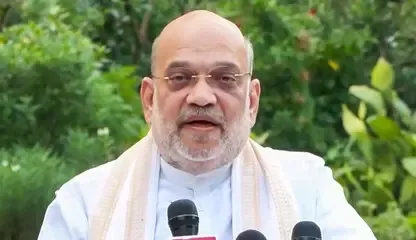
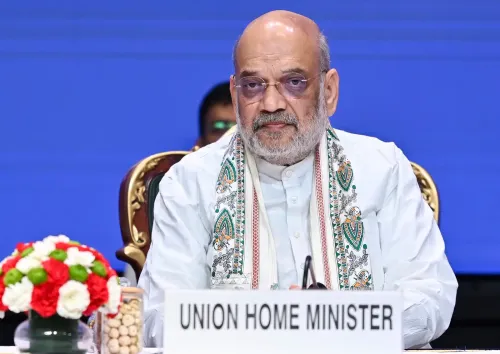
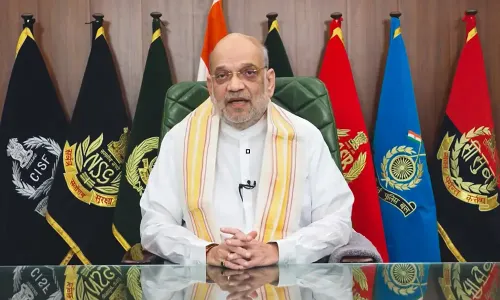
Union Home Minister Amit Shah on Tuesday, 20 October visited Gurdaspur district in Punjab — which shares a border with Pakistan — to meet the family of Vikramjeet Singh, an anti-drug activist who was allegedly shot dead after opposing drug trafficking in the area. The visit is part of a day-long tour of the state during which Shah is scheduled to meet the families of three individuals whose deaths have cast a harsh spotlight on Punjab's deepening drug menace.
What the Family Demanded
Shah spent approximately 15 minutes with Vikramjeet Singh's family at their residence. According to reports, the family handed the Home Minister a written list of demands, including a fair and independent probe into the killing, a government job for a family member, and financial assistance. The Union Home Ministry has separately sought detailed reports from the Punjab government on the recent drug-related deaths.
The Killing of Vikramjeet Singh
Vikramjeet Singh was allegedly shot dead on 15 October in the Mari Pannwan village area under Hargobindpur Sahib in Gurdaspur district. The killing reportedly occurred in direct retaliation for his opposition to drug sales in the locality. The incident has fuelled outrage across the state and drawn national political attention.
Shah's Broader Punjab Tour
The Gurdaspur visit is one of three family meetings on Shah's itinerary. He is also scheduled to meet the family of anti-drug activist Parvinder Singh Jhota in Mansa and the family of Gulzar Singh in Sangrur. Later in the day, Shah is set to attend Dussehra celebrations at Daresi Ground in Ludhiana, where the anti-drug message is expected to feature prominently in the proceedings.
AAP Government Transfers Jhota Case to CBI
Ahead of Shah's visit, the Aam Aadmi Party (AAP) government announced it would hand over the Parminder Singh Jhota murder case to the Central Bureau of Investigation (CBI), responding to the family's demand. The Chief Minister wrote on X: 'We stand firmly with the father and family of Parminder Singh Jhota, who has been fighting against drugs. Respecting the family's demand, we are handing over the case to the CBI.'
Notably, the announcement came just hours before Shah's scheduled arrival — a timing that critics have read as political damage control rather than proactive governance.
BJP Hits Back at AAP
Former Punjab Bharatiya Janata Party (BJP) President Sunil Jakhar responded sharply to the state government's CBI decision, writing on X that the government had taken far too long to act. 'The Punjab government has finally been forced to bow before public outrage and hand over the investigation of Parvinder Singh Jhota's murder to the CBI. But this is not just one case. Under the patronage of the AAP government in Punjab, there have been numerous such incidents where drug traffickers have murdered people for raising their voices against drugs or forced them to commit suicide,' Jakhar wrote.
He further appealed to Shah to ensure the CBI probe covers a broader scope and is completed within a stipulated timeframe, adding: '...so that the victims can get complete justice.' The exchange underscores how Punjab's drug-related violence has become a flashpoint in the ongoing political battle between the AAP state government and the BJP-led Centre.
Wider Context: Punjab's Drug Crisis
Punjab has long been at the centre of India's narcotics crisis, with its proximity to the Pakistan border making it a key corridor for drug smuggling. The murders of anti-drug activists — individuals who publicly challenge local trafficking networks — have drawn renewed attention to a pattern of violence against those who resist the trade. This is not the first time the Centre has stepped in amid state inaction; similar interventions have followed high-profile cases in previous years. The Centre's engagement with affected families, analysts note, also carries clear political optics ahead of local elections.
Whether Shah's visit translates into sustained federal action or remains symbolic will depend on the scope and pace of the investigations that follow.
Point of View
Not state conscience, is driving accountability. Punjab's anti-drug activist killings follow a grim pattern: local voices are silenced, investigations stall, and political action comes only when national attention forces it. The Centre's engagement is welcome, but without a concrete federal framework to protect whistleblowers against drug networks, these visits risk being another cycle of outrage with no structural follow-through.
NationPress
20 Oct 2026
Frequently Asked Questions
Why did Amit Shah visit Gurdaspur, Punjab?
Home Minister Amit Shah visited Gurdaspur on 20 October 2026 to meet the family of Vikramjeet Singh, an anti-drug activist who was allegedly shot dead on 15 October for opposing drug trafficking in the Mari Pannwan village area. The visit is part of a broader tour to meet families of three individuals killed in connection with anti-drug activism in Punjab.
Who was Vikramjeet Singh and how did he die?
Vikramjeet Singh was an anti-drug activist from Gurdaspur district in Punjab who was allegedly shot dead on 15 October in the Mari Pannwan village area under Hargobindpur Sahib. His killing reportedly occurred in retaliation for his opposition to drug sales in the locality.
What did the family of Vikramjeet Singh demand from Amit Shah?
The family handed Shah a written list of demands that included a fair and independent probe into the killing, a government job for a family member, and financial assistance from the government.
Why has the Parminder Singh Jhota murder case been handed to the CBI?
The AAP government in Punjab announced the transfer of the Parminder Singh Jhota murder case to the Central Bureau of Investigation (CBI) in response to the family's demand, with the announcement made ahead of Home Minister Shah's visit to the state. Former BJP President Sunil Jakhar criticised the government for acting only after sustained public pressure.
Which other families is Amit Shah scheduled to meet during his Punjab visit?
Besides the Vikramjeet Singh family in Gurdaspur, Shah is scheduled to meet the family of anti-drug activist Parvinder Singh Jhota in Mansa and the family of Gulzar Singh in Sangrur. He is also set to attend Dussehra celebrations at Daresi Ground in Ludhiana.