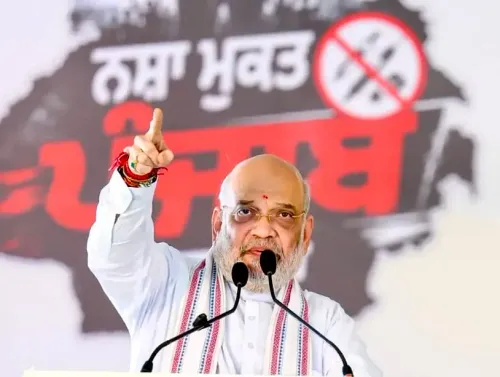
Amit Shah to meet Punjab drug-victims' families on Oct 20
Synopsis
Union Home Minister Amit Shah announced he will meet bereaved families of anti-drug activists in Mansa, Sangrur, and Gurdaspur on 20 October 2026, accusing the AAP-led Punjab government of sheltering chitta traders and pledging central action to dismantle drug networks across India.
Key Takeaways
Union Home Minister Amit Shah will visit Mansa, Sangrur, and Gurdaspur on 20 October 2026 to meet families of individuals killed for opposing the drug trade.
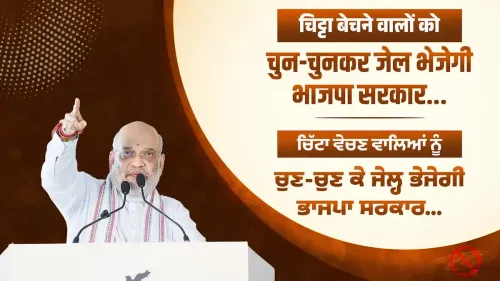
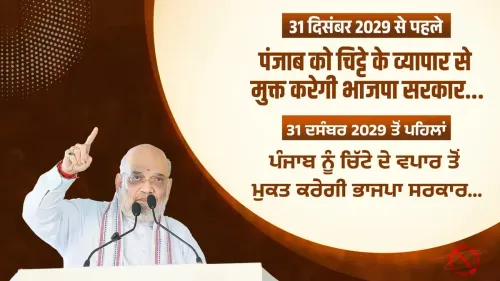
Shah directly accused the AAP government in Punjab of allowing chitta traders to 'flourish under its patronage.' He pledged that the Government of India will systematically jail chitta traders and make Punjab and the entire country drug-free.
Chitta — a synthetic drug linked to cross-border smuggling from Pakistan — has been a chronic public-health and security crisis in Punjab for over a decade.
The NDPS Act (amended 2014) provides for stricter penalties and asset forfeiture, but enforcement coordination with state police remains a flashpoint.
Shah's visits to all three districts, including Sangrur — CM Bhagwant Mann's former constituency — carry a sharp political dimension.
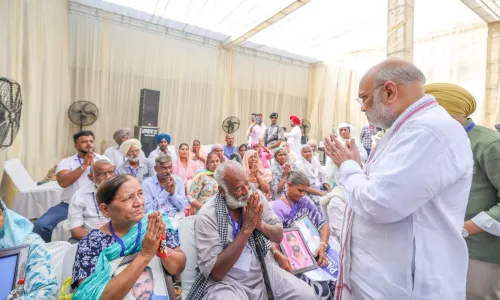
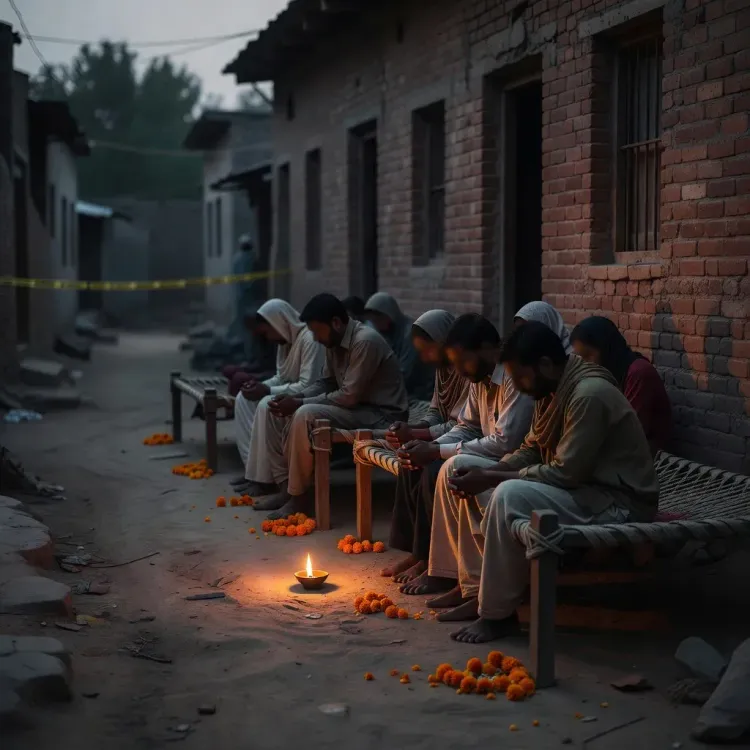
Families in Mansa, Sangrur, and Gurdaspur have paid the highest possible price — losing loved ones who dared to speak out against chitta (synthetic drug) traders allegedly operating under political cover. Union Home Minister Amit Shah announced on Sunday, 18 October 2026 that he will travel to all three Punjab districts on Tuesday, 20 October to personally meet those bereaved families, framing the visits as a direct indictment of the Aam Aadmi Party-led state government.
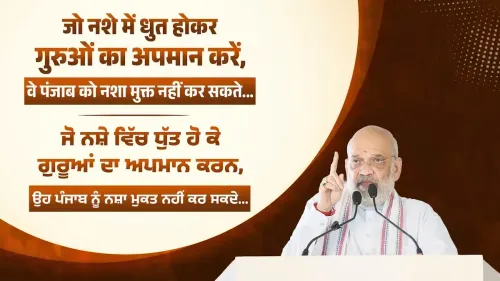
In a sharply-worded post in Hindi, Shah accused the AAP government of pushing Punjab 'into the abyss of drugs,' declaring that 'इन परिवारों ने जो खोया है, उस दुःख को शब्दों में बयान नहीं किया जा सकता' — 'the grief of what these families have lost cannot be put into words.' He charged that chitta traders were 'flourishing under AAP government patronage,' and that individuals who raised their voices against this trade recently lost their lives as a consequence.
What 'chitta' has cost Punjab
Chitta — a white powdery synthetic drug typically laced with heroin or pharmaceutical opioids — has ravaged Punjab's younger population for well over a decade, making the state one of India's most acute drug-abuse hotspots. Punjab shares a long border with Pakistan, and successive central governments have classified cross-border narcotics smuggling from that frontier as a national security concern, with the Ministry of Home Affairs coordinating enforcement through central agencies including the Narcotics Control Bureau (NCB).
The Narcotic Drugs and Psychotropic Substances (NDPS) Act was amended in 2014 to toughen penalties and introduce asset-forfeiture provisions specifically targeting trafficking networks — but activists and opposition politicians have long argued that ground-level enforcement depends heavily on state police cooperation, a variable that sits at the heart of the current political dispute.
BJP's Punjab offensive and the three districts
Shah's scheduled visits to Mansa, Sangrur, and Gurdaspur are not random. All three districts have surfaced repeatedly in Punjab's drug-crisis narrative — Sangrur is also the parliamentary constituency once held by Chief Minister Bhagwant Mann, making a Home Minister visit there a pointed political signal. The BJP has sustained a drumbeat of criticism against the AAP government since it swept to power in Punjab in 2022, consistently alleging that narcotics networks have operated with impunity under the new administration.
Shah's post raised the stakes further, offering an explicit federal promise: 'भारत सरकार चिट्टा कारोबारियों को चुन-चुनकर जेल की सलाखों के पीछे भेजेगी' — 'the Government of India will send chitta traders, one by one, behind prison bars.' That language signals a potential escalation of central-agency action in the state, bypassing the state administration where necessary.
The warning to those who silence dissent
Perhaps the most consequential line in Shah's post was directed at those allegedly suppressing anti-drug voices: 'Attempts to silence voices rising against this dark trade will never succeed, and the people of Punjab will give a befitting reply.' The assertion that activists have recently been killed for opposing the chitta trade — if borne out in the meetings on 20 October — would transform what is currently a political allegation into a documented human-rights and law-enforcement crisis demanding federal intervention.
All eyes now move to the NCB's operational posture in Punjab's border districts and whether the state government offers any official rebuttal before Tuesday's visits land on the front pages.
Point of View
Silenced activists) with a federal enforcement threat that the AAP administration cannot easily dismiss. Visiting Sangrur, the Chief Minister's former constituency, is a deliberate escalation designed to maximise symbolic pressure. The pledge to send chitta traders to jail 'one by one' signals that the NCB and other central agencies may be positioned for high-visibility raids in Punjab ahead of the next electoral cycle, turning a humanitarian tragedy into a sustained political and law-enforcement campaign.
NationPress
18 Oct 2026
Frequently Asked Questions
Why is Amit Shah visiting Punjab on 20 October 2026?
He is travelling to Mansa, Sangrur, and Gurdaspur to personally meet families of individuals who were recently killed after speaking out against the chitta drug trade in Punjab. Shah announced the visits in a post on 18 October 2026 , accusing the AAP government of protecting drug traffickers.
What is chitta and why is it a problem in Punjab?
Chitta is a white synthetic drug — typically heroin-based or laced with pharmaceutical opioids — that has fuelled a severe drug-abuse crisis in Punjab for over a decade. Punjab's long border with Pakistan makes it a key entry point for narcotics smuggled across the frontier.
What action has the central government threatened against drug traders?
Shah stated that the Government of India will 'send chitta traders, one by one, behind prison bars' and make Punjab and the entire country free of the drug trade, implying stepped-up enforcement by central agencies like the Narcotics Control Bureau .
What is the AAP government's position on Punjab's drug problem?
The AAP government came to power in Punjab in 2022 partly on a promise to tackle the drug crisis. The BJP alleges it has instead provided cover to traffickers — a charge the AAP administration disputes. An official response to Shah's latest accusations had not been issued at the time of publication.
What law governs drug trafficking enforcement in India?
The Narcotic Drugs and Psychotropic Substances (NDPS) Act , amended in 2014 , is the primary legislation. The 2014 amendment introduced stricter penalties and asset-forfeiture provisions specifically targeting drug-trafficking networks.