Punjab govt hands Jhota murder case to CBI ahead of Amit Shah's visit
Synopsis
Hours before Home Minister Amit Shah’s high-profile multi-district tour of Punjab, the AAP government quietly conceded to a key demand — handing the murder of anti-drug activist Parminder Singh Jhota to the CBI. With the 2027 elections looming and drug violence dominating the political discourse, Punjab’s drug crisis is no longer just a law-and-order issue; it has become the defining battleground between the BJP and AAP.
Key Takeaways
The Punjab AAP government announced on 20 October 2026 that the murder case of anti-drug activist Parminder Singh Jhota will be transferred to the CBI .
Jhota was shot dead in Mansa on 13 October 2026 , triggering widespread protests.
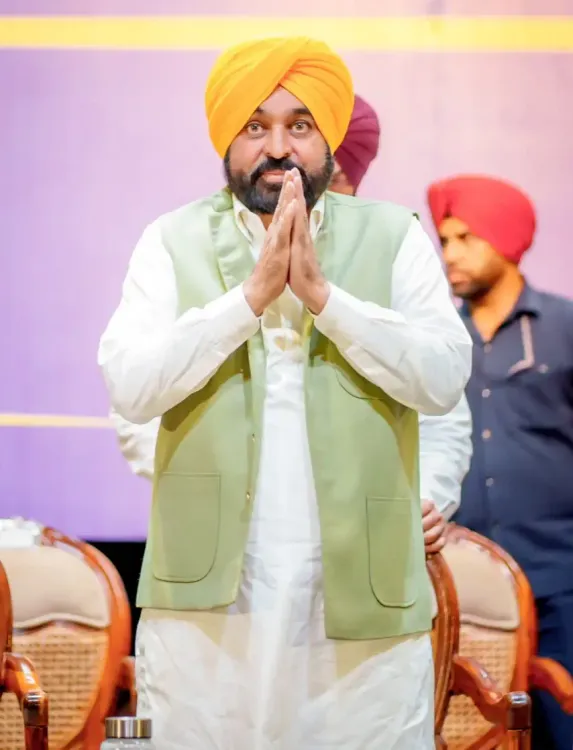
Chief Minister Bhagwant Mann posted the CBI announcement on X , citing the family’s demand.
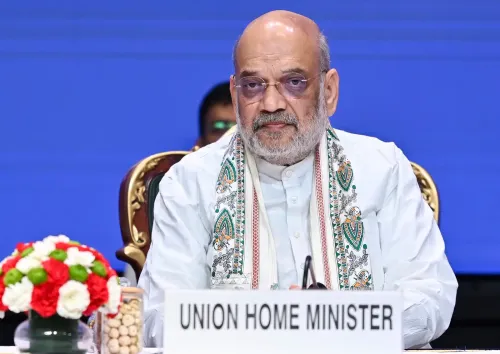
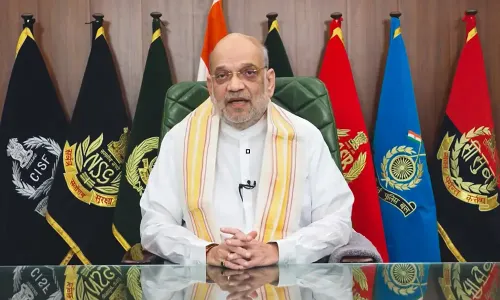
Home Minister Amit Shah is on a day-long visit to Mansa , Sangrur , and Gurdaspur to meet families of three drug-related victims.
The Union Home Ministry has sought detailed reports from Punjab on all three cases.
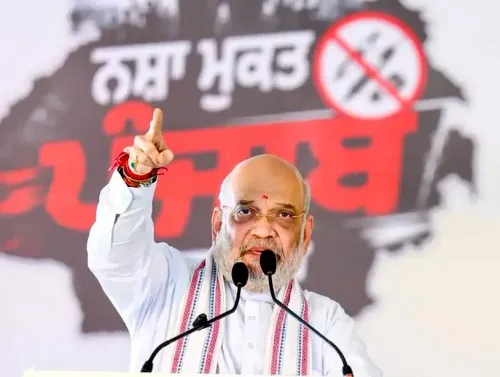
The BJP has pledged a drug-free Punjab by 31 December 2029 , framing the issue as a key plank ahead of the 2027 Assembly elections .
The Aam Aadmi Party (AAP) government in Punjab on Tuesday, 20 October announced it will transfer the murder case of slain anti-drug activist Parminder Singh Jhota to the Central Bureau of Investigation (CBI), conceding to the family's demand for a central probe. The announcement came hours before a day-long visit by Union Home Minister Amit Shah to the state, where drug-related violence has emerged as a dominant political flashpoint.
What the Chief Minister Said
Chief Minister Bhagwant Mann posted on X: “We stand firmly with the father and family of Parminder Singh Jhota, who has been fighting against drugs. Respecting the family’s demand, we are handing over the case to the CBI.” He added that the government’s campaign against drug traffickers would not relent. “Our fight against drug traffickers is a decisive one. We will not back down from taking any stringent measures necessary to make Punjab drug-free,” Mann wrote.
Jhota, a vocal anti-drug activist from Mansa, was shot dead on 13 October 2026. His killing triggered protests across the region and intensified demands for accountability, raising uncomfortable questions about the safety of individuals who publicly challenge drug networks.
Amit Shah’s Punjab Itinerary
Home Minister Shah’s visit covers Mansa, Sangrur, and Gurdaspur, before concluding at Dussehra celebrations in Ludhiana, where an effigy symbolising ‘Chitta’ — a synthetic drug — is scheduled to be burnt alongside Ravana. The symbolism is pointed: it frames the drug menace as a moral and political battle requiring national attention.
In Mansa, Shah is scheduled to meet the family of Jhota. His father, Bhim Singh, has welcomed the visit and reportedly invited the Home Minister to meet at their residence rather than the protest site. In Gurdaspur, Shah will visit Mari Panwan village to meet the family of Bikramjit Singh, who was killed on 15 October. In Sangrur, he is expected to meet the family of Gulzar Singh, who reportedly died by suicide on 7 September following an alleged confrontation over drug sales in his village and remarks directed at Finance Minister Harpal Singh Cheema.
The Union Home Ministry has also sought detailed reports from the Punjab government on all three cases.
BJP Ramps Up Political Pressure
State Bharatiya Janata Party (BJP) General Secretary Anil Sareen said the three families Shah is scheduled to meet have become symbols of Punjab’s fight against drugs. The BJP has pledged that the state will be completely drug-free by 31 December 2029 once the party forms the government.
Sareen accused the AAP government of neglecting Punjab, alleging that Chief Minister Mann was on a foreign tour while the state confronted a drug crisis. The BJP charged that the AAP administration had “left Punjab to fend for itself.” The AAP government has not responded to the specific foreign-tour allegation.
The Wider Context: Punjab’s Drug Crisis and 2027 Elections
This comes amid a sustained political battle over Punjab’s drug problem, which has resisted resolution across successive state governments. The transfer of the Jhota case to the CBI marks a notable escalation — state governments typically resist ceding jurisdiction over sensitive law-and-order cases to central agencies. Notably, the announcement arrived on the same day as Shah’s visit, a timing that critics may read as reactive rather than proactive.
With the 2027 Punjab Assembly elections approaching, the drug menace has become a central campaign terrain. Shah’s multi-district tour, his symbolic presence at a ‘Chitta’-burning ceremony, and the BJP’s drug-free deadline all signal an intent to own this issue at the national level heading into the electoral cycle.
How swiftly the CBI constitutes its probe team and whether the investigation proceeds independently of state-level political pressures will be watched closely by activists, opposition parties, and the families seeking justice.
Point of View
Whose entire Punjab pitch in 2022 centred on eliminating drugs, the Jhota murder and Shah’s symbolic ‘Chitta’-burning tour represent a direct assault on its core credential. The real question is whether CBI involvement produces verifiable accountability or becomes yet another investigative cul-de-sac in a state where drug cases have a long history of stalling.
NationPress
20 Oct 2026
Frequently Asked Questions
Who was Parminder Singh Jhota and why was he killed?
Parminder Singh Jhota was an anti-drug activist from Mansa, Punjab, who was shot dead on 13 October 2026. He had been vocal against drug abuse in his area; the alleged motive, according to reports, is linked to his anti-drug activism, though investigators have not formally confirmed a motive.
Why is the Punjab government transferring the Jhota case to the CBI?
Chief Minister Bhagwant Mann announced the CBI transfer in response to a direct demand by the Jhota family, who sought a central agency probe. The announcement was made on 20 October 2026, hours before Home Minister Amit Shah’s day-long visit to Punjab focused on drug-related cases.
What is Amit Shah’s agenda during his Punjab visit on 20 October 2026?
Home Minister Amit Shah is scheduled to meet the families of three drug-related victims — Parminder Singh Jhota in Mansa, Bikramjit Singh’s family in Mari Panwan village in Gurdaspur, and Gulzar Singh’s family in Sangrur. He will also attend Dussehra celebrations in Ludhiana, where an effigy of ‘Chitta’, a synthetic drug, is to be burnt.
What are the three cases the Union Home Ministry has sought reports on from Punjab?
The Home Ministry has sought reports on the murder of anti-drug activist Parminder Singh Jhota (shot dead on 13 October), the killing of Bikramjit Singh (15 October in Gurdaspur), and the death by suicide of Gulzar Singh (7 September in Sangrur), all of which are linked to the state’s drug crisis.
How does the Jhota case connect to the 2027 Punjab Assembly elections?
Punjab’s drug menace has become the central political battleground ahead of the 2027 state elections. The BJP is using high-profile visits and a pledge to make Punjab drug-free by 31 December 2029 to challenge the AAP government’s core claim of tackling drug abuse — the very issue on which AAP won the 2022 mandate.