Odisha CMO highlights tech-driven land and revenue reforms
Synopsis
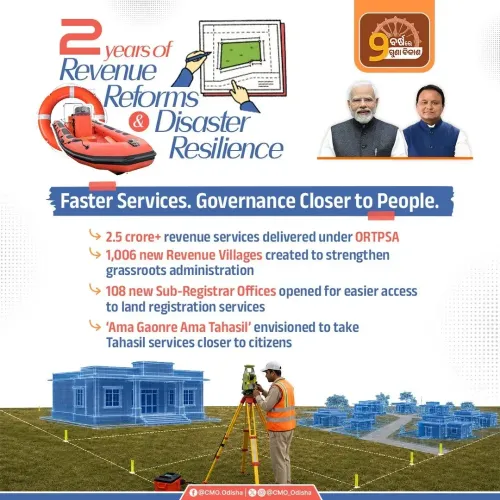
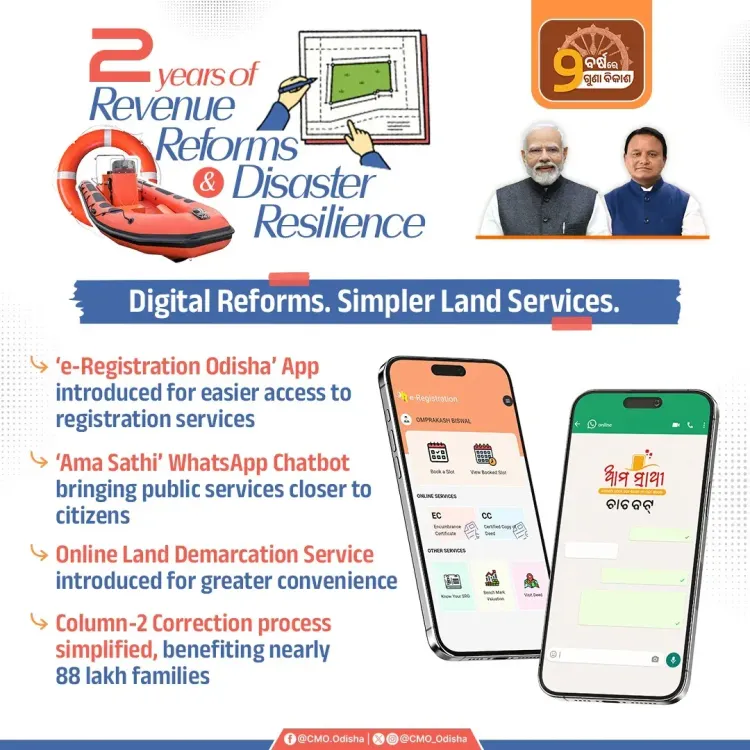
The Chief Minister's Office of Odisha on 9 July 2026 spotlighted four technology-driven reforms — e-Registration Odisha, the Ama Sathi WhatsApp chatbot, online land demarcation, and simplified Column-2 Correction — aimed at cutting procedural delays in land and revenue services for citizens across the state.
Key Takeaways
The Chief Minister's Office of Odisha on 9 July 2026 highlighted four land and revenue digitisation initiatives under two years of the current government. e-Registration Odisha enables online property registration, reducing the need for in-person visits to sub-registrar offices.
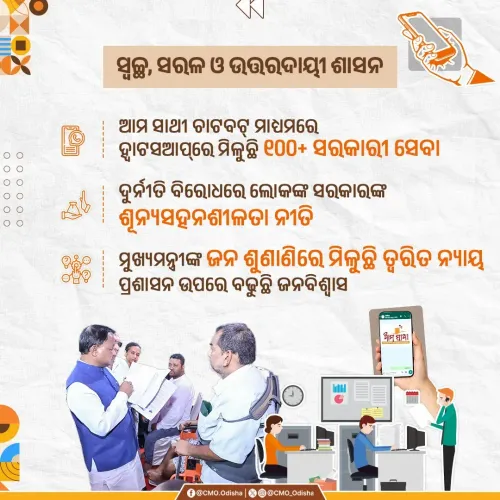
The Ama Sathi WhatsApp chatbot provides citizens with grievance redressal and service access through a widely used mobile platform.
Online land demarcation aims to cut long waiting periods and disputes associated with physical boundary surveys.
Simplified Column-2 Correction addresses a key bottleneck in Odisha's Record of Rights, which determines land tenure classifications.
The reforms align with India's Digital India programme and mirror similar e-governance pushes in Karnataka, Maharashtra, and Andhra Pradesh.
The Chief Minister's Office of Odisha on Thursday, 9 July 2026, highlighted a suite of technology-driven reforms transforming land and revenue services across the state, citing initiatives including e-Registration Odisha, the Ama Sathi WhatsApp chatbot, online land demarcation, and a simplified Column-2 Correction process as key milestones under two years of the current government.
Context
The post, shared under the hashtags #2YearsofLokankaSarakar and #2YearsOfRevenueReforms, marks what the government describes as a concerted push to reduce procedural hurdles in services that have historically been prone to delays and bureaucratic friction. The announcement frames these digital tools as making essential services 'faster, easier and more accessible' for citizens across Odisha.
Land and revenue administration has long been a pressure point for ordinary citizens — particularly in rural areas — where processes such as property registration, boundary demarcation, and record correction have traditionally required multiple visits to government offices and significant paperwork. The state government is positioning technology as the primary lever to change that.
Policy Backdrop
Odisha's reforms sit within the broader arc of India's Digital India programme, launched in 2015, which has encouraged states to digitise land records, mutation workflows, and registration processes. Several states — including Karnataka, Maharashtra, and Andhra Pradesh — have implemented comparable e-governance platforms for land administration over the past decade, making Odisha part of a nationwide pattern rather than an outlier.
The Ama Sathi WhatsApp chatbot is among the more citizen-facing innovations in this stack, designed to enable grievance redressal and service access through a platform already widely used across urban and rural Odisha. Online land demarcation addresses a particularly contentious area of revenue administration, where physical surveys have historically involved long waiting periods and disputes over scheduling.
The Column-2 Correction simplification targets a specific procedural bottleneck in Odisha's land record system, where entries in Column 2 of the Record of Rights determine the nature of land tenure — corrections to which have previously required cumbersome administrative processes.
Stakeholders and Impact
The primary beneficiaries of these reforms are landowners and rural citizens who interact with revenue administration for property transactions, inheritance records, boundary disputes, and tenancy documentation. Reducing in-person dependencies is expected to cut both the time and informal costs associated with these services.
For the broader economy, smoother land registration and demarcation processes can also improve the ease of doing business by accelerating property transactions and reducing title disputes — a factor that affects investment decisions, particularly in agriculture and real estate. Transparency gains from digitisation also have anti-corruption implications in a domain historically associated with rent-seeking.
What's Next
The practical impact of these initiatives will be measured by adoption and rollout metrics — how many citizens are using the Ama Sathi chatbot, how many demarcation requests are being processed online, and how quickly Column-2 Correction cases are being resolved across districts. These figures, if released, will indicate whether the reforms are reaching citizens in rural and semi-urban areas or remain concentrated in better-connected urban centres.
Analysts and civil society observers will also watch for any follow-up legislative or regulatory action — such as amendments to the Odisha Land Reforms Act or updates to revenue rules — that would institutionalise the digital processes and give them durable legal backing beyond administrative orders.
Point of View
Citizen-facing digital wins — land registration, chatbot access, demarcation, and record correction — into a single narrative of administrative modernisation. The choice of land and revenue as the showcase sector is politically astute: it is an area where citizen frustration has historically been high and where tangible digital improvements are easy to demonstrate and communicate. This fits a broader pattern among Indian state governments of using e-governance milestones as proof points of delivery-oriented governance ahead of electoral cycles. The real test, however, will be district-level adoption data and whether the reforms reduce informal costs for citizens who lack digital literacy or reliable internet access.
NationPress
8 Oct 2026
Frequently Asked Questions
What is e-Registration Odisha?
e-Registration Odisha is a digital platform introduced by the Odisha government that allows citizens to register property documents online, reducing the need for multiple in-person visits to sub-registrar offices and cutting procedural delays.
What is the Ama Sathi WhatsApp chatbot?
Ama Sathi is an Odisha government WhatsApp chatbot designed to help citizens access land and revenue services, track requests, and raise grievances through the WhatsApp messaging platform without visiting a government office.
What is Column-2 Correction in Odisha land records?
Column 2 of Odisha's Record of Rights specifies the nature of land tenure for a plot. Corrections to this column have historically involved complex administrative procedures; the Odisha government has now simplified this process as part of its revenue reforms.
How does online land demarcation work in Odisha?
Online land demarcation allows citizens in Odisha to apply digitally for physical boundary surveys of their land, replacing a process that previously required multiple office visits and long waiting periods before a revenue official could be assigned.
How do Odisha's land reforms fit into India's Digital India programme?
India's Digital India programme, launched in 2015, encourages states to digitise land records, registration, and mutation workflows. Odisha's e-Registration portal, chatbot, and demarcation tools are state-level implementations aligned with these national e-governance goals, similar to reforms in Karnataka, Maharashtra, and Andhra Pradesh.