CM Majhi's Odisha Marks 2 Years of Revenue Reforms
Synopsis
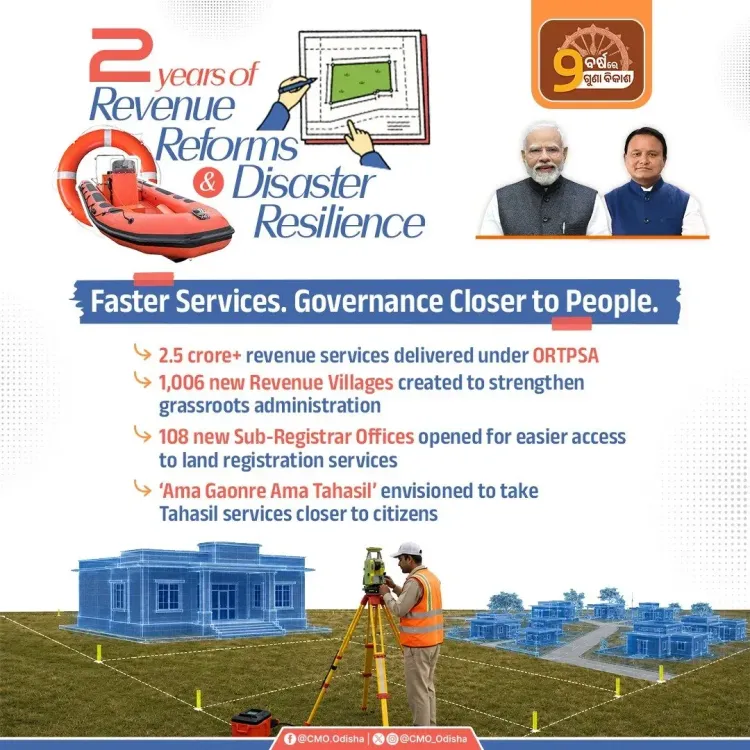
Marking two years in office, Chief Minister Mohan Majhi's government in Odisha says it has delivered over 2.5 crore services within statutory timelines under ORTPSA and created 1,006 new Revenue Villages, deepening grassroots revenue administration across the state.
Key Takeaways
The Chief Minister's Office of Odisha announced the milestones on 9 July 2026 , marking two years of the BJP government under CM Mohan Charan Majhi .
Over 2.5 crore services have been delivered within stipulated timelines under the Odisha Right to Public Services Act (ORTPSA) .
1,006 new Revenue Villages have been created, extending formal administrative reach to previously unrecognised settlements.
ORTPSA , originally enacted in 2012 , mandates time-bound public service delivery and provides grievance redressal for citizens.
The reforms target rural and semi-urban citizens who depend on revenue offices for land records, certificates, and welfare entitlements.
State budget documents and Revenue Department reports will be key indicators of whether the cited metrics are sustained and expanded.
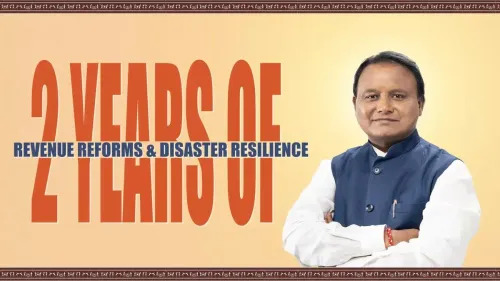
The Chief Minister's Office of Odisha on Thursday, 9 July 2026, highlighted two years of citizen-centric revenue administration reforms under Chief Minister Mohan Charan Majhi, citing over 2.5 crore services delivered within stipulated timelines and the creation of 1,006 new Revenue Villages across the state.
Context
The announcement, shared under the hashtags #2YearsofLokankaSarakar and #2YearsOfRevenueReforms, marks the second anniversary of the Bharatiya Janata Party government in Odisha, which came to power in June 2024 following assembly elections. The post credits the improvements to 'timely service delivery and wider grassroots outreach' under Chief Minister Majhi's leadership. The framing positions revenue administration — historically a point of friction for rural citizens — as a centrepiece of the government's governance agenda.Policy Backdrop
The service delivery figures cited by the CMO are linked to the Odisha Right to Public Services Act (ORTPSA), a law first enacted in 2012 that mandates time-bound delivery of notified public services by state departments and provides a grievance redressal mechanism for citizens who are denied services within set deadlines. The statute was designed to reduce bureaucratic delays that disproportionately affect rural and semi-urban residents who depend on government offices for land records, certificates, and other revenue services. The current government's claim of 2.5 crore services delivered on time reflects its emphasis on operationalising the Act at scale. The creation of 1,006 new Revenue Villages is a parallel administrative step: by formally notifying new villages, the state extends the reach of the revenue machinery to settlements that previously lacked official recognition, enabling residents to access land rights and government schemes.Stakeholders and Impact
The primary beneficiaries are Odisha's rural households, particularly those in areas where the absence of a formally recognised revenue village has historically meant limited access to land documentation, welfare entitlements, and government services. Citizens interacting with state departments for certificates, mutations, and public distribution services stand to benefit from the statutory timelines enforced under ORTPSA. The reforms also carry implications for local revenue officials, who are now accountable to fixed delivery windows, and for gram panchayats whose administrative boundaries may be redrawn as new villages are notified. Broader administrative reform efforts across Indian states — including digitised service tracking and rationalisation of local units — provide a comparative frame: Odisha's steps are consistent with a national pattern of strengthening revenue machinery at the grassroots level that has gathered pace since the early 2010s.What's Next
The government's own benchmarks — service delivery timelines and village notification counts — will be tested against state budget documents and the Revenue Department's annual performance reports in the months ahead. Analysts and civil society groups will watch whether the ORTPSA notified-services list is expanded to cover a wider range of citizen interactions, and whether the newly created Revenue Villages are backed by adequate staffing and infrastructure at the local level. The two-year mark also sets a political baseline: the BJP government in Odisha is effectively signalling that administrative reform, not just welfare spending, will be a key plank of its governance narrative heading into the mid-term period.Point of View
Lending the milestones a degree of institutional credibility. The creation of over a thousand new Revenue Villages is a quietly significant administrative act: formal recognition unlocks land rights and welfare access for settlements that have long existed outside the revenue map. Taken together, the moves suggest the Majhi government is attempting to distinguish itself from its predecessor by emphasising process reform alongside welfare delivery. The durability of these gains will depend on whether the state invests in the staffing and digital infrastructure needed to sustain service timelines as demand grows.
NationPress
8 Oct 2026
Frequently Asked Questions
What is ORTPSA in Odisha?
ORTPSA stands for the Odisha Right to Public Services Act, enacted in 2012. It legally mandates that state government departments deliver notified public services — such as land records, certificates, and welfare documents — within fixed timelines, and provides a grievance redressal mechanism for citizens who are denied services on time.
How many services has Odisha delivered under ORTPSA in two years?
The Chief Minister's Office of Odisha stated on 9 July 2026 that over 2.5 crore services have been delivered within stipulated timelines under ORTPSA during the two years of Chief Minister Mohan Charan Majhi's government.
What are Revenue Villages in Odisha and why does their creation matter?
Revenue Villages are formally notified administrative units in Odisha's land and revenue system. Creating new Revenue Villages brings previously unrecognised settlements into the official revenue map, enabling residents to access land rights, government certificates, and welfare schemes that require a registered address within a notified village.
When did Mohan Charan Majhi become Chief Minister of Odisha?
Mohan Charan Majhi became Chief Minister of Odisha in June 2024, after the Bharatiya Janata Party formed the state government following the 2024 assembly elections.
How many new Revenue Villages has Odisha created under CM Majhi?
According to the Chief Minister's Office of Odisha, 1,006 new Revenue Villages have been created under Chief Minister Mohan Charan Majhi's government in the two years since June 2024.