PM Modi Champions 'Grow More, Achieve More' for Viksit Bharat
Synopsis
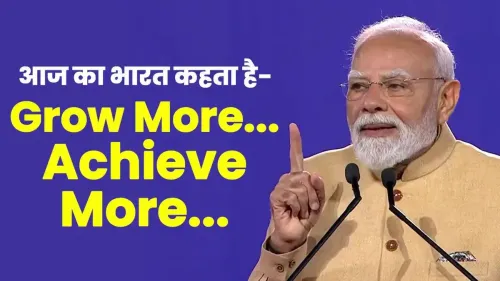
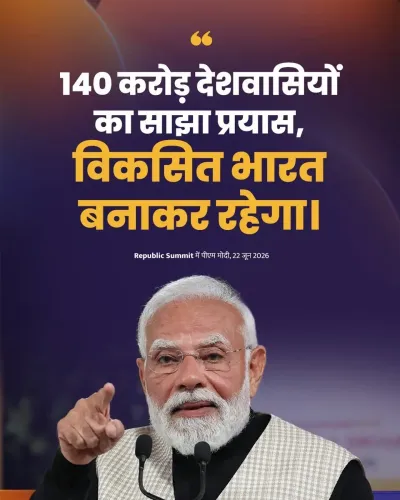
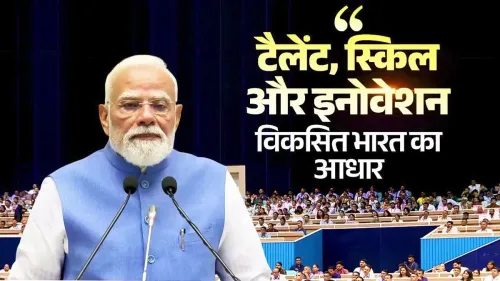
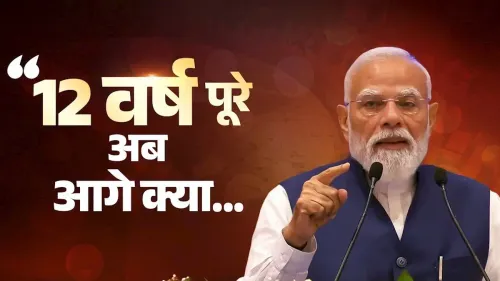
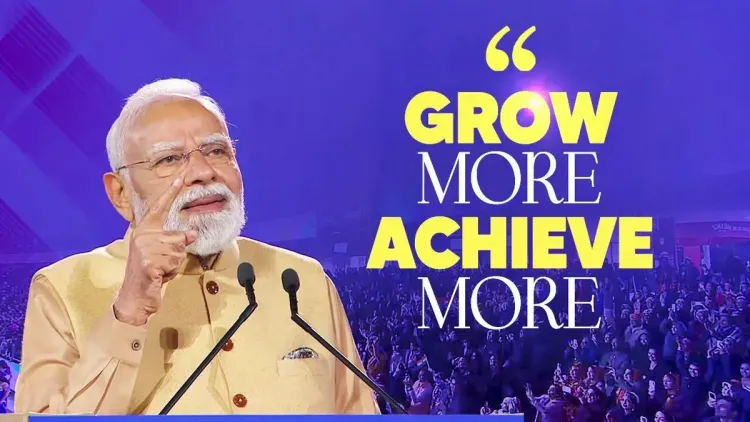
Prime Minister Narendra Modi on 9 July 2026 distilled India's Viksit Bharat ambition into a bilingual slogan — 'Grow More, Achieve More' — calling it the core inspiration for the country's march toward developed-nation status by 2047.
Key Takeaways
PM Modi posted on 9 July 2026 framing 'Grow More, Achieve More' as the guiding inspiration for India's development journey.
The message is anchored in the Viksit Bharat vision, which targets transforming India into a developed economy by 2047 .
The vision was formally announced in Modi's Independence Day address on 15 August 2022 .
The bilingual slogan bridges formal policy language and everyday citizen aspiration, targeting workers, entrepreneurs, and institutions.
Such posts from the Prime Minister typically precede major economic events, scheme launches, or budget-related announcements.
Prime Minister Narendra Modi on Thursday, 9 July 2026 shared a motivational message on X, framing the slogan 'Grow More, Achieve More' as the driving inspiration behind India's pursuit of developed-nation status. The post, in Hindi, reads: 'Viksit hone ke lakshya ko lekar aage badh rahe Bharat ki prerana hai — Grow More, Achieve More' — translating to 'The inspiration for India, moving forward with the goal of becoming developed, is: Grow More, Achieve More.'
Context
The post distils the government's long-standing national ambition into a compact, bilingual call to action. Prime Minister Modi has consistently used social media to reinforce large-scale policy narratives, and this message is a direct articulation of the Viksit Bharat vision — India's blueprint to become a fully developed economy by 2047, the centenary of Independence.
The slogan 'Grow More, Achieve More' functions as a productivity and aspiration cue directed at Indian citizens, businesses, and institutions alike, encouraging alignment with national development targets.
Policy Backdrop
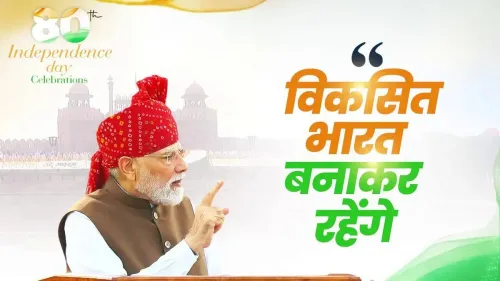
The Viksit Bharat framework was formally articulated by Prime Minister Modi in his Independence Day address on 15 August 2022, setting 2047 as the horizon for transforming India into a developed nation. Since then, it has become the organising principle for a wide range of policy initiatives — spanning infrastructure, manufacturing, digital public goods, and social welfare.
The vision draws on India's sustained economic expansion and positions the country as a global growth engine. Successive policy documents, including NITI Aayog reports and Union Budget frameworks, have been structured around quantifiable milestones that feed into this overarching goal.
The recurring use of motivational slogans in prime-ministerial communication is part of an established pattern that links individual effort to collective national outcomes — a style visible across multiple policy domains since 2014.
Stakeholders and Impact
The primary audience for this message is the Indian citizenry at large — workers, entrepreneurs, students, and policymakers who are expected to internalise the growth imperative. By framing the national goal in simple, bilingual terms, the post bridges the gap between high-level policy language and everyday aspiration.
For the business community, the phrase 'Grow More, Achieve More' carries an implicit signal: that the policy environment is oriented toward expansion and that individual enterprise is seen as integral to national progress. Civil society and state governments are equally stakeholders in the Viksit Bharat roadmap, which requires coordinated action across sectors and geographies.
What's Next
Observers will watch for follow-up elaboration in upcoming policy announcements, including any references in the 2026-27 Union Budget cycle or NITI Aayog progress reports that attach specific growth targets to the Viksit Bharat framework. Posts of this nature from the Prime Minister's handle often precede or accompany major economic engagements, scheme launches, or international summits where India's development narrative is projected globally.
As 2047 draws closer on the policy horizon, the frequency and specificity of such communications are likely to intensify, with each slogan serving as a marker of the government's intent to keep the developed-India goal at the centre of public discourse.
Point of View
Achieve More' post is less a standalone message and more a rhetorical reinforcement of the Viksit Bharat framework — a long-term nation-building project that the government has made its central political and economic identity. The bilingual framing is deliberate: English for aspirational resonance, Hindi for mass reach, together signalling that the developed-India goal is meant to feel personally owned by every citizen. This style of prime-ministerial communication has been a consistent feature since 2014, using compact slogans to sustain public engagement with large, abstract policy arcs between major announcements. The timing in mid-2026 suggests the government is actively refreshing the Viksit Bharat narrative, possibly ahead of a significant policy or budgetary milestone.
NationPress
8 Oct 2026
Frequently Asked Questions
What does 'Grow More, Achieve More' mean in PM Modi's post?
In his 9 July 2026 post, PM Modi used 'Grow More, Achieve More' as a motivational slogan to describe the spirit driving India's effort to become a developed nation by 2047 under the Viksit Bharat vision.
What is Viksit Bharat and when was it announced?
Viksit Bharat is India's national goal to become a fully developed economy by 2047, the centenary of Independence. PM Modi formally announced the vision in his Independence Day address on 15 August 2022.
Why does PM Modi post motivational slogans on X?
PM Modi regularly uses social media to connect large-scale policy goals with everyday citizen aspiration. Compact slogans help sustain public engagement with long-term frameworks like Viksit Bharat between major policy announcements.
What is the 2047 target for India under Viksit Bharat?
The Viksit Bharat framework aims to transform India into a developed nation by 2047, with milestones across infrastructure, manufacturing, digital services, and social welfare tracked through NITI Aayog reports and Union Budget frameworks.
What could follow PM Modi's 'Grow More, Achieve More' post?
Such posts from the Prime Minister's handle have historically preceded scheme launches, budget presentations, or international economic engagements. Observers will watch the 2026-27 Union Budget cycle and NITI Aayog updates for specific growth targets linked to Viksit Bharat.