PM Modi Urges Industry to Back Talent, Skills, Innovation for Viksit Bharat
Synopsis
Prime Minister Narendra Modi on June 19, 2026 called on Indian industry to champion talent, skilling, and innovation, framing them as the essential path to the Viksit Bharat goal of a developed India by 2047. The appeal builds on a decade of government skilling and startup programmes seeking private-sector alignment.
Key Takeaways
Prime Minister Narendra Modi issued a direct appeal to Indian industry on June 19, 2026 , urging investment in talent, skill, and innovation.
The appeal is anchored in the Viksit Bharat vision — India becoming a fully developed economy by 2047 .
The Skill India Mission (2015) targeted training over 400 million people and remains the government's primary skilling vehicle.
The National Education Policy 2020 integrated vocational training from Class 6 , embedding skills into mainstream schooling.
MSMEs and large corporates are the primary audience of the appeal, as key employers of skilled youth.
Industry responses — including apprenticeship pledges and innovation partnerships — are expected to feed into future Union Budget and NITI Aayog deliberations.
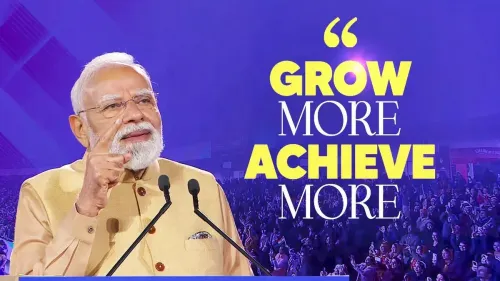
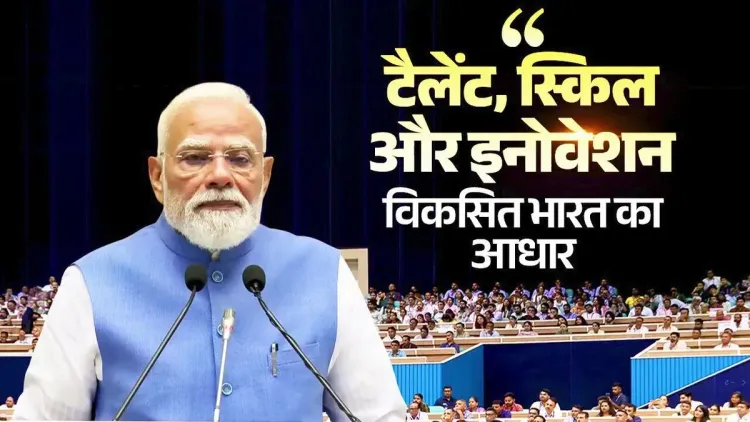
Prime Minister Narendra Modi on Friday, June 19, 2026, issued a direct appeal to India's industry leaders, calling on them to invest in talent, skilling, and innovation as the foundational pillars of a developed India by 2047. The appeal, shared on X, signals a renewed push to align the private sector with the government's Viksit Bharat vision.
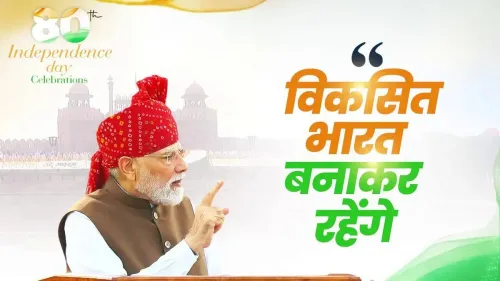
Posting in Hindi, the Prime Minister wrote: 'Viksit Bharat ka raasta talent, skill aur innovation ki shakti se banega' — 'The path to a developed India will be built through the power of talent, skill, and innovation' — accompanied by what he described as a 'special appeal' to the world of industry.
Context
The Viksit Bharat vision, which Prime Minister Modi has articulated consistently since 2021, sets the goal of transforming India into a fully developed economy by the centenary of its independence in 2047. Reaching that milestone requires sustained investment in human capital — an area where the Prime Minister has repeatedly flagged the need for industry participation alongside government programmes.
India's demographic dividend, with a median age below 30, is widely seen as the country's most significant economic asset. Translating that into productive output, however, depends on closing persistent gaps in employability and access to quality skilling infrastructure.
Policy Backdrop
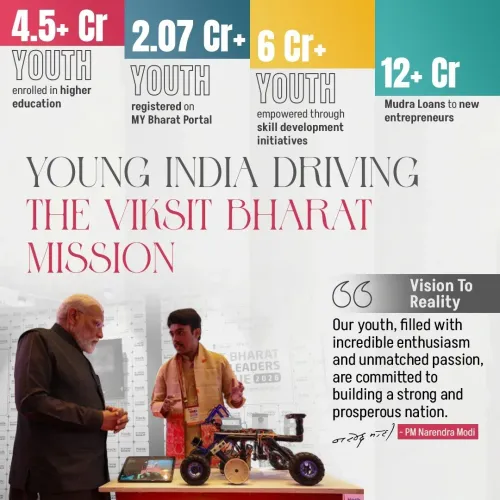
The government's skilling architecture rests on several interlocking initiatives. The Skill India Mission, launched in July 2015, set an ambitious target of training over 400 million people and has since expanded to cover hundreds of trades and vocational streams. The National Education Policy 2020 deepened this by integrating vocational training from Class 6 onwards, embedding skill-readiness into mainstream schooling.
The Startup India programme, launched in 2016, added an innovation layer — providing regulatory ease, funding access, and mentorship to early-stage ventures. Together, these schemes represent the supply side of the government's human-capital strategy. Prime Minister Modi's latest appeal is a call for the demand side — industry — to meet the government halfway.
The Atmanirbhar Bharat package announced in May 2020 further reinforced the emphasis on domestic manufacturing and indigenous innovation, framing self-reliance as inseparable from the skilling agenda.
Stakeholders and Impact
The appeal is directed primarily at India's corporate sector, including large conglomerates, MSMEs, and technology firms, all of whom are seen as critical absorbers of skilled labour. Industry bodies have in the past partnered with the government on apprenticeship schemes and sector-specific skill councils, but bridging the gap between training output and actual employment remains a challenge.
Skilled youth, particularly those from Tier-2 and Tier-3 cities and rural areas, stand to benefit most from any uptick in industry commitments. For MSMEs, which account for a significant share of employment, access to innovation and a trained workforce is directly tied to competitiveness in both domestic and export markets.
What's Next
Observers will watch for concrete industry responses — joint skilling programmes, apprenticeship pledges, or innovation partnerships — that may follow the Prime Minister's public appeal. Any such commitments are likely to be referenced in upcoming NITI Aayog deliberations or in the next Union Budget as evidence of public-private convergence on the Viksit Bharat roadmap. The framing of talent and innovation as the 'path' to a developed India suggests the government intends to keep human-capital development at the centre of its economic narrative in the run-up to 2047.
Point of View
Skill, and innovation in a single breath, the Prime Minister is signalling that supply-side reforms alone — skilling missions, education policy — are insufficient without private-sector demand. This fits a consistent BJP pattern of using high-visibility social media posts to set the agenda for industry forums and budget consultations. The real test will be whether the appeal translates into measurable industry commitments or remains an aspirational framing ahead of the 2047 milestone.
NationPress
19 Sept 2026
Frequently Asked Questions
What is Viksit Bharat and when is it targeted?
Viksit Bharat is Prime Minister Modi's vision for India to become a fully developed nation by 2047 , the centenary of Indian independence. It covers economic, social, and infrastructural development goals.
What did PM Modi say to industry on June 19, 2026?
Prime Minister Modi posted on X urging Indian industry to invest in talent, skill, and innovation, calling them the essential path to achieving the Viksit Bharat goal.
What is the Skill India Mission?
The Skill India Mission was launched in July 2015 with a target of training over 400 million people in vocational and technical skills to close India's employability gap.
How does the National Education Policy 2020 support skilling?
The National Education Policy 2020 introduced vocational training from Class 6 onwards, integrating skill development into mainstream schooling rather than treating it as a separate track.
Why is industry being asked to participate in India's skilling agenda?
Government programmes address the supply of skilled workers, but industry creates the demand. Without corporate investment in hiring, apprenticeships, and on-the-job training, skilling initiatives cannot fully translate into employment and economic growth.