Odisha Cabinet clears bill to repeal 358 obsolete laws
Synopsis
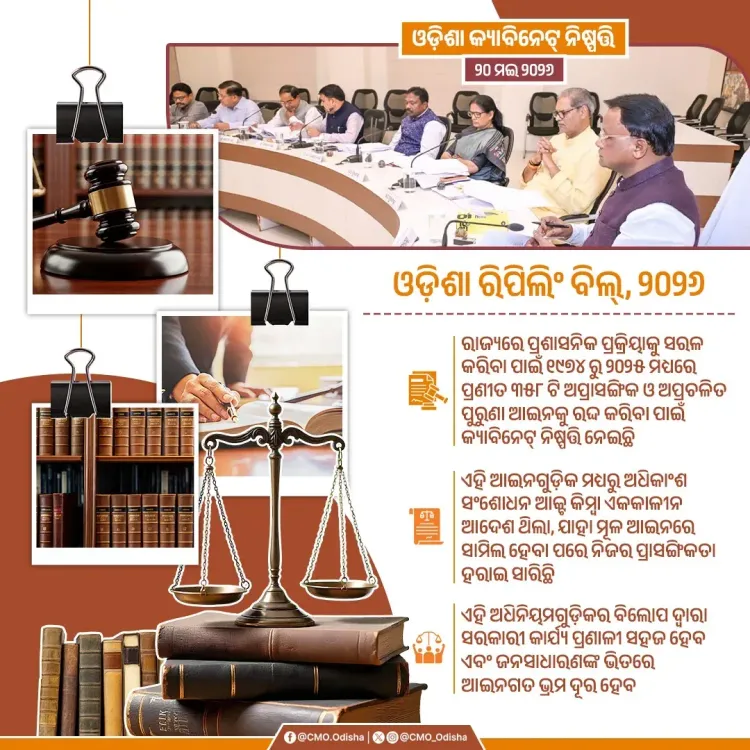
The Odisha cabinet chaired by Chief Minister Mohan Charan Majhi has approved the Odisha Repealing Bill 2026, which will abolish 358 redundant state laws enacted between 1974 and 2025, aiming to simplify administration and remove legal confusion for citizens and businesses.
Key Takeaways
The Odisha Cabinet , chaired by CM Mohan Charan Majhi , approved the Odisha Repealing Bill, 2026 on 26 May 2026 .
The bill proposes repeal of 358 obsolete and redundant laws enacted between 1974 and 2025 .
The stated objectives are simplifying government administration and eliminating legal confusion among the public.
The bill must now be passed by the Odisha Legislative Assembly before the repeals take legal effect.
The move mirrors the Government of India's repeal of over 1,400 central laws since 2014 and similar exercises in other BJP-governed states.
Passage would represent one of the largest single omnibus repeal exercises in Odisha's post-independence legislative history.
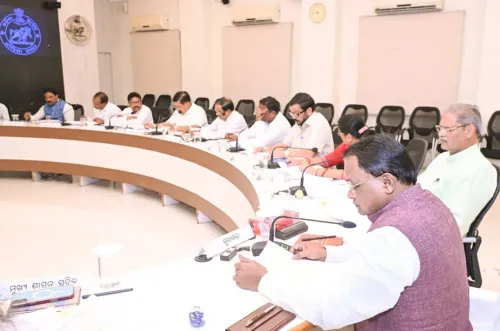
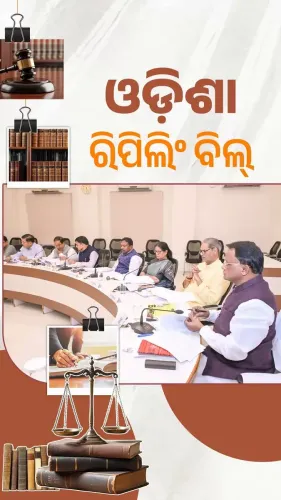
The Chief Minister's Office of Odisha announced on Tuesday, 26 May 2026, that the state cabinet, chaired by Chief Minister Mohan Charan Majhi, has approved a proposal for the 'Odisha Repealing Bill, 2026' — a sweeping legislative clean-up exercise that will abolish 358 outdated and redundant laws enacted between 1974 and 2025.
The cabinet decision, shared by the official CMO Odisha account, states that the move will 'simplify government administrative processes and remove legal confusion among the public.' The bill now heads to the Odisha Legislative Assembly for debate and passage before the repeals take effect.
Context
Over five decades of legislative activity in Odisha had left the statute books carrying laws that were either superseded by newer legislation, rendered redundant by policy shifts, or simply no longer enforced in practice. Such legal clutter creates compliance uncertainty for citizens and businesses alike, and imposes an unnecessary administrative burden on state departments that must technically operate within those frameworks. The 'Odisha Repealing Bill, 2026' targets this accumulated overhang in one consolidated stroke, covering statutes passed across a 51-year window from 1974 to 2025.Policy Backdrop
The Odisha decision fits squarely within a broader national pattern of legal rationalisation. The Government of India has repealed more than 1,400 obsolete central laws since 2014, framing the exercise as essential to ease of governance and ease of doing business. Several BJP-governed states have followed suit with their own repeal drives, targeting both colonial-era statutes and post-independence legislation that has since been overtaken by events. Chief Minister Majhi, who took office in 2024 heading a BJP-led government, has positioned administrative simplification as a governance priority. The cabinet approval of a single omnibus repealing bill — rather than piecemeal revocations — signals a deliberate effort to move quickly and visibly on the reform agenda.Stakeholders and Impact
The primary beneficiaries are ordinary citizens who interact with state government services, businesses operating under state regulations, and legal practitioners who must navigate Odisha's statute book. Removing defunct laws reduces the risk of conflicting legal interpretations and lowers the compliance burden for enterprises seeking regulatory clarity. For the state administration, the repeal exercise streamlines the legal framework within which departments issue orders, grant licences, and adjudicate disputes. It also clears the ground for updating Odisha's official legal database and compliance portals, making it easier for citizens and officials to identify applicable law.What's Next
The 'Odisha Repealing Bill, 2026' must now be introduced, debated, and passed by the Odisha Legislative Assembly. Once enacted, the state government is expected to issue an official gazette notification listing all 358 laws that stand repealed. Observers will watch whether the exercise prompts a corresponding update to state-level compliance portals and whether the clean-up is followed by a second tranche targeting laws predating 1974. If passed without major amendments, the bill will mark one of the largest single-session legislative repeal exercises in Odisha's post-independence history, and could serve as a template for other states looking to accelerate their own statute-book rationalisation.Point of View
Measurable reform win without the political friction of sector-specific legislation. The move aligns Odisha with a BJP-wide playbook of statute-book rationalisation that has been a recurring administrative theme since 2014, lending it both ideological coherence and national visibility. For a government barely two years old, packaging five decades of legal detritus into one sweeping bill also serves a narrative purpose: it frames inherited administrative complexity as a problem being actively solved. The real test will come in the assembly, where opposition scrutiny of which specific laws are being repealed — and whether any carry residual public interest protections — could complicate an otherwise procedurally straightforward exercise.
NationPress
10 Oct 2026
Frequently Asked Questions
What is the Odisha Repealing Bill 2026?
The Odisha Repealing Bill 2026 is a cabinet-approved legislative proposal to repeal 358 obsolete and redundant state laws enacted between 1974 and 2025, with the aim of simplifying government administration and reducing legal confusion for citizens and businesses.
How many laws will be repealed under the Odisha Repealing Bill 2026?
The bill proposes to repeal 358 laws. These statutes were enacted over a 51-year period from 1974 to 2025 and are considered outdated or no longer in practical use.
Who approved the Odisha Repealing Bill 2026?
The Odisha state cabinet, chaired by Chief Minister Mohan Charan Majhi, approved the proposal on 26 May 2026. The bill still needs to be passed by the Odisha Legislative Assembly to take effect.
Why is Odisha repealing old laws?
The government says repealing redundant laws will simplify administrative processes and remove legal confusion among the public. It also reduces the compliance burden on businesses and aligns with a broader national push for ease of governance.
Has India repealed obsolete laws before?
Yes. The Government of India has repealed more than 1,400 obsolete central laws since 2014 as part of ongoing legal simplification reforms, and several states have undertaken similar exercises to modernise their statute books.