PM Modi Thanks South Korea's Lee Jae-myung for Warm Wishes
Synopsis
Prime Minister Narendra Modi on 10 July 2026 publicly thanked South Korean leader Lee Jae-myung for warm congratulatory words, responding in Korean on X. The exchange reflects the personal diplomacy underpinning the India-South Korea strategic partnership built on CEPA, Act East Policy, and defence cooperation.
Key Takeaways
Prime Minister Narendra Modi responded to a congratulatory message from South Korean leader Lee Jae-myung on 10 July 2026 .
Modi posted his reply in Korean , describing Lee's message as 'thoughtful' and saying such words from friends are 'always cherished.' India and South Korea have maintained a strategic partnership since 2010 , anchored by the Comprehensive Economic Partnership Agreement (CEPA) .
Modi has visited Seoul twice — in May 2015 and February 2019 — to deepen defence, technology, and infrastructure ties.
The exchange aligns with India's Act East Policy , under which South Korea is a key partner in semiconductors and supply-chain resilience.
A fresh CEPA review round and a possible bilateral summit are among the next expected milestones in the relationship.
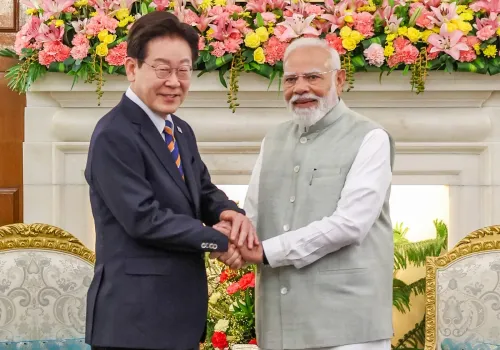
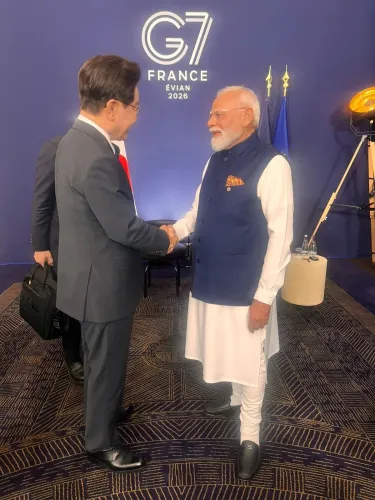
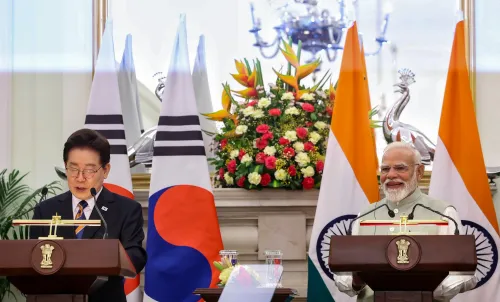
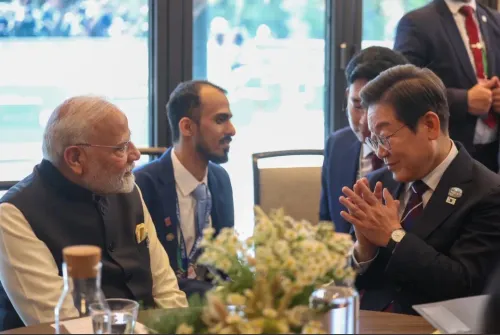
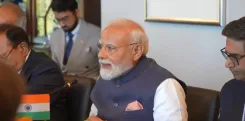
Prime Minister Narendra Modi on Friday, 10 July 2026, responded warmly to a congratulatory message from South Korean leader Lee Jae-myung, expressing gratitude for the thoughtful gesture and reaffirming the personal bonds that underpin India-South Korea ties.
Context
Posting on X, Prime Minister Modi wrote in Korean: '이재명 대통령님의 따뜻한 축하 말씀에 감사드립니다. 친구들의 이처럼 사려 깊은 메시지는 언제나 소중하게 간직됩니다.' — translated: 'I am grateful for President Lee Jae-myung's warm congratulatory words. Such thoughtful messages from friends are always cherished.' The decision to reply in Korean is itself a diplomatic signal, underscoring the personal warmth New Delhi seeks to cultivate with Seoul.
The post was addressed directly to @Jaemyung_Lee, indicating a one-to-one exchange between the two leaders rather than a general public statement. Personal outreach of this kind between heads of government is consistent with the high-level diplomatic rhythm that has defined the India-South Korea relationship in recent years.
Policy Backdrop
India and South Korea have built a layered strategic partnership since signing a Comprehensive Economic Partnership Agreement (CEPA) in 2010, which expanded bilateral trade and investment flows significantly. Prime Minister Modi visited Seoul in May 2015 and again in February 2019, each visit upgrading cooperation in defence, technology, and infrastructure.
Under India's Act East Policy, South Korea occupies a central place as a partner in semiconductors, defence co-production, and supply-chain resilience. The two countries have consistently expanded the scope of their engagement beyond trade into civil nuclear cooperation and advanced manufacturing.
Stakeholders and Impact
Indian exporters and Korean investors stand to benefit most directly from a warm bilateral relationship, particularly as both governments explore a review of the CEPA to address contemporary supply-chain concerns. Strong personal rapport between leaders historically accelerates the pace of such negotiations.
For South Korea, close ties with the world's most populous democracy offer strategic depth in an increasingly multipolar Indo-Pacific. For India, the partnership delivers access to cutting-edge Korean technology and capital, complementing its own manufacturing ambitions.
What's Next
Diplomatic observers will watch for a formal bilateral summit or a new round of CEPA review talks, both of which are expected to address technology transfers and supply-chain resilience. Exchanges like this between Prime Minister Modi and President Lee typically precede or follow structured diplomatic engagements, suggesting the bilateral calendar may soon see fresh activity.
The broader trajectory points toward deeper integration between New Delhi and Seoul across defence, digital infrastructure, and green technology — areas where both nations have identified complementary strengths.
Point of View
The timing of this exchange is unlikely to be incidental. It suggests both capitals are keeping the diplomatic temperature warm ahead of what could be a substantive new phase in India-South Korea ties.
NationPress
11 Jul 2026
Frequently Asked Questions
Why did PM Modi post in Korean on X?
PM Modi responded in Korean as a diplomatic gesture of personal warmth toward South Korean leader Lee Jae-myung, a practice consistent with his broader approach of engaging foreign counterparts in their own languages to strengthen bilateral ties.
What is the India-South Korea relationship based on?
India and South Korea share a strategic partnership formalised through the Comprehensive Economic Partnership Agreement (CEPA) in 2010, covering trade, defence co-production, semiconductors, and civil nuclear cooperation under India's Act East Policy.
Has PM Modi visited South Korea before?
Yes. PM Modi visited South Korea in May 2015 and again in February 2019, using both trips to upgrade bilateral cooperation in defence, technology, and infrastructure.
What did PM Modi say to Lee Jae-myung?
PM Modi thanked Lee Jae-myung for his 'warm congratulatory words,' adding that 'such thoughtful messages from friends are always cherished' — posting the reply in Korean on X.
What comes next for India-South Korea ties?
Diplomatic observers expect a new round of CEPA review talks and a possible bilateral summit, focusing on supply-chain resilience, technology transfers, and defence co-production.