PM Modi Responds to South Korea President Lee Jae-myung
Synopsis
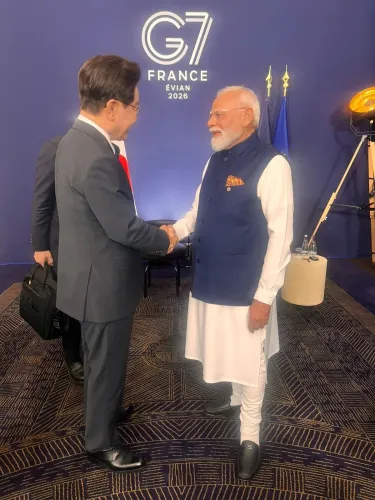
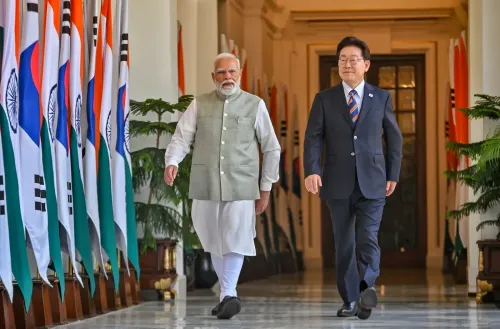
Prime Minister Narendra Modi on June 10, 2026 replied to South Korean President Lee Jae-myung's goodwill message, reaffirming India's Special Strategic Partnership with Seoul and pledging to take bilateral cooperation to new heights under the Act East Policy framework.
Key Takeaways
Prime Minister Narendra Modi responded on June 10, 2026 to congratulatory wishes from South Korean President Lee Jae-myung via X.
Modi reaffirmed that India 'values its special partnership with South Korea greatly' and expressed confidence in taking cooperation to 'new heights'.
India and South Korea share a Special Strategic Partnership established during Modi's 2015 Seoul visit .
The bilateral relationship is anchored by the Comprehensive Economic Partnership Agreement (CEPA) signed in 2010 .
Key areas of cooperation include defence co-production , semiconductor collaboration and people-to-people ties.
The engagement fits within India's Act East Policy aimed at strengthening Indo-Pacific supply chains and diversifying strategic partnerships.
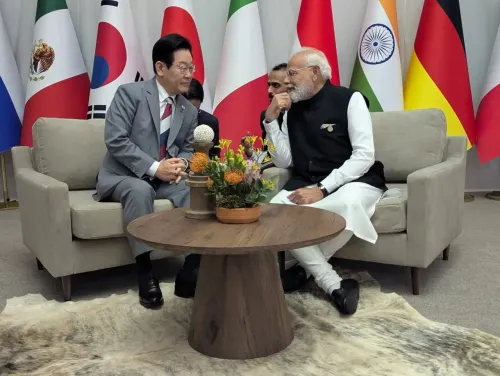
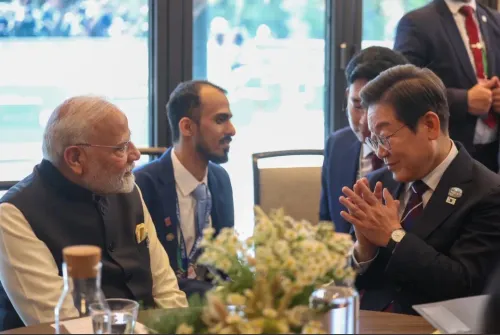
Prime Minister Narendra Modi on Wednesday, June 10, 2026 responded to congratulatory wishes from South Korean President Lee Jae-myung, reaffirming India's commitment to deepening its Special Strategic Partnership with South Korea and expressing confidence that bilateral cooperation would reach new heights.
In his reply posted on X, Modi wrote in Hindi: 'माननीय राष्ट्रपति ली जे-म्युंग जी, आपकी शुभकामनाओं के लिए बहुत-बहुत धन्यवाद' ('Honourable President Lee Jae-myung, thank you very much for your good wishes'). He added that India values its special partnership with South Korea greatly and that the two nations would together take cooperation to new heights.
Context
The exchange follows a message of goodwill from President Lee Jae-myung, leader of South Korea's Democratic Party, directed at Prime Minister Modi. Such diplomatic exchanges between heads of government typically signal the health of a bilateral relationship and often precede more substantive engagement. The specific occasion prompting Lee's original message has not been officially confirmed.
Policy Backdrop
India and South Korea share a relationship that was formally elevated to a Special Strategic Partnership during Prime Minister Modi's visit to Seoul in 2015. The two countries had earlier signed the Comprehensive Economic Partnership Agreement (CEPA) in 2010, which liberalised bilateral trade and investment flows. In recent years, defence co-production, semiconductor cooperation and people-to-people ties have emerged as consistent pillars of the partnership.
India's engagement with South Korea sits within the broader framework of its Act East Policy, which seeks to deepen economic and security links with East and Southeast Asian nations. This outreach runs parallel to similar deepening of ties with Japan, Vietnam and ASEAN members, with a shared goal of strengthening Indo-Pacific supply chains and diversifying strategic partnerships.
Stakeholders and Impact
Indian exporters, defence manufacturers and technology firms stand to benefit most directly from a reinvigorated India-South Korea relationship. South Korea's strengths in semiconductors, shipbuilding and advanced manufacturing complement India's growing ambitions in electronics production and defence indigenisation. People-to-people ties, including the Indian diaspora in South Korea and Korean investment communities in India, also have a stake in sustained high-level diplomatic warmth.
For South Korea, India represents a large and fast-growing market as well as a potential manufacturing partner at a time when global supply chains are being restructured. The Special Strategic Partnership framework provides institutional channels for both sides to advance shared interests in the Indo-Pacific.
What's Next
Diplomatic observers will watch for whether this exchange of goodwill translates into concrete deliverables, including a possible review of the CEPA, proposed high-level visits, or new announcements on defence manufacturing collaboration. India has consistently used such diplomatic moments to lay groundwork for structured bilateral dialogue. The tone of Prime Minister Modi's response — emphasising partnership and forward momentum — suggests New Delhi views the relationship with Seoul as a priority lane within its Indo-Pacific strategy.
Point of View
Reinforcing that the Special Strategic Partnership with South Korea remains a live priority for New Delhi. Coming within the Act East Policy framework, the exchange fits a pattern in which India uses high-visibility bilateral touchpoints to keep East Asian partnerships warm ahead of potential structural negotiations, such as a CEPA upgrade. The emphasis on 'new heights' in Modi's language is consistent with his government's practice of framing each bilateral interaction as forward-looking rather than merely ceremonial. Taken together with India's parallel outreach to Japan and ASEAN, the message to Seoul is that New Delhi sees the Indo-Pacific partnership architecture as an ongoing construction project, not a settled arrangement.
NationPress
15 Sept 2026
Frequently Asked Questions
What did PM Modi say to South Korea's President Lee Jae-myung?
Prime Minister Modi thanked President Lee Jae-myung for his goodwill message and reaffirmed that India values its Special Strategic Partnership with South Korea, expressing confidence that the two nations would take bilateral cooperation to new heights.
What is the India-South Korea Special Strategic Partnership?
The Special Strategic Partnership is the highest tier of India's bilateral relationship with South Korea, established during Prime Minister Modi's visit to Seoul in 2015. It covers trade, defence, technology and people-to-people ties.
What is the India-South Korea CEPA?
The Comprehensive Economic Partnership Agreement (CEPA) was signed between India and South Korea in 2010 to liberalise bilateral trade and investment. A review of the agreement has been a subject of ongoing diplomatic discussion.
How does South Korea fit into India's Act East Policy?
South Korea is a key partner under India's Act East Policy, which seeks to deepen economic and security links with East and Southeast Asian nations to strengthen Indo-Pacific supply chains and diversify India's strategic partnerships.
What are the main areas of India-South Korea cooperation?
Key areas include defence co-production, semiconductor cooperation, shipbuilding, advanced manufacturing, and people-to-people ties, all of which have been consistent themes in the bilateral relationship in recent years.