PM Modi Hails India-South Korea Ties After Lee Jae-myung Message
Synopsis
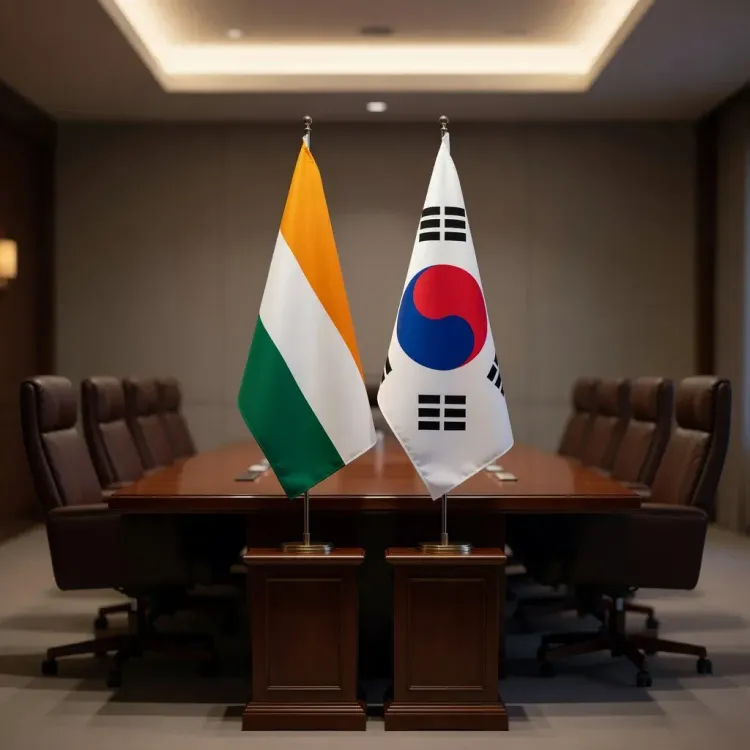
Prime Minister Narendra Modi acknowledged a warm message from South Korean President Lee Jae-myung on October 7, 2026, recalling Lee's April India visit as a catalyst for their Special Strategic Partnership and reaffirming commitment to deeper bilateral and global cooperation.
Key Takeaways
PM Modi publicly thanked President Lee Jae-myung on October 7, 2026 for a warm personal message.
Modi cited Lee's April 2026 visit to India as giving 'fresh momentum' to the bilateral relationship.
The India-South Korea Special Strategic Partnership , formalised in 2015 , remains the framework for cooperation across defence, trade, and technology.
Modi published his reply bilingually in English and Korean , signalling deliberate outreach to South Korea's domestic audience.
Both leaders reaffirmed a shared vision for global peace, stability, and prosperity — framing the bilateral within broader multilateral concerns.
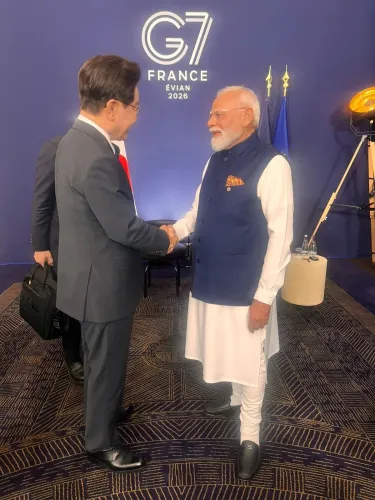
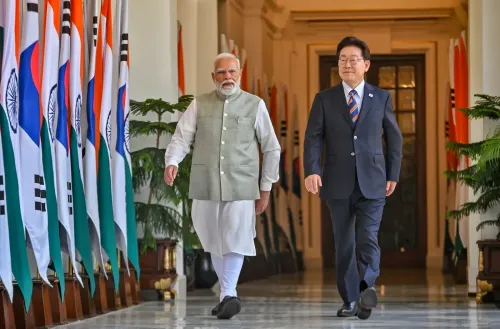
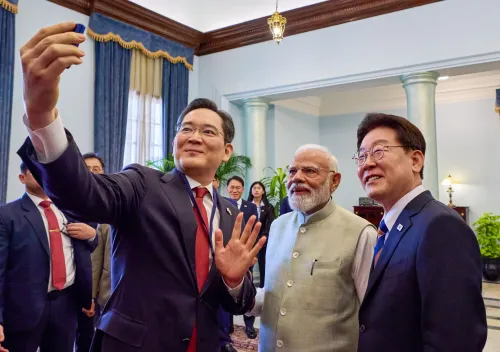
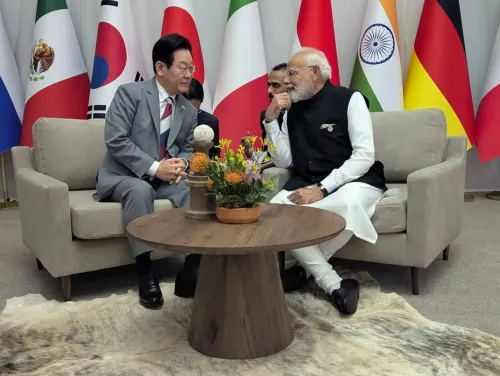
A diplomatic exchange between two heads of government — and a pointed reminder that the India-South Korea Special Strategic Partnership is very much in motion. Prime Minister Narendra Modi on Wednesday, October 7, 2026 responded warmly to a message from South Korean President Lee Jae-myung, invoking their April 2026 summit in India as a turning point for bilateral ties.
April Summit That Set the Tone
Modi's response singled out President Lee's India visit in April 2026 as a moment that 'gave fresh momentum' to the partnership — diplomatic language that carries real weight. A sitting South Korean president travelling to New Delhi signals the relationship's elevation beyond transactional trade, into a framework where both sides coordinate on security, technology, and the broader Indo-Pacific order.
The India-South Korea relationship was formally upgraded to a Special Strategic Partnership in 2015, but summits of this nature inject operational energy into what can otherwise become a shelf document. The April meeting, by Modi's own account, did exactly that.
What 'Multifaceted Cooperation' Covers
Modi's phrase — 'deepen our multifaceted cooperation' — is a diplomatic shorthand for a relationship that spans defence manufacturing, semiconductor supply chains, shipbuilding, clean energy, and a substantial bilateral trade corridor. South Korea is home to global technology and industrial conglomerates with deep investment interests in India's manufacturing push, making the partnership strategically complementary at a moment when both countries are recalibrating their supply chain exposures.
Modi also posted the message bilingually, publishing the full Korean-language version alongside the English text — a detail that signals deliberate personal outreach to Seoul's domestic audience, not just a routine diplomatic courtesy.
The Global Peace and Stability Frame
The joint invocation of 'global peace, stability and prosperity' in Modi's reply places the bilateral in a larger multilateral context — both India and South Korea are navigating a world reshaped by great-power competition, and both sit in regions where that competition is acutely felt. New Delhi's Indo-Pacific positioning and Seoul's peninsular security calculus make them natural interlocutors on rules-based order, even as their immediate threat environments differ.
The public, bilingual exchange — Modi tagging @Jaemyung_Lee directly — keeps the diplomatic signal visible and legible to audiences in both capitals simultaneously.
With the April summit's energy now formally acknowledged at the highest level, the next test is whether that momentum translates into concrete deliverables — trade agreements, defence co-production deals, or joint technology frameworks — before the next scheduled engagement.
Point of View
Personally addressed reply to Lee Jae-myung is a calibrated diplomatic gesture — using a public platform to reinforce a bilateral relationship that carries strategic value in India's Indo-Pacific calculus. By anchoring the message to the April 2026 summit, New Delhi signals continuity and intent rather than mere pleasantry. The invocation of 'global peace and stability' places India-South Korea ties within a rules-based order narrative that both capitals are actively cultivating as counterweights to great-power pressure in Asia. The real metric will be whether this summit energy converts into concrete deliverables in trade, defence co-production, or technology transfer in the months ahead.
NationPress
7 Oct 2026
Frequently Asked Questions
What is the India-South Korea Special Strategic Partnership?
The India-South Korea Special Strategic Partnership was formalised in 2015 , providing a framework for cooperation in defence, trade, technology, and diplomatic coordination between the two countries.
When did South Korean President Lee Jae-myung visit India?
President Lee Jae-myung visited India in April 2026 , a trip that PM Modi described as giving 'fresh momentum' to the bilateral Special Strategic Partnership.
Why did PM Modi reply in both English and Korean on X?
Modi's bilingual post — English and Korean — was a deliberate diplomatic gesture aimed at reaching South Korea's domestic audience directly, elevating the exchange beyond a routine courtesy.
What areas does India-South Korea cooperation cover?
The bilateral relationship spans defence manufacturing, semiconductor supply chains, shipbuilding, clean energy, and trade , with South Korean conglomerates holding significant investment interests in India's manufacturing sector.
What did PM Modi say about global peace in his message to Lee?
Modi expressed confidence that India and South Korea would together 'advance our shared vision for global peace, stability and prosperity,' framing the partnership within a broader multilateral context.