India-South Korea Ties Reset: Tech, Chips & Strategic Alliance
Synopsis
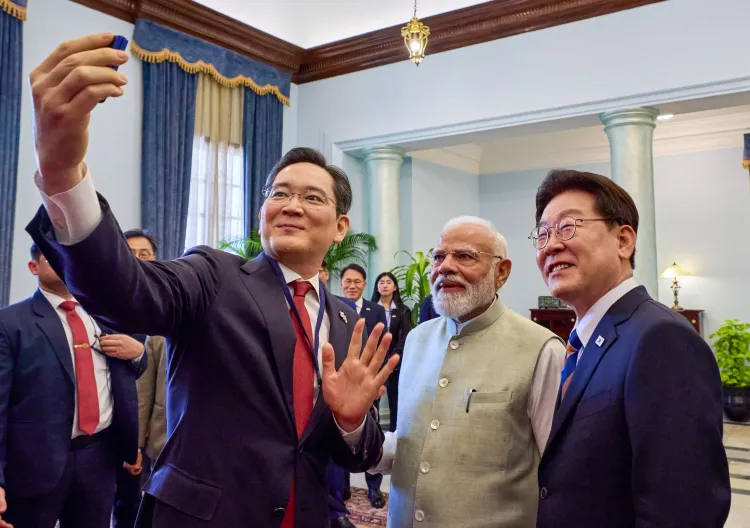
South Korean President Lee Jae Myung's landmark India visit marks a historic reset in bilateral ties — shifting the relationship from neglected potential to active co-building across semiconductors, AI, defence, and digital infrastructure, with implications far beyond routine diplomacy.
Key Takeaways
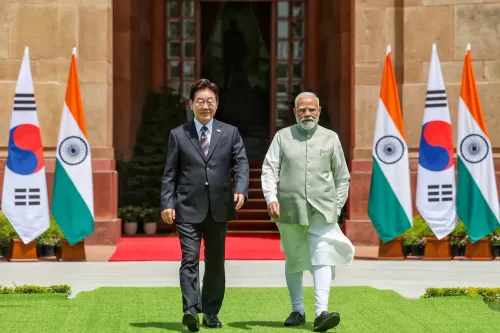
South Korean President Lee Jae Myung visited India in April 2025 , marking a formal reset of bilateral ties after years of diplomatic underperformance.
Both nations are shifting focus from automobiles and steel to high-value areas including semiconductors, AI, battery supply chains , and advanced manufacturing .
A proposed digital bridge aims to establish shared digital standards, interoperable systems, and trusted technology partnerships between the two democracies.
India contributes market scale, talent, and digital infrastructure while South Korea brings manufacturing discipline and high-technology production expertise.
The partnership also encompasses defence production and maritime resilience , reflecting shared strategic concerns in the Indo-Pacific .
Analysts warn the summit's value depends entirely on follow-through including investment announcements and progress on the bilateral CEPA upgrade .
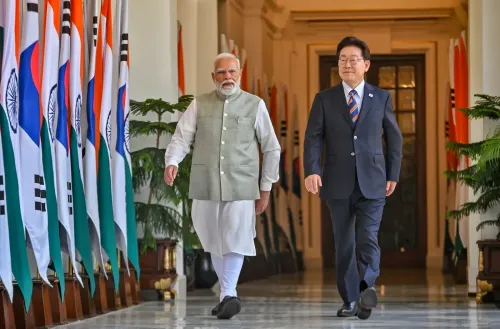
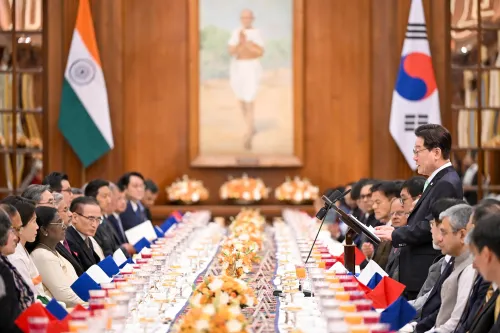
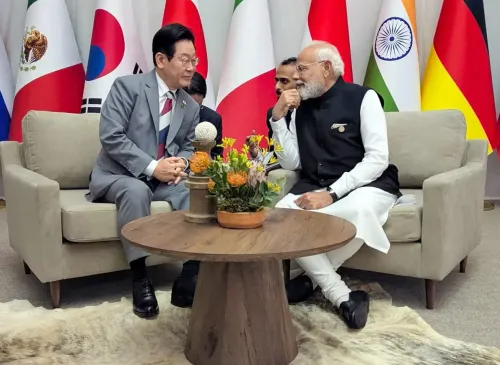
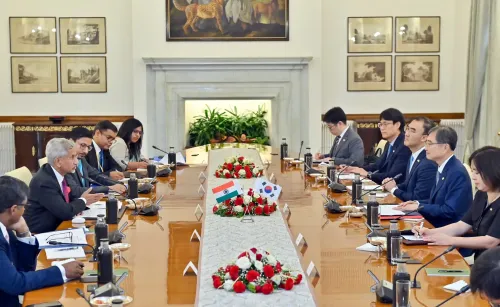
New Delhi / Seoul, April 25: India and South Korea have formally reset their bilateral relationship following the landmark visit of South Korean President Lee Jae Myung to India this week — a long-overdue summit that signals both nations are ready to move beyond decades of underperformance and build a serious strategic and technological partnership. The reset comes at a critical moment when global supply chains are fracturing, US-China tensions are reshaping trade, and the race for semiconductor dominance is rewriting geopolitical alliances.
Why This Visit Was Long Overdue
According to a detailed analysis published in One World Outlook, the delay in high-level engagement between India and South Korea was not driven by hostility but by habit — a pattern of diplomatic neglect rooted in competing priorities on both sides.
India spent years consolidating its relationship with the United States, managing its complex ties with China, deepening Gulf partnerships, and asserting its leadership across the Global South. South Korea remained preoccupied with the North Korea security threat, its defence dependence on Washington, and the uncomfortable reality of being economically entangled with China while strategically wary of it.
In that crowded diplomatic calendar, India-Korea ties were important but never urgent enough to force a summit breakthrough. That calculus has now changed — sharply and irreversibly.
Technology at the Core: Semiconductors, AI and Digital Infrastructure
The most consequential dimension of the renewed partnership is technology. Both nations are pivoting decisively away from the traditional pillars of their trade relationship — automobiles and steel — toward high-value sectors including semiconductors, artificial intelligence, digital public infrastructure, battery supply chains, digital payments, and advanced manufacturing.
The strategic logic is compelling. India brings enormous market scale, a vast talent pool, rich data ecosystems, and a rapidly maturing digital infrastructure stack. South Korea contributes world-class manufacturing discipline, export sophistication, and decades of expertise in high-technology production — particularly through global giants like Samsung and SK Hynix.
Together, they can do more than trade — they can co-build, as the One World Outlook report stated, capturing the ambition behind what is now being described as a digital bridge between the two democracies.
The Digital Bridge — More Than Diplomatic Language
The concept of a digital bridge between India and South Korea carries strategic weight that goes well beyond symbolic diplomacy. It implies shared digital standards, interoperable technology systems, and trusted partnerships in sectors — chips, cloud infrastructure, and AI models — that are increasingly classified as national security assets.
In a world where the United States is restricting chip exports to China and where Europe is scrambling to build domestic semiconductor capacity, a bilateral framework that moves from software service contracts to deep ecosystem co-development represents a qualitative leap in strategic alignment.
This is especially significant for India, which has been aggressively courting semiconductor investment under its India Semiconductor Mission, and for South Korea, which is seeking to diversify its manufacturing footprint beyond China-dependent corridors.
Defence, Maritime Security and the Indo-Pacific Dimension
Beyond technology, the renewed partnership is expanding into defence production and maritime resilience — two areas where both nations have overlapping interests given rising tensions in the Indo-Pacific.
India's growing role as a defence manufacturer under the Make in India initiative aligns naturally with South Korea's emergence as a major global arms exporter — a development that accelerated dramatically since 2022 following record-breaking weapons deals with Poland and other NATO-adjacent nations.
The bilateral cooperation also offers both countries a practical mechanism to reduce dangerous dependence on a narrow set of global suppliers — a lesson made brutally clear by the COVID-19 pandemic supply chain crisis and subsequent chip shortages that crippled automotive and electronics industries worldwide.
What Comes Next: From Summit to Substance
The critical question now is whether the political momentum generated by President Lee Jae Myung's visit translates into concrete institutional frameworks, investment commitments, and joint manufacturing projects — or whether it fades into the familiar pattern of well-worded joint statements with limited follow-through.
The One World Outlook report offered a pointed assessment: if India and South Korea follow through, this visit may be remembered not as a diplomatic courtesy but as the moment two major Asian democracies decided to stop underperforming and start building something that matches the world around them.
Analysts will be watching for joint technology task forces, progress on the bilateral Comprehensive Economic Partnership Agreement (CEPA) upgrade, and early-stage semiconductor or battery investment announcements from Korean conglomerates in India in the months ahead. The reset has been declared — the real test is delivery.
Point of View
Both nations treated their relationship as a second-tier priority — India chasing the US and Gulf, South Korea fixated on North Korea and China. That strategic inertia cost both countries real industrial and technological opportunity. What is striking now is the clarity of purpose: this is no longer about automobiles and steel, it is about who controls the chip stacks, AI models, and battery supply chains of the 2030s. The real test is not the summit communique — it is whether Korean conglomerates start breaking ground on semiconductor fabs in India within the next 18 months.
NationPress
5 Oct 2026
Frequently Asked Questions
Why did South Korean President Lee Jae Myung visit India in April 2025?
South Korean President Lee Jae Myung visited India to reset bilateral ties and launch a deeper strategic partnership focused on technology, semiconductors, AI, defence, and digital infrastructure. The visit acknowledged that previous engagement between the two nations was insufficient given today's rapidly shifting global dynamics.
What are the key areas of India-South Korea cooperation after the 2025 summit?
The renewed partnership focuses on semiconductors, artificial intelligence, digital public infrastructure, battery supply chains, advanced manufacturing, and defence production. Both nations are also exploring a digital bridge involving shared digital standards and interoperable technology ecosystems.
Why were India-South Korea ties neglected for so long?
The delay was due to competing diplomatic priorities — India was focused on the US, China, and the Gulf, while South Korea was preoccupied with North Korea and its economic dependence on China. The bilateral relationship was considered important but never urgent enough to drive a breakthrough summit.
How does the India-South Korea partnership impact semiconductor supply chains?
India and South Korea aim to co-develop semiconductor and battery supply chains, reducing dependence on a narrow set of global suppliers. India's Semiconductor Mission combined with South Korean chip manufacturing expertise from firms like Samsung and SK Hynix creates a powerful complementary framework.
What is the digital bridge concept between India and South Korea?
The digital bridge refers to a framework for shared digital standards, interoperable systems, and trusted technology partnerships between India and South Korea. It goes beyond software contracts to ecosystem-level cooperation in AI, cloud infrastructure, and digital payments — sectors now considered national security assets.