South Korea must deepen strategic ties with India beyond trade: Korea Times
Synopsis
President Lee Jae Myung's India visit deepened trade ties — but a Korea Times analysis argues Seoul is leaving its biggest strategic asset on the table. With Indo-Pacific tensions rising and South Korea exposed on maritime routes, semiconductors, and carrier capability, India offers answers Seoul cannot easily find elsewhere. The window is open; the question is whether Seoul will walk through it.
Key Takeaways
South Korean President Lee Jae Myung's India visit deepened economic ties but fell short of a full strategic partnership, according to The Korea Times .
PM Modi described Korea as a key partner in India's Viksit Bharat vision of becoming a developed nation by 2047 .
South Korea's dependence on vulnerable maritime routes — including the Strait of Hormuz and South China Sea — underscores the need for India's naval partnership.
The Indian Navy operates two aircraft carriers, including one indigenously built, offering Seoul a model for its own carrier programme.
India's satellite launch vehicles, navigation systems, and space-grade semiconductors are identified as key assets for bilateral space cooperation.
The analysis calls for joint naval exercises, technology co-development, and coordinated maritime domain awareness between the two democracies.
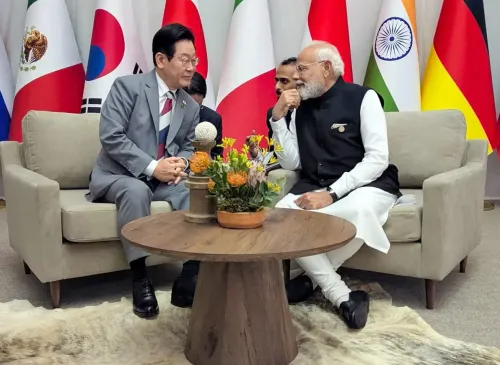
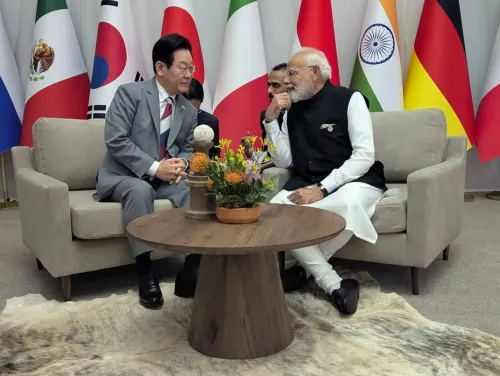
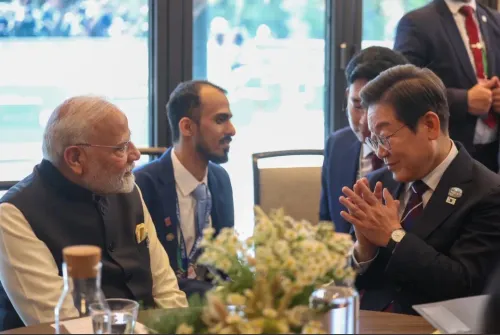
South Korea must move beyond economic engagement and build a comprehensive strategic partnership with India — one that addresses Seoul's acute vulnerabilities in maritime security, supply chains, and technological resilience, according to an analysis published in The Korea Times. The commentary follows South Korean President Lee Jae Myung's recent visit to New Delhi, which yielded deeper bilateral economic ties but, analysts argue, left the fuller strategic potential of the relationship untapped.
What President Lee's Visit Achieved
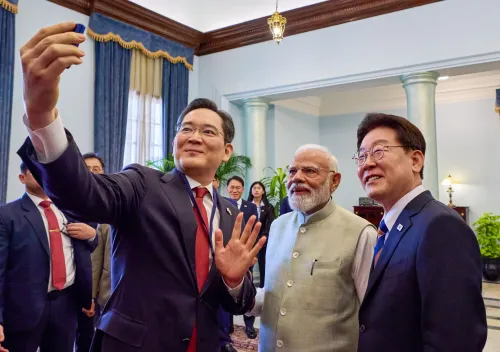
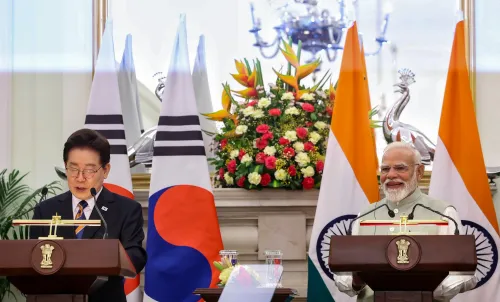
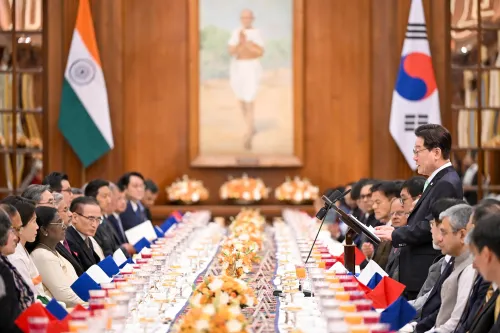
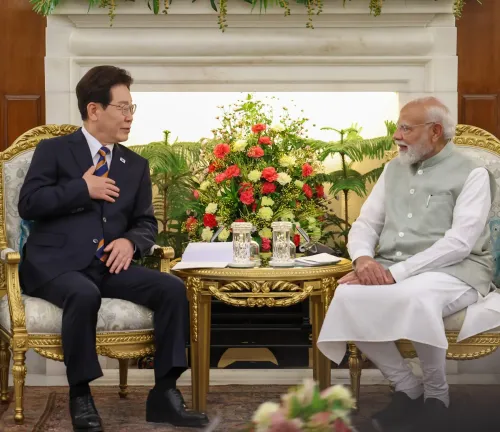
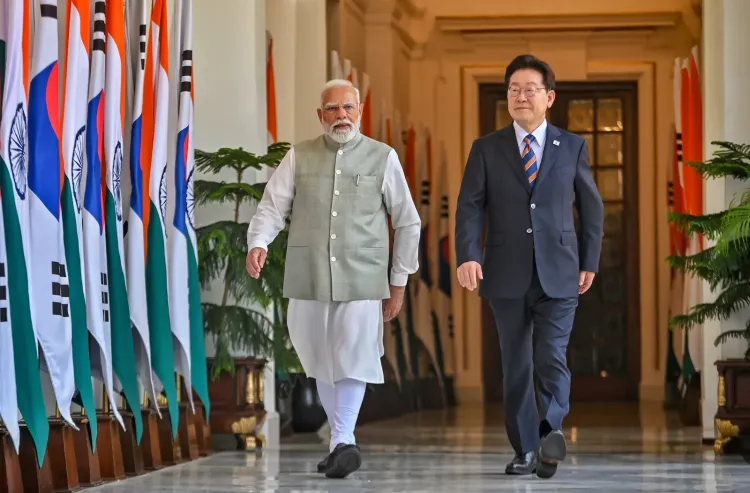
President Lee Jae Myung's India visit produced tangible progress on the economic front, strengthening bilateral commerce and investment linkages. However, the Korea Times analysis contends that Seoul must now exercise bolder strategic imagination — treating India not merely as a trade partner but as a geopolitical anchor in the Indo-Pacific.
Prime Minister Narendra Modi captured the complementarity of the relationship when he stated that 'from chips to ships, from talent to technology, and from environment to energy… Korea stands as an important partner in India's Viksit Bharat vision of becoming a developed industrial nation by 2047.' India, for its part, regards South Korea as a vital source of investment, advanced technology, and industrial expertise across shipbuilding, steel, semiconductors, and defence.
Maritime Security: India's Strategic Value for Seoul
The analysis highlights how supply chain disruptions caused by tensions around the Strait of Hormuz have exposed South Korea's heavy dependence on vulnerable maritime routes for imports and exports. As Indo-Pacific tensions rise, comparable disruptions in the South China Sea or the Taiwan Strait remain a credible risk.
India, with significant naval assets in the Indian Ocean, is well-positioned to help Seoul address these challenges. The Indian Navy has operated aircraft carrier battle groups since independence and currently maintains two carriers — including one that is indigenously built. South Korea, which has long pursued its own aircraft carrier capability, could benefit substantially from India's operational experience, potentially accelerating timelines and reducing development costs.
Technology and Space: Shared Frontiers
Beyond naval cooperation, the article identifies space as a high-potential area of collaboration. India's proven satellite launch vehicle record, its indigenous navigation system, and domestically developed space-grade semiconductors make it an attractive partner for South Korea's own space ambitions.
This comes amid a broader global scramble for trusted technology supply chains, where both democracies share an interest in reducing dependence on concentrated sources of critical components. Notably, India's semiconductor and space capabilities have grown considerably in recent years, adding strategic depth to what was previously a trade-dominant relationship.
The Case for a Multifaceted Partnership
The Korea Times analysis argues that a truly forward-looking partnership should encompass joint naval exercises, technology co-development programmes, and coordinated approaches to maritime domain awareness. Such a framework would, according to the article, not only mitigate South Korea's strategic vulnerabilities in an increasingly unstable global environment but also position both democracies as pillars of stability and prosperity across the Indo-Pacific.
With President Lee's visit having opened a promising diplomatic window, the onus is now on Seoul to translate goodwill into concrete strategic architecture — before the opportunity narrows.
Point of View
Space launch capability, and indigenous defence systems — assets Seoul is only beginning to develop. The gap is an opportunity, but bilateral defence partnerships rarely move at the speed of commentary. What is missing from the current framework is a concrete mechanism: a joint working group on maritime domain awareness, a co-development MoU on space-grade semiconductors, or a structured naval exchange programme. Without those, 'strategic partnership' risks remaining a phrase in joint statements rather than a force-multiplier in the Indo-Pacific.
NationPress
20 Sept 2026
Frequently Asked Questions
What was the outcome of South Korean President Lee Jae Myung's visit to India?
President Lee Jae Myung's visit to India resulted in a further deepening of bilateral economic relations. However, a Korea Times analysis argues that the visit has opened a window for a much broader strategic partnership that Seoul has yet to fully pursue.
Why does South Korea need a strategic partnership with India?
South Korea is heavily dependent on vulnerable maritime routes — including the Strait of Hormuz and South China Sea — for its imports and exports. A strategic partnership with India, which has significant naval assets in the Indian Ocean, could help Seoul mitigate these supply chain and maritime security risks.
How can India help South Korea with its aircraft carrier programme?
The Indian Navy has operated aircraft carrier battle groups since independence and currently maintains two carriers, including one that is indigenously built. This operational experience could help South Korea accelerate its own carrier development, reduce costs, and strengthen its ability to protect vital sea lanes.
What role does technology play in the proposed India-South Korea partnership?
India's proven satellite launch vehicles, indigenous navigation system, and space-grade semiconductors make it an attractive technology partner for South Korea. Both countries also share interests in building resilient, trusted supply chains for critical components such as semiconductors.
What specific cooperation does the Korea Times analysis recommend?
The analysis recommends joint naval exercises, technology co-development programmes, and coordinated maritime domain awareness initiatives. It argues these steps would position both India and South Korea as pillars of stability and prosperity in the Indo-Pacific.