Lee's India-Vietnam Tour: South Korea Secures Energy & Supply Chains
Synopsis
South Korean President Lee Jae Myung's six-day India-Vietnam tour ended with 27 MOUs signed, nuclear energy deals with Hanoi, and a push to double trade with New Delhi — all driven by the US-Iran war threatening Seoul's crude oil lifeline through the Strait of Hormuz.
Key Takeaways
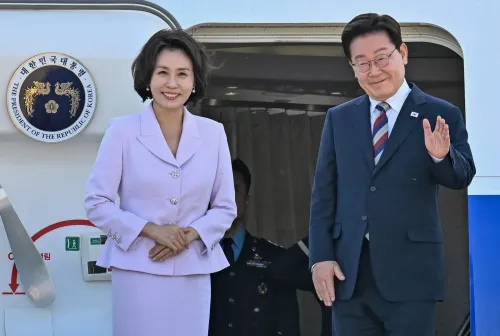
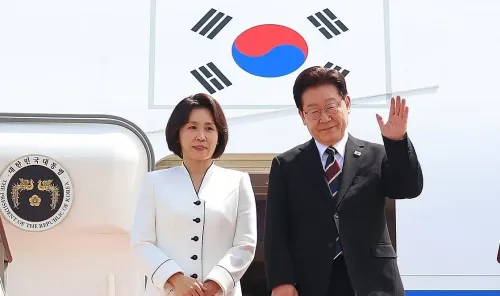
President Lee Jae Myung completed a six-day state visit to India and Vietnam , concluding on Friday, April 25, 2025 , with a total of 27 MOUs signed across both countries.
India and South Korea pledged to upgrade their CEPA and double bilateral trade from $25 billion to $50 billion by 2030 , with 15 MOUs signed at the Lee-Modi summit .
KEPCO and Vietnam National Industry-Energy Group signed 2 MOUs on nuclear power feasibility and financing, reviving Vietnam's shelved nuclear program from 2016 .
South Korea and Vietnam reaffirmed a bilateral trade target of $150 billion by 2030 , up from $94.6 billion in 2024 , with 12 MOUs signed in Hanoi .
The trip was driven by the US-Iran conflict entering its eighth week , threatening energy flows through the Strait of Hormuz — South Korea's primary crude oil import route.
President Lee was the first foreign leader to visit Vietnam since To Lam was elected state president in April 2025 , signalling Seoul's intent to build early ties with Hanoi's new leadership.
South Korean President Lee Jae Myung concluded a landmark six-day state visit to India and Vietnam on Friday, April 25, signing a combined 27 memorandums of understanding aimed at fortifying Seoul's energy security and diversifying critical mineral supply chains — moves driven by escalating disruption from the US-Iran war now entering its eighth week. The trip signals a strategic pivot by South Korea to deepen ties with the Global South as traditional supply routes face unprecedented pressure.
India Summit: Critical Minerals, Shipbuilding and a $50 Billion Trade Target
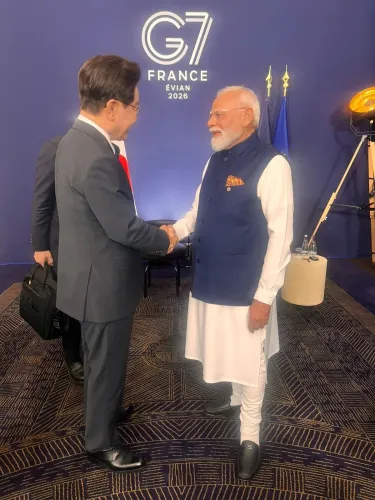
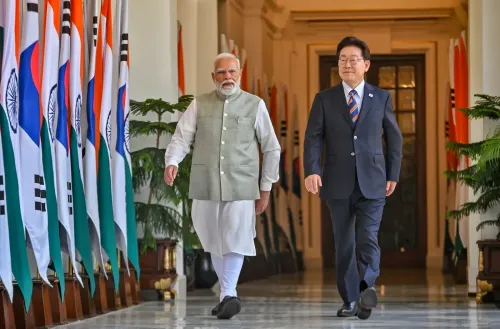
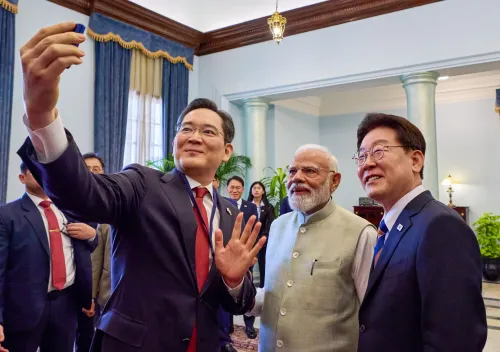
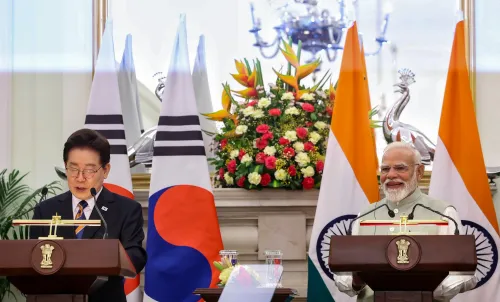
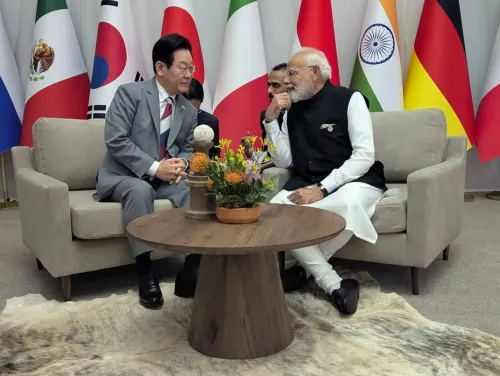
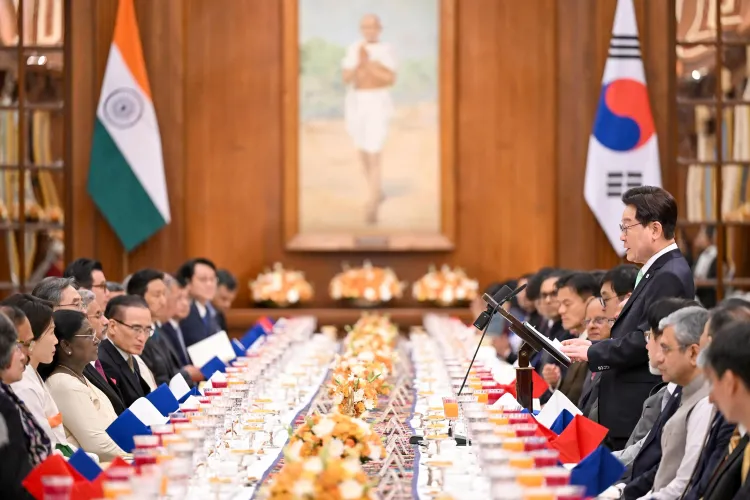
In New Delhi, President Lee held a bilateral summit with Indian Prime Minister Narendra Modi, agreeing to accelerate cooperation across critical minerals, energy, artificial intelligence, finance and shipbuilding. The two leaders also pledged to fast-track upgrades to their Comprehensive Economic Partnership Agreement (CEPA), with an ambitious target of doubling bilateral trade from the current $25 billion to $50 billion by 2030.
Fifteen MOUs were signed on the sidelines of the Lee-Modi summit, covering a broad spectrum of sectors. Among the most strategically significant was an agreement laying the groundwork for the joint construction of a shipyard in India — a move that could reshape South Asia's maritime manufacturing landscape.
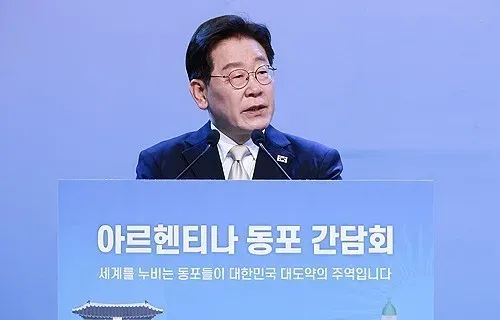
President Lee stated following the summit: In light of recent developments in the Middle East, we will continue to strengthen bilateral cooperation to ensure a stable supply of energy resources and key raw materials. This carries significant weight as South Korea imports nearly 70% of its crude oil through the Strait of Hormuz, a chokepoint now under severe stress due to the ongoing conflict.
Notably, India — now the world's fourth-largest economy with a population of approximately 1.5 billion — has emerged as a preferred partner for nations seeking supply chain alternatives outside China and the volatile Middle East corridor. This aligns with New Delhi's own push to attract advanced manufacturing investment.
Vietnam Visit: Nuclear Energy Revival and $150 Billion Trade Goal
In Hanoi, President Lee became the first foreign leader to visit Vietnam since To Lam was elected state president earlier in April 2025, consolidating power by simultaneously holding the country's two most powerful positions. The symbolic timing of Lee's visit underscores Seoul's intent to build early-mover advantage with Hanoi's new leadership.
The two sides agreed to deepen cooperation across energy, infrastructure, technology and supply chain coordination, reaffirming a bilateral trade target of $150 billion by 2030 — up significantly from $94.6 billion in 2024. Twelve MOUs were signed covering energy, infrastructure, artificial intelligence and transportation.
Perhaps the most consequential development from the Hanoi leg was the emergence of nuclear energy as a new pillar of cooperation. Vietnam is seeking a credible partner to revive a nuclear power program shelved in 2016 due to financing constraints. In response, Korea Electric Power Corporation (KEPCO) and Vietnam National Industry-Energy Group signed two MOUs covering joint feasibility studies and financing for potential nuclear power development projects.
On Thursday, President Lee also held separate meetings with Vietnamese Prime Minister Le Minh Hung and National Assembly Chairman Tran Thanh Man to further advance bilateral ties at multiple levels of government.
The Bigger Picture: Middle East Conflict Reshaping Asia's Energy Architecture
The urgency behind Lee's tour cannot be overstated. The US-Iran conflict, now in its eighth week, has disrupted energy flows through the Strait of Hormuz — a critical chokepoint for South Korea's imports of crude oil and industrial feedstocks like naphtha, essential for petrochemicals and semiconductor manufacturing. Any prolonged blockade or escalation could trigger severe supply shocks for Seoul's export-driven economy.
Vietnam has already emerged as a key manufacturing base for major South Korean conglomerates including Samsung and LG, with the country accounting for a substantial share of their global electronics output. Deepening ties now positions Seoul to further reduce dependence on China-based production amid ongoing US-China trade tensions.
India offers access to critical minerals — including rare earths, lithium and cobalt — vital for South Korea's battery and semiconductor industries. As China tightens export controls on rare earth processing, Seoul's pivot to New Delhi is a direct hedge against Beijing's growing leverage over global tech supply chains.
Strategic Significance: South Korea's Global South Engagement
National Security Adviser Wi Sung-lac stated that President Lee's trip laid the groundwork for deeper economic cooperation with key partners, explicitly referencing Seoul's expanding engagement with the Global South. As the G7-led economic order fragments, middle powers like South Korea are recalibrating their foreign economic policy to build redundancy and resilience.
Critics and analysts will note that MOUs must be converted into binding agreements and actual capital flows to deliver strategic value. South Korea's track record on CEPA implementation with India has historically been slow, with the original agreement signed in 2009 yet to be substantially upgraded despite years of negotiation.
Looking ahead, follow-up working-level talks on CEPA upgrades and nuclear feasibility studies are anticipated in the coming months. Whether these high-level commitments translate into durable partnerships will determine Seoul's resilience in an increasingly fragmented global order.
Point of View
But out of vulnerability. With the Strait of Hormuz under threat and China tightening rare earth controls, Seoul is racing to build alternative energy and mineral pipelines before the next shock hits. The nuclear MOU with Vietnam is the sleeper story here — it positions South Korean technology at the heart of Southeast Asia's energy future. The real test is whether these MOUs join the long graveyard of unimplemented Indo-Korean CEPA promises or become binding deals that reshape regional trade architecture.
NationPress
25 Sept 2026
Frequently Asked Questions
What was the purpose of South Korean President Lee Jae Myung's visit to India and Vietnam?
President Lee Jae Myung visited India and Vietnam to strengthen energy security and diversify critical mineral supply chains amid disruption caused by the ongoing US-Iran conflict. The six-day trip resulted in 27 MOUs covering energy, AI, nuclear power, infrastructure and shipbuilding.
What did India and South Korea agree on during the Lee-Modi summit?
India and South Korea agreed to deepen cooperation in critical minerals, energy, AI, finance and shipbuilding, and pledged to upgrade their CEPA to double bilateral trade from $25 billion to $50 billion by 2030. Fifteen MOUs were signed, including an agreement to explore joint shipyard construction in India.
What nuclear energy deal did South Korea sign with Vietnam?
South Korea's KEPCO and Vietnam National Industry-Energy Group signed two MOUs on joint feasibility studies and financing for nuclear power development projects. Vietnam is seeking to revive a nuclear power program it shelved in 2016 due to financing constraints.
Why is the Strait of Hormuz important to South Korea?
The Strait of Hormuz is a critical chokepoint through which South Korea imports the majority of its crude oil and industrial feedstocks like naphtha. The ongoing US-Iran war has disrupted energy flows through this route, raising urgent concerns about Seoul's energy security.
What is South Korea's trade target with Vietnam by 2030?
South Korea and Vietnam reaffirmed a bilateral trade target of $150 billion by 2030, up from $94.6 billion recorded in 2024. The two countries also agreed to strengthen supply chain coordination and cooperation in energy, infrastructure and AI.