South Korea's Lee Jae Myung returns after 11-day tour spanning US tech, South America
Synopsis
South Korean President Lee Jae Myung's 11-day overseas sweep — from an AI sit-down with Nvidia's Jensen Huang in San Francisco to mineral and energy deals across Brazil, Chile, and Argentina — reflects Seoul's twin strategic bets: locking in AI partnerships with US tech giants and securing the raw materials needed to power them.
Key Takeaways
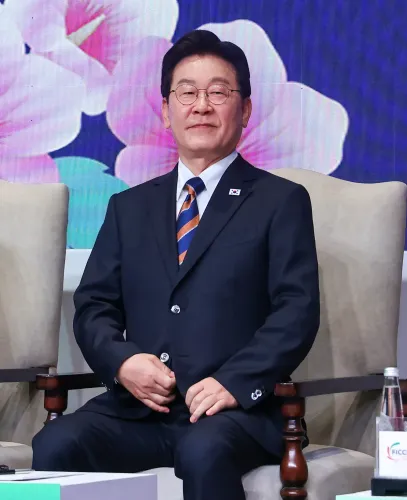
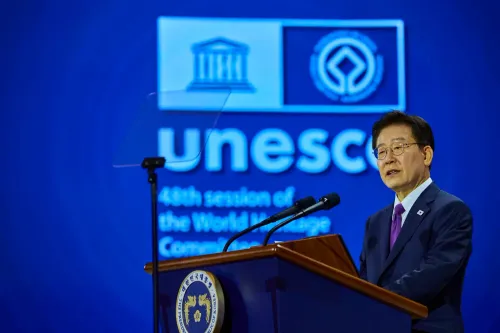
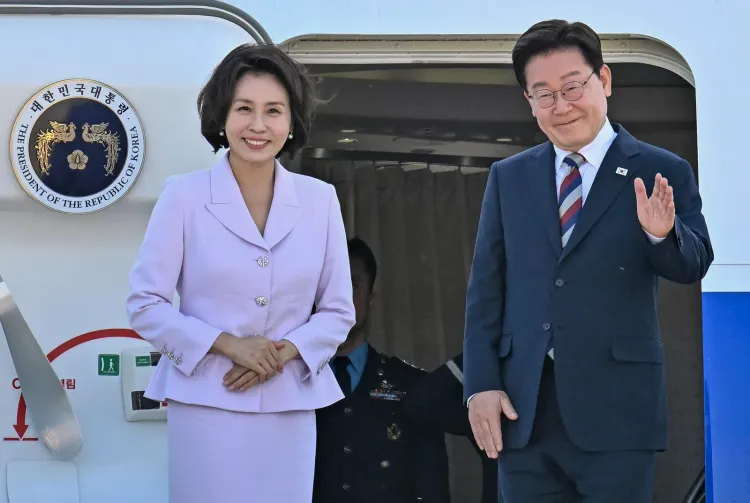
President Lee Jae Myung returned to Seoul on 3 August after an 11-day overseas tour .
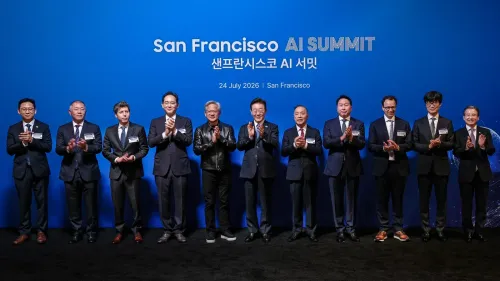
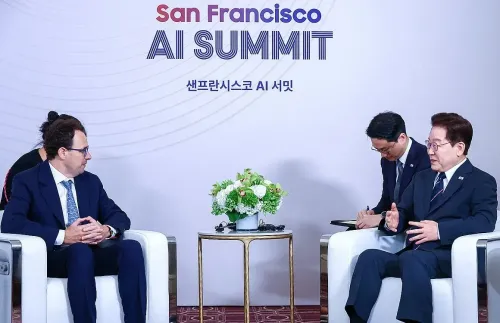
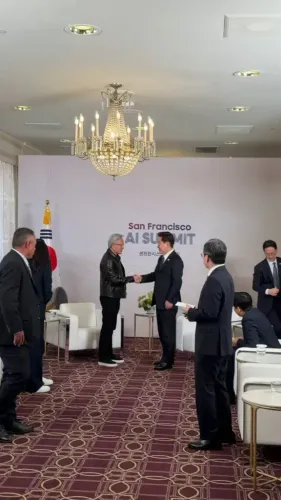
In San Francisco , Lee met Nvidia CEO Jensen Huang and heads of three other US tech firms to advance artificial intelligence cooperation.
Summits in Brazil , Chile , and Argentina produced agreements on critical minerals and crude oil imports .
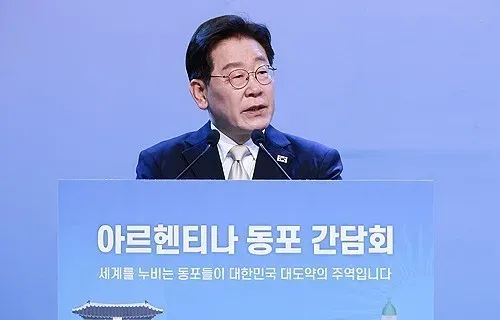
A brief stop in Frankfurt included a meeting with the Korean diaspora community.
Back home, Lee will chair a closed-door economic meeting at Cheong Wa Dae with Prime Minister Han Seong-sook and Finance Minister Koo Yun-cheol on housing and stock market volatility.
The government is weighing measures on single-stock leveraged ETFs , which have been linked to elevated market swings.
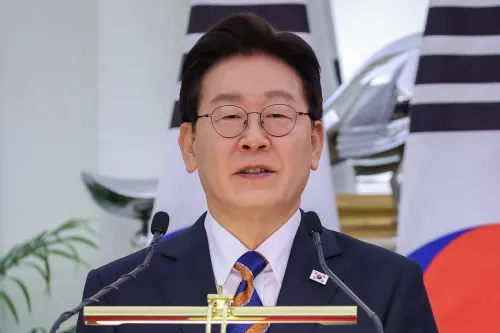
South Korean President Lee Jae Myung touched down in Seoul on Monday, 3 August after completing an 11-day overseas tour that spanned the United States, three South American nations, and a brief stop in Germany. The trip combined high-stakes technology diplomacy with bilateral summits aimed at securing critical mineral and energy supply chains.
AI and Tech Diplomacy in San Francisco
The tour's opening leg brought Lee to San Francisco, where he held a direct meeting with Nvidia Chief Executive Officer Jensen Huang alongside the heads of three other major US technology companies. The discussions centred on advancing bilateral cooperation in artificial intelligence, a sector South Korea has identified as a strategic priority. The Nvidia meeting, in particular, signals Seoul's intent to deepen semiconductor and AI supply-chain ties with leading American firms at a time of intensifying global competition in the sector.
South America Summits: Minerals and Energy
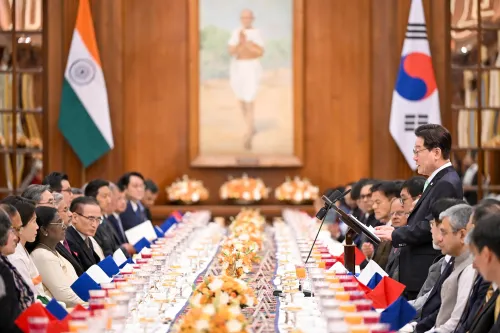
Lee subsequently visited Brazil, Chile, and Argentina, holding presidential summits in each country. The meetings yielded agreements to strengthen cooperation across critical and strategic minerals — lithium, copper, and rare earths among the likely focus areas given the three nations' resource profiles — as well as crude oil imports. South Korea, which imports nearly all of its energy needs, has been actively diversifying supply partnerships amid global commodity volatility.
Frankfurt Stopover
At his final stop in Frankfurt, Germany, Lee held a brief community engagement with members of the Korean diaspora before returning home. The stopover, while short, underscored the diplomatic value South Korea places on overseas Korean communities as informal ambassadors.
Domestic Agenda: Housing and Markets
Back in Seoul, President Lee was scheduled to resume policy briefings from government ministries beginning Tuesday, starting with the trade, environment, and labour ministries, followed by the foreign, defence, and unification ministries on Wednesday.
Later on Monday, Lee was set to convene a special closed-door meeting at Cheong Wa Dae with key economic ministers, including Prime Minister Han Seong-sook and Finance Minister Koo Yun-cheol, to address mounting concerns over the housing market and sharp fluctuations in the local stock market. The government has been working to revise the property tax system, tackle housing supply-demand imbalances, and introduce regulatory measures around single-stock leveraged exchange-traded funds (ETFs), which officials have linked to heightened market volatility.
The dual challenge of stabilising real estate and reining in speculative trading instruments will likely define the domestic economic agenda in the weeks ahead.
Point of View
Then lock in the raw materials — lithium, copper, rare earths — at the base of it in South America. What is less clear is whether the agreements signed in Brazil, Chile, and Argentina will translate into binding supply commitments or remain aspirational MOUs, a pattern that has historically plagued South Korea's resource diplomacy. On the domestic front, the immediate pivot to housing and leveraged-ETF regulation signals that Lee's political capital from the foreign trip will be tested quickly by economic pressures at home.
NationPress
17 Sept 2026
Frequently Asked Questions
Where did South Korean President Lee Jae Myung travel during his 11-day tour?
President Lee visited San Francisco in the United States, followed by Brazil, Chile, and Argentina in South America, before a brief stopover in Frankfurt, Germany. The tour covered technology diplomacy, bilateral energy and mineral deals, and community engagement with the Korean diaspora.
Why did Lee Jae Myung meet Nvidia CEO Jensen Huang?
The meeting in San Francisco was aimed at promoting bilateral cooperation on artificial intelligence between South Korea and leading US technology companies. Nvidia, as a dominant supplier of AI chips, is a key partner for South Korea's stated ambition to become a major AI economy.
What did South Korea agree to with Brazil, Chile, and Argentina?
Lee held presidential summits in all three countries and agreed to strengthen cooperation in critical and strategic minerals as well as crude oil imports. South Korea depends on imports for nearly all its energy needs, making supply diversification a core foreign policy priority.
What domestic issues will President Lee address after returning?
Lee is set to resume ministry briefings from Tuesday and will hold a special closed-door meeting with Prime Minister Han Seong-sook and Finance Minister Koo Yun-cheol to discuss the housing market and sharp fluctuations in the local stock market, including measures targeting single-stock leveraged ETFs.
What are single-stock leveraged ETFs and why is South Korea concerned about them?
Single-stock leveraged ETFs are financial instruments that amplify exposure to individual stocks, often by two or three times, and have been linked to heightened volatility in South Korea's stock market. The government is reportedly considering regulatory measures to curb their impact on market stability.