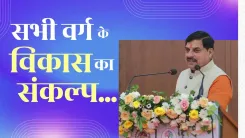
CM Saini Demands Rahul Gandhi Apologise for 1984 Sikh Riots
Synopsis
Haryana Chief Minister Nayab Singh Saini on 1 November 2026 demanded Rahul Gandhi seek penance for the 1984 anti-Sikh riots, invoking Rajiv Gandhi's controversial 'big tree' remark made after Indira Gandhi's assassination and the ensuing massacre of over 3,000 Sikhs.
Key Takeaways
CM Nayab Singh Saini used the anniversary of Indira Gandhi's assassination (31 October 1984) to demand a public apology from Rahul Gandhi for the anti-Sikh riots.
The BJP invoked Rajiv Gandhi's remark — 'when a big tree falls, the earth shakes' — made in the aftermath of the riots in which over 3,000 Sikhs were killed.
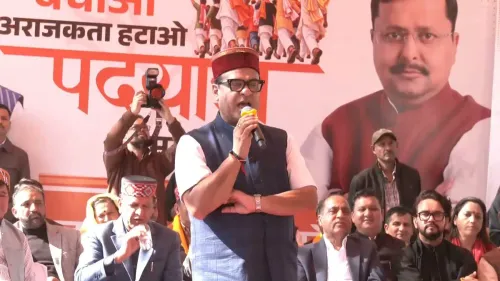
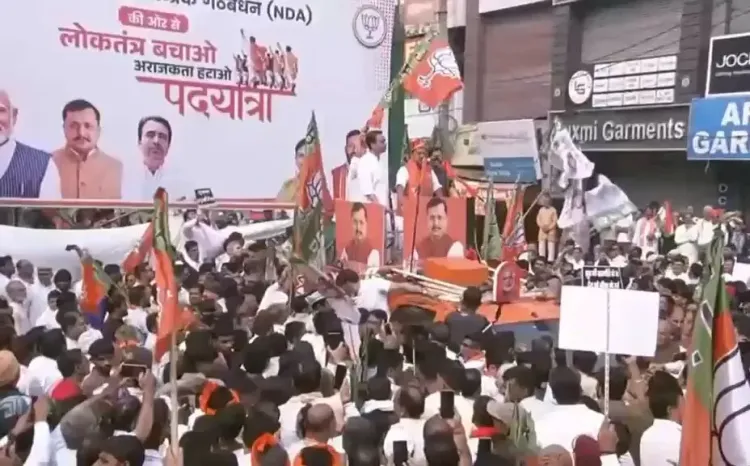
A BJP leader raised the demand at a public event in Rohtak, Haryana .
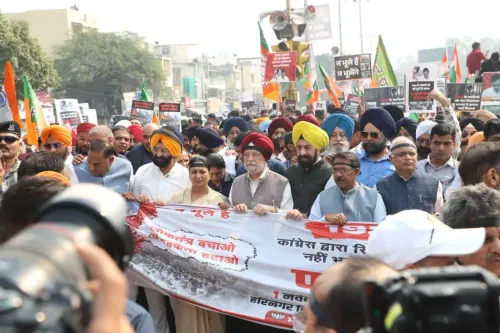
Saini framed the attack as a call for accountability, contrasting Rahul Gandhi's political demonstrations with silence on the 1984 violence.
The BJP has consistently cited the 1984 riots and Congress leaders' contemporaneous statements to question the party's secular credentials.
Congress's formal response to the renewed demand for apology remains awaited.
On the anniversary of one of independent India's darkest chapters, Haryana Chief Minister Nayab Singh Saini turned a political demonstration into a reckoning — demanding that Congress leader Rahul Gandhi seek forgiveness for the 1984 anti-Sikh massacre rather than take to the streets. The sharpest edge of the attack came from a quote four decades old: 'जब बड़ा पेड़ गिरता है, तो धरती कांपती है' ('when a big tree falls, the earth shakes') — words attributed to Rajiv Gandhi in the bloodstained days that followed Indira Gandhi's assassination on 31 October 1984.
The Rohtak Broadside and the Rajiv Gandhi Quote
CM Saini amplified a broadside delivered in Rohtak, where a BJP leader reminded the gathering of Rajiv Gandhi's infamous remark made after Indira Gandhi's assassination triggered nationwide anti-Sikh violence. The official death toll from those riots stands at over 3,000 Sikhs killed across India, a figure that has long shadowed the Congress party's legacy. Saini wrote pointedly: 'Today was not a day for demonstrations, Rahul Gandhi ji — it was a day for penance and an apology for the 1984 Sikh massacre.'
The BJP's line of attack was direct: that Rahul Gandhi's public activism cannot coexist with silence on what his father allegedly said at the height of the violence. The implication — accountability cannot be selective.
A Recurring BJP Demand With Electoral Weight
The BJP has weaponised the 1984 riots as a recurring pressure point against the Gandhi family, particularly during political confrontations involving minority communities. The demand for a formal apology from Congress is not new — but its revival on 1 November 2026, the anniversary of Indira Gandhi's assassination, carries deliberate symbolic weight. For the Sikh community, the date is inseparable from grief; for Haryana's BJP leadership, it is a moment to press that grief into political accountability.
Saini closed with a line aimed squarely at the public: 'The people want not demonstrations, but accountability for that injustice.' It is a framing the BJP has refined over years — positioning Congress's silence as a form of complicity.
Whether Congress responds with a formal statement on the 1984 events — or absorbs the attack without engaging — will define the next beat of this political exchange. The demand has been made loudly, in public, on the most charged date on the calendar.
Point of View
A terrain Congress typically claims. By pairing Rahul Gandhi's current political activism with his father's notorious remark, the party constructs a narrative of inherited impunity. The demand gains traction in a state like Haryana with a significant Sikh population, making it simultaneously a national moral argument and a local electoral calculation. The longer Congress avoids a direct response, the more the silence itself becomes the BJP's evidence.
NationPress
1 Nov 2026
Frequently Asked Questions
What did Rajiv Gandhi say after the 1984 Sikh riots?
Rajiv Gandhi made the statement 'when a big tree falls, the earth shakes' in November 1984, days after Indira Gandhi's assassination triggered widespread anti-Sikh violence across India that killed over 3,000 people. The remark has been widely cited as appearing to justify or minimise the scale of the violence.
Why is CM Nayab Singh Saini demanding an apology from Rahul Gandhi for 1984?
CM Saini argues that Rahul Gandhi cannot engage in public political activism while his party remains silent on the accountability for the 1984 anti-Sikh riots, in which over 3,000 Sikhs died, and for statements made by his father Rajiv Gandhi at the time.
What happened in the 1984 anti-Sikh riots?
Following the assassination of Prime Minister Indira Gandhi on 31 October 1984 by her Sikh bodyguards, widespread anti-Sikh violence erupted across India. Official estimates place the death toll at over 3,000 Sikhs, with Delhi being among the worst-affected cities.
Has Congress apologised for the 1984 Sikh massacre?
Former Prime Minister Manmohan Singh offered an apology in Parliament in 2005, calling the riots a 'negation of the concept of nationhood.' However, the BJP contends that the Gandhi family itself has never directly sought forgiveness, and the demand for a personal apology from Congress leadership persists.
Where did the BJP raise the 1984 apology demand against Rahul Gandhi?
The demand was raised at a public gathering in Rohtak, Haryana, and was subsequently amplified by Haryana Chief Minister Nayab Singh Saini on social media on 1 November 2026.