Puri Leads 1984 Homage Padyatra at Hari Nagar, Delhi
Synopsis
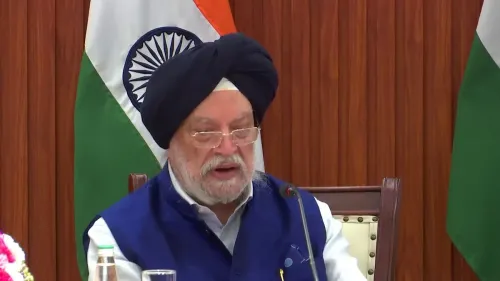
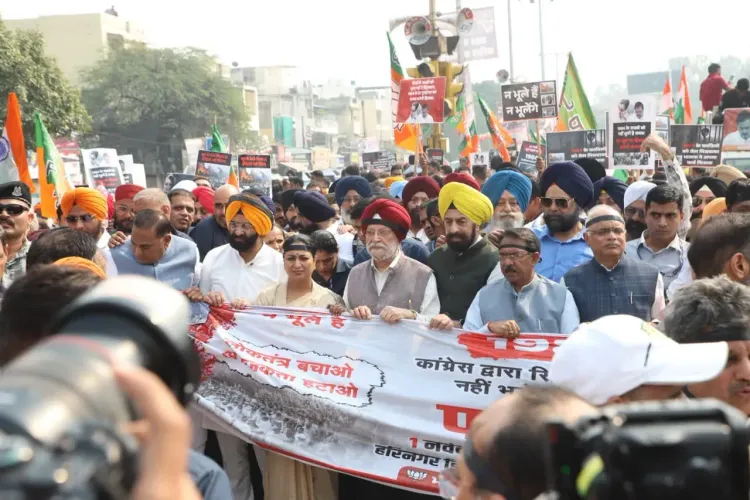
Union Petroleum Minister Hardeep Singh Puri led a jansabha and Padyatra at Hari Nagar, Delhi, on 1 November 2026, paying homage to 1984 anti-Sikh violence victims, accusing Congress of shielding perpetrators, and vowing justice until the last guilty party is punished.
Key Takeaways
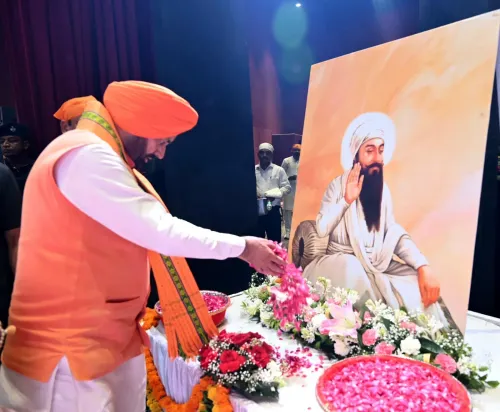
Hardeep Singh Puri joined the Sikh Sangat for a jansabha and Padyatra at Hari Nagar, Delhi on 1 November 2026 to commemorate victims of the 1984 anti-Sikh violence .
Many attendees were survivors, children, and grandchildren of those killed in the 1984 riots that erupted after the assassination of PM Indira Gandhi on 31 October 1984 .
Puri directly accused the Indian National Congress of encouraging the violence and subsequently sheltering perpetrators for decades.
He credited PM Narendra Modi with taking 'firm resolve' to bring convicted perpetrators to justice, including through a Supreme Court-mandated SIT in 2018 .
Senior 1984 justice activist and advocate H.S.
Phoolka , Delhi CM Rekha Gupta , and several MPs and ministers joined the Padyatra.
Puri pledged the Sangat 'will not rest till the last remaining perpetrator is punished by law,' signalling continued political and legal pressure.
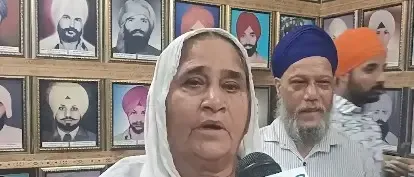
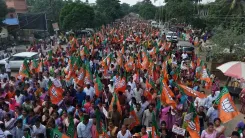
Forty-two years on, the streets of Hari Nagar, Delhi carried the weight of an unhealed wound. Union Petroleum Minister Hardeep Singh Puri joined members of the Sikh Sangat on Sunday, 1 November 2026 for a jansabha and Padyatra to pay homage to the victims of the 1984 anti-Sikh violence — a gathering where many present were survivors, children, and grandchildren of those killed in the carnage.
A Padyatra Rooted in Rage and Memory
Puri did not mince words. 'ना भूले हैं, ना भूलेंगे' — 'We have not forgotten, we will not forget' — opened his post, setting the register for everything that followed. He described the violence as 'the most brutal ever unleashed against Sikhs in Independent India,' recounting how Gurdwara Sahibs were attacked, homes and properties burnt to the ground, and the streets of Delhi left 'littered with bodies of murdered Sikhs.'
The events he referenced erupted in the days following the assassination of Prime Minister Indira Gandhi on 31 October 1984. What followed across Delhi and other cities was a wave of targeted killings of Sikh men and women, widely documented and investigated by multiple commissions over the subsequent decades.
The Political Charge Against Congress
Puri levelled a direct and sharp indictment at the Indian National Congress, accusing the party of having 'openly encouraged and aided' the violence, then spent decades sheltering and protecting perpetrators. 'Those who now talk of Mohabbat [love] are the original founding fathers of hate against Sikhs,' he wrote, in a pointed reference to opposition campaign sloganeering. He called on Congress leaders to be 'ashamed and repentant.'
This narrative sits at the centre of the BJP's long-standing contrast with the Congress on the 1984 question. The Nanavati Commission, constituted in 2000 and reporting in 2005, examined the riots but its findings were disputed by victims' groups as incomplete. It took a Supreme Court-mandated Special Investigation Team in 2018 to finally drive convictions in several high-profile cases.
Credit to PM Modi, a Promise to the Sangat
Puri credited Prime Minister Narendra Modi with the 'firm resolve' to ensure perpetrators who had been 'protected, and even promoted by Congress Party' were eventually brought to justice. But he was equally clear that the task is unfinished. 'Our Sangat will not rest till the last remaining perpetrator is punished by law,' he wrote — a commitment that lands as both tribute to the dead and a political pledge to the living.
Among the prominent figures who joined the Padyatra were Delhi CM Smt Rekha Gupta, senior advocate and long-time 1984 justice activist Sdr H.S. Phoolka, BJP Delhi President and Union Minister Sh H.D. Malhotra, Members of Parliament Sh Ramvir Bidhuri and Smt K.J. Sehrawat, Delhi Ministers Sh Ashish Sood and Sdr M.S. Sirsa, and several MLAs, councillors, and party office-bearers.
A Date That Never Passes Quietly
The timing is never coincidental. Annual commemorations on 31 October and 1 November have become a fixed point in India's political calendar — a moment when the Sikh community mourns, and when political parties are held to account for what they did or failed to do in those blood-soaked days of 1984. With court proceedings in remaining cases still pending, the anniversary retains its urgency well beyond ceremony.
For the families who walked Hari Nagar's streets on Sunday, the padyatra was not a political event. It was evidence that the promise — ना भूले हैं, ना भूलेंगे — still holds.
Point of View
And Puri's Hari Nagar Padyatra follows an established BJP playbook: use the anniversary to simultaneously honour Sikh victims and prosecute a political case against Congress. What sharpens this year's edition is the convergence of unresolved court cases, a newly elected Delhi government, and an opposition that has struggled to credibly distance itself from the violence's political legacy. Puri's invocation of PM Modi as the agent of justice — and his explicit rejection of Congress's 'Mohabbat' messaging as hypocritical — frames the 1984 file as a live electoral liability for the opposition rather than a settled historical matter. The presence of H.S. Phoolka, a non-partisan icon of the justice movement, lends the gathering a legitimacy beyond party optics.
NationPress
1 Nov 2026
Frequently Asked Questions
What is the 1984 anti-Sikh violence and why is it commemorated on 1 November?
The 1984 anti-Sikh riots erupted across Delhi and other cities following the assassination of Prime Minister Indira Gandhi on 31 October 1984 . Thousands of Sikh men and women were killed in days of targeted mob violence. 1 November marks the height of the killings, and the date is observed annually as a day of mourning and demands for justice.
What did Hardeep Singh Puri do at Hari Nagar on 1 November 2026?
Union Petroleum Minister Hardeep Singh Puri joined the Sikh Sangat for a jansabha (public assembly) and Padyatra (solidarity march) at Hari Nagar, Delhi , paying homage to victims of the 1984 violence and vowing that justice would be pursued until the last perpetrator was punished.
What action has the Supreme Court taken on 1984 anti-Sikh riot cases?
In 2018 , the Supreme Court of India constituted a Special Investigation Team to probe high-profile 1984 cases. The SIT's work led to convictions of several perpetrators who had previously evaded justice. Cases against remaining accused are still pending in courts.
Who is H.S. Phoolka and why was his presence significant at the Padyatra?
H.S. Phoolka is a senior advocate who has spent decades fighting legal battles for 1984 riot victims . His presence at the Padyatra alongside BJP leaders added cross-party credibility to the homage event, as he is widely recognised as an independent voice for justice in these cases.
Why does the BJP link Congress to the 1984 anti-Sikh violence?
Multiple investigations, including the Nanavati Commission (2000–2005) , documented the role of individuals with Congress affiliations in organising or abetting the violence. The BJP has long argued that Congress protected these individuals from prosecution for decades, and uses annual commemorations to highlight this as an unresolved political and moral failure.