CM Pema Khandu: Buddha Relics Open for Darshan at Tawang
Synopsis
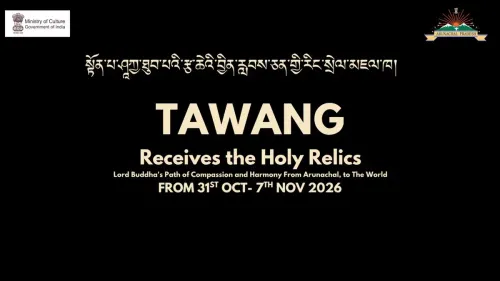
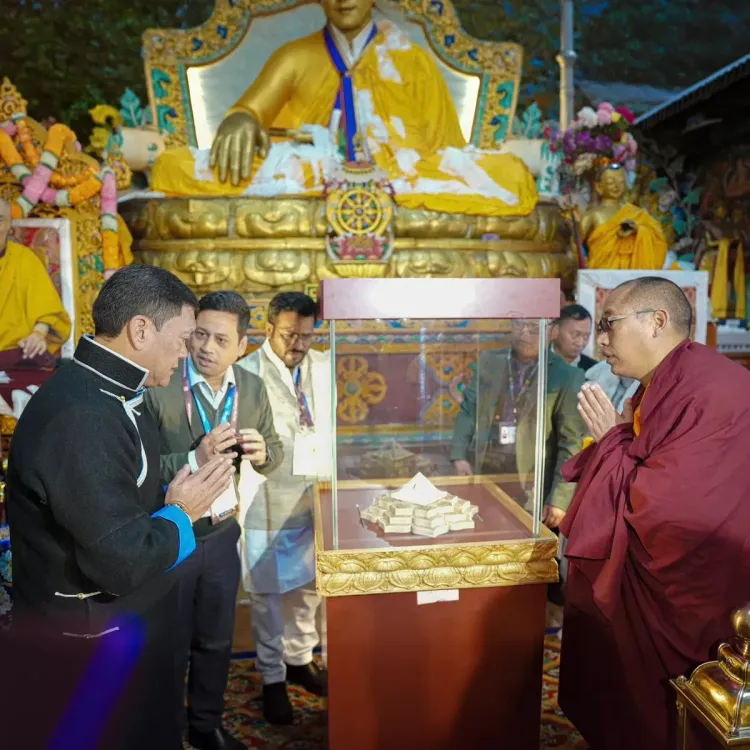
The Sacred Exposition of Holy Relics of Bhagwan Buddha has opened for public darshan at Tawang Monastery in Arunachal Pradesh, CM Pema Khandu announced on 1 November 2026 — the relics' first return to the 17th-century Gelugpa monastery in 13 years.
Key Takeaways
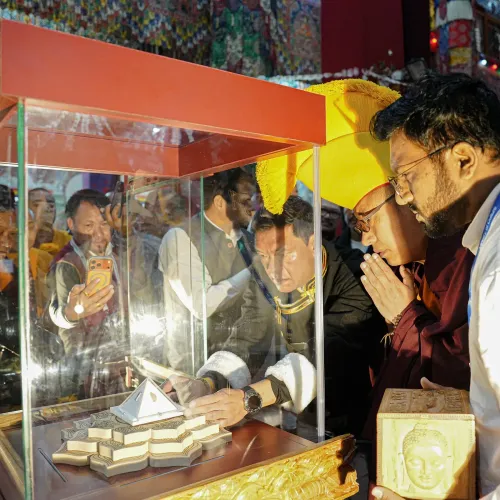
The Sacred Exposition of Holy Relics of Bhagwan Buddha is now open for public darshan at Tawang Monastery (Gaden Namgyal Lhatse) in Arunachal Pradesh.
This is the first time in 13 years the holy relics have returned to Tawang, making it a rare pilgrimage occasion for Buddhist devotees.
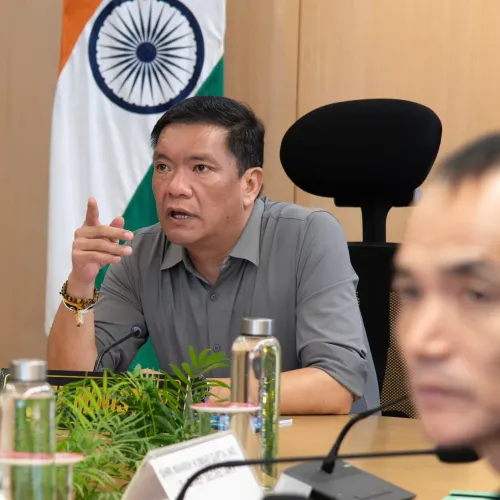
Arunachal Pradesh CM Pema Khandu made the announcement on 1 November 2026 via social media.
Tawang Monastery is India's largest Gelugpa Buddhist monastery, founded in the 17th century , and sits near the Line of Actual Control with China.
The Indian government has promoted Tawang and similar sites under the Swadesh Darshan scheme since 2014-15 as part of Buddhist heritage circuits in the Northeast.
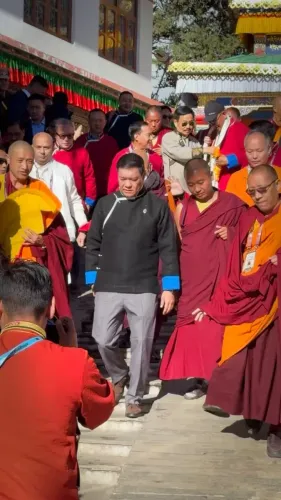
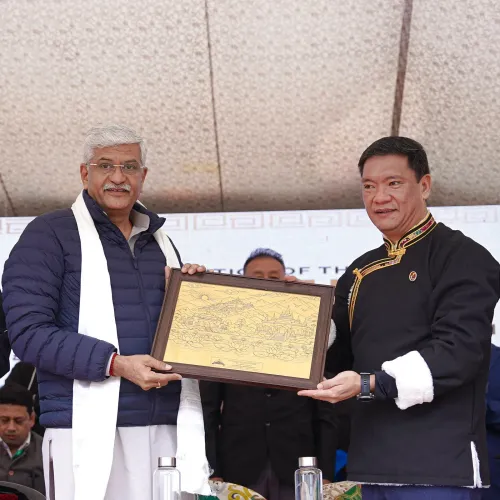
After a 13-year absence, one of Buddhism's most sacred occasions has returned to the mountains of Arunachal Pradesh — the Sacred Exposition of Holy Relics of Bhagwan Buddha is now open for public darshan (veneration) at Gaden Namgyal Lhatse, popularly known as Tawang Monastery. Arunachal Pradesh Chief Minister Pema Khandu announced the opening on Sunday, 1 November 2026, calling it 'a rare opportunity to pay homage to the Enlightened One and seek his blessings.'
A once-in-a-generation return to Tawang
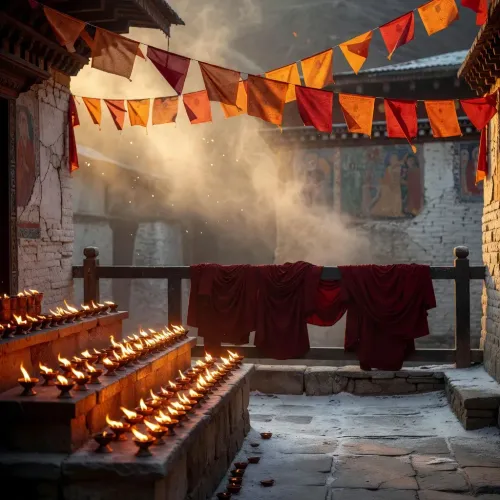
The exposition marks the first time in 13 years that the holy relics have been brought to Tawang for public veneration — making this a genuinely rare pilgrimage window for Buddhist devotees. Tawang Monastery, founded in the 17th century and the largest Gelugpa Buddhist monastery in India, sits at roughly 3,000 metres above sea level near the Line of Actual Control with China. For the devout, the relics' arrival here carries the weight of a once-in-a-generation moment.
Sacred relic expositions of this kind are held at multi-year intervals, coordinated between monastic authorities and the state government, and draw pilgrims from across the Northeast and beyond. CM Khandu's announcement signals that arrangements are in place and the monastery's doors are open.
Tawang's place in India's Buddhist heritage map
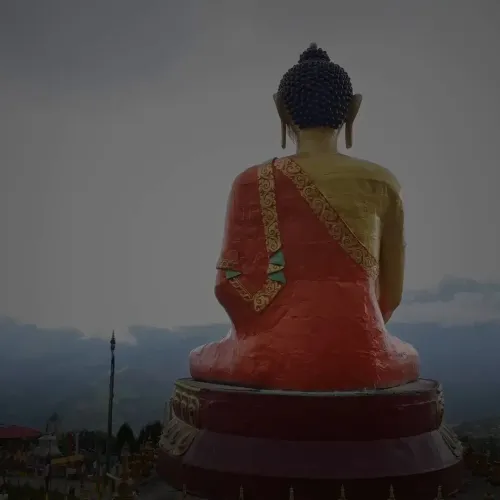
Gaden Namgyal Lhatse — 'the celestial paradise of the divine site' — is not merely a local landmark. It is a living seat of the Gelugpa school of Tibetan Buddhism and a cultural anchor for the Monpa people of western Arunachal. The monastery's position close to the border has long given it strategic as well as spiritual significance, and successive governments in Itanagar and New Delhi have treated it as a flagship of the state's identity.
The Government of India has promoted sites like Tawang under its Swadesh Darshan scheme since 2014-15, earmarking funds for Buddhist heritage circuits in the Northeast to boost religious tourism and strengthen border-area community ties.
Why border-region cultural events carry extra weight
Events at Tawang rarely stay purely local in their resonance. The monastery's proximity to the Line of Actual Control means that a high-profile, state-supported religious gathering here carries soft-power undertones — reaffirming the living cultural continuity of communities on India's northeastern frontier. That context gives CM Khandu's announcement a dimension beyond routine heritage promotion.
For the thousands of devotees expected to make the journey, however, the calculus is simpler and more profound: a chance, rare by any measure, to stand before the relics of the Enlightened One in one of the Himalayas' most extraordinary monasteries.
The relics will not wait — and neither, it seems, will the pilgrims.
Frequently Asked Questions
Where is the Sacred Exposition of Holy Relics of Bhagwan Buddha being held in 2026?
The Sacred Exposition is being held at Gaden Namgyal Lhatse, also known as Tawang Monastery, in the Tawang district of Arunachal Pradesh.
How often do the Buddha relics come to Tawang Monastery?
The expositions occur at multi-year intervals. The current 2026 exposition is the first time the relics have returned to Tawang in 13 years.
What is Gaden Namgyal Lhatse?
Gaden Namgyal Lhatse is the formal name for Tawang Monastery, a major 17th-century Gelugpa Buddhist monastery in Arunachal Pradesh and the largest of its kind in India.
Why is Tawang Monastery significant in India?
Tawang Monastery is India's largest Gelugpa Buddhist monastery, a key pilgrimage site for Buddhist communities in the Northeast, and an important cultural and strategic landmark near the Line of Actual Control with China.
What is the Swadesh Darshan scheme and how does it relate to Tawang?
Swadesh Darshan is a Government of India scheme launched in 2014-15 to develop religious tourism circuits, including Buddhist heritage sites in the Northeast such as Tawang Monastery.