Assam CM Himanta's Agarwood Policy Sends First Chips to Dubai
Synopsis
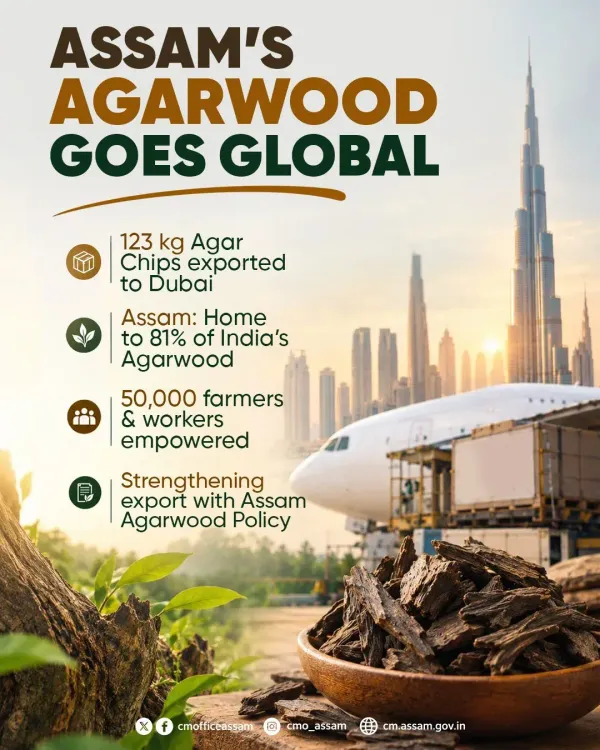
Assam's CMO revealed that 123 kg of agarwood chips have been exported to Dubai under CM Himanta Biswa Sarma's Agarwood Policy. The state produces 81% of India's agarwood and the sector supports over 50,000 farmers and workers.
Key Takeaways
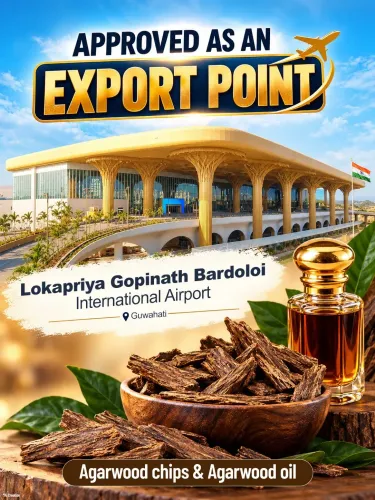
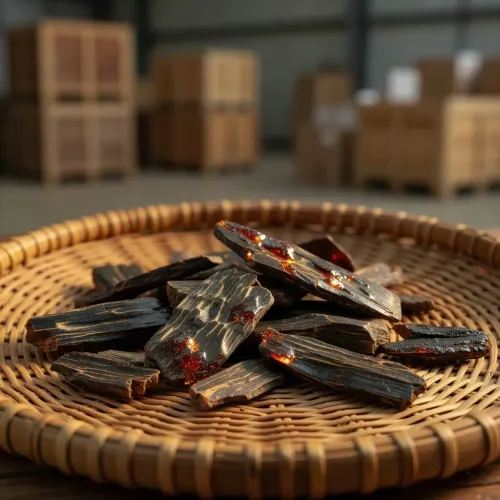
123 kg of agarwood chips have been exported from Assam to Dubai , marking a tangible milestone for the state's Agarwood Policy.
Assam contributes 81% of India's total agarwood production, giving it an outsized national role in this high-value commodity.
The sector supports more than 50,000 farmers and workers across Assam's rural economy.
Agarwood is a CITES-listed species , meaning this export reflects growing regulatory and processing maturity in the state.
Himanta Biswa Sarma has championed the Agarwood Policy as part of a broader push to diversify Assam's agri-export portfolio beyond tea.
Dubai serves as a global redistribution hub for oud and agarwood products, making it a strategic first export destination.
A fragrant piece of Assam just landed in Dubai — and it signals something far larger than a single shipment. The Chief Minister's Office of Assam announced on Sunday, November 1, 2026, that 123 kg of agarwood chips have been exported to Dubai, a milestone the state government frames as proof that its Agarwood Policy is converting forest heritage into hard foreign exchange.
The state behind 81% of India's agarwood
The numbers behind this shipment deserve a second look. Assam accounts for 81% of India's total agarwood production — a near-monopoly on one of the world's most expensive natural commodities, prized across the Gulf, East Asia, and Europe for perfumery, incense, and traditional medicine. The sector directly supports more than 50,000 farmers and workers across the state's rural economy, making it far more than a niche export curiosity.
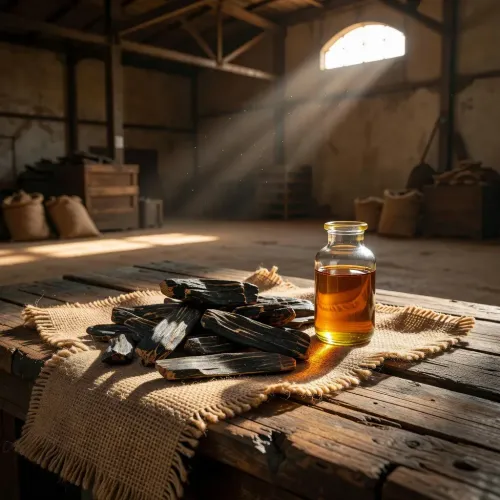
Agarwood — derived from Aquilaria trees — is a CITES-listed species, meaning international trade requires rigorous documentation and regulatory compliance. That Assam is now moving certified chips to a trading hub as demanding as Dubai signals that the state's regulatory and processing infrastructure is maturing fast.
Himanta Biswa Sarma's policy bet on 'liquid gold'
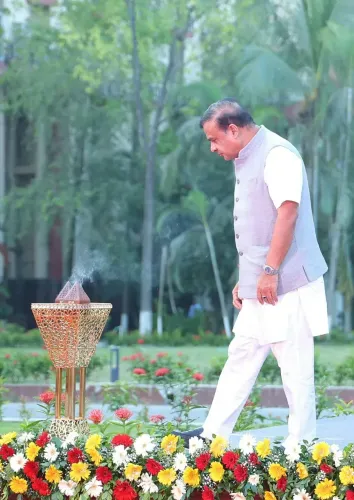
Chief Minister Dr. Himanta Biswa Sarma, who has helmed Assam since 2021, has made agarwood a centrepiece of his administration's push to diversify the state's agri-export base beyond tea. The state's Agarwood Policy targets regulated cultivation, value-added processing, and formal export linkages — turning what was once an informally harvested forest product into a traceable, premium export commodity.
Dubai is the right first port of call. The UAE city is one of the world's largest redistribution hubs for agarwood-derived oud oil and chips, supplying perfumers and luxury goods manufacturers globally. A foothold there opens doors to buyers across the Gulf Cooperation Council and beyond.
What the Dubai shipment must prove next
A single 123 kg consignment is a proof-of-concept, not a supply chain. The real test is whether Assam can move from demonstration exports to consistent, high-volume trade — and whether the Agarwood Policy's implementation can keep pace with farmer demand and international market timelines. Linkages with central government schemes for medicinal and aromatic plants could provide additional capital and technical support to scale up.
For 50,000 rural livelihoods waiting on the next chapter, the pace of that scale-up matters enormously.
Assam's forests have been producing one of the planet's most coveted scents for centuries. The question now is whether policy and logistics can finally let that scent travel the world at scale.
Point of View
Silk, organic agriculture — as vehicles for Northeast India's economic integration with global supply chains, a strategy that also serves a political narrative of development-led governance. The CITES compliance angle is underappreciated: successfully navigating international wildlife trade rules builds institutional credibility that could unlock larger buyer relationships. Whether the Agarwood Policy translates into sustained export volumes, rather than headline-making one-off shipments, will determine its real legacy for the 50,000-odd rural families staked to the sector.
NationPress
1 Nov 2026
Frequently Asked Questions
What is Assam's Agarwood Policy?
Assam's Agarwood Policy is a state government initiative led by Chief Minister Dr. Himanta Biswa Sarma to promote regulated cultivation, processing, and export of agarwood products, aiming to generate rural income and integrate the sector into formal international trade.
Why is Assam important for agarwood production in India?
Assam accounts for approximately 81% of India's total agarwood production, making it the dominant source of this high-value commodity, which is derived primarily from Aquilaria tree species native to the Northeast.
What is agarwood used for?
Agarwood — also known as oud — is prized globally for perfumery, incense, and traditional medicine. It is one of the world's most expensive natural materials and commands high demand in Gulf countries, East Asia, and Europe.
Why was Dubai chosen as the export destination for Assam's agarwood?
Dubai is one of the world's largest redistribution hubs for agarwood and oud products, supplying luxury perfumers and traders across the Gulf and beyond, making it a strategically important first market for Assam's export push.
How many people does Assam's agarwood sector employ?
According to the Chief Minister's Office of Assam, the agarwood sector supports over 50,000 farmers and workers in the state, underlining its significance as a rural livelihood driver.