Modi meets South Korea's Lee Jae-myung at G7, targets semiconductors and green energy
Synopsis
Just two months after South Korea's president visited New Delhi, Modi met Lee Jae-myung again — this time at the Evian G7 — zeroing in on semiconductors, AI, and green energy. The rapid cadence of high-level contact signals that India-South Korea ties are moving from strategic rhetoric to sector-specific action.
Key Takeaways
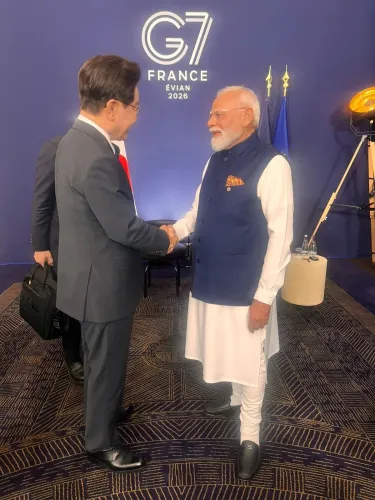
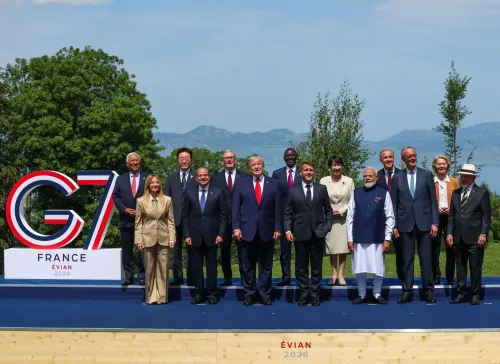
PM Narendra Modi met South Korean President Lee Jae-myung on 16 June at the Evian G7 Summit .
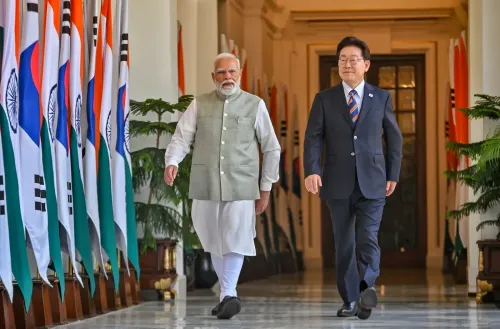
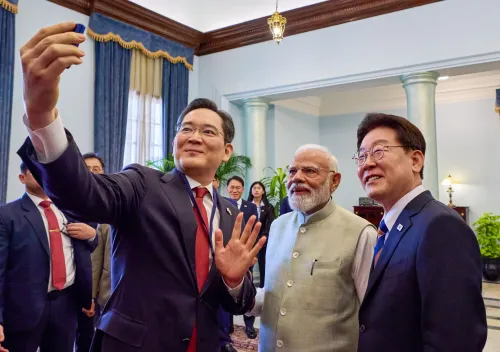
The meeting came just two months after Lee's official visit to India, marking a rapid pace of high-level engagement.
Leaders discussed cooperation in semiconductors , artificial intelligence , green energy , and defence manufacturing .
India-South Korea annual bilateral trade exceeds USD 23 billion ; ties have been a 'Special Strategic Partnership' since 2015 .
The meeting is expected to drive concrete follow-up on critical technology and trade frameworks in the months ahead.
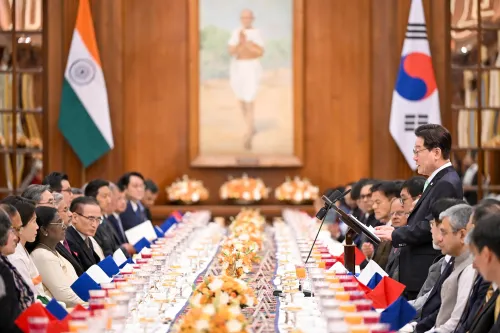
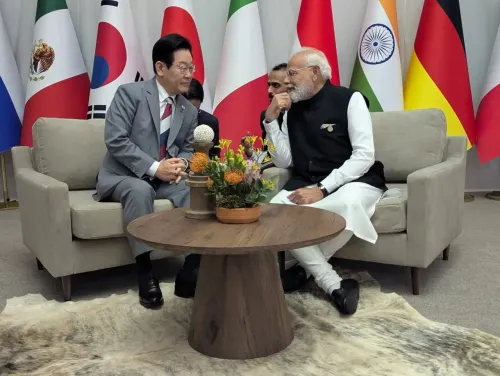
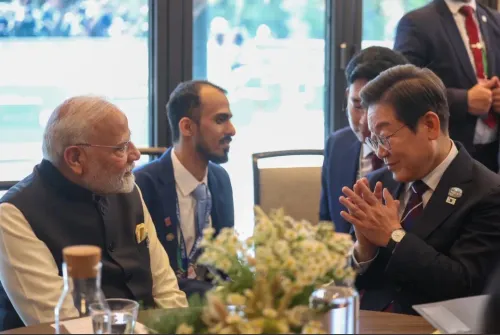
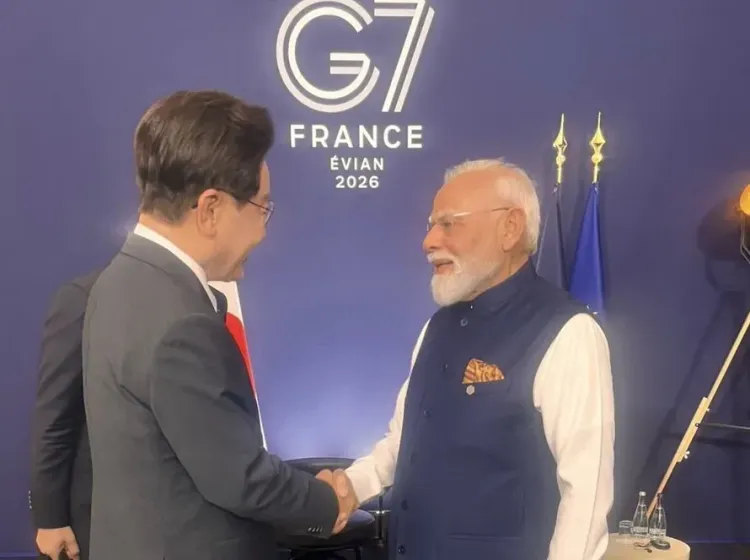
Prime Minister Narendra Modi on Tuesday, 16 June held talks with South Korean President Lee Jae-myung on the sidelines of the Evian G7 Summit, with both leaders reaffirming their countries' commitment to deepening cooperation in trade, emerging technologies, and strategic sectors. The meeting, Modi noted, came just two months after Lee's official visit to India.
What the Leaders Discussed
Modi described the exchange as a 'very good conversation,' underscoring continuity from the earlier New Delhi summit. Officials said the two leaders focused on accelerating collaboration in semiconductors, artificial intelligence, green energy, and defence manufacturing — sectors both governments have identified as priorities for long-term growth.
The conversation also covered renewable energy, critical technologies, and infrastructure development, according to officials. Both sides underlined shared concerns over regional security and the need for closer coordination in multilateral forums.
The Bilateral Relationship in Context
India and South Korea have maintained diplomatic ties since 1973, with the partnership elevated to a 'Special Strategic Partnership' in 2015. Annual bilateral trade has crossed USD 23 billion, making South Korea one of India's most significant economic partners in East Asia.
Major South Korean conglomerates have established a substantial presence in India's automobile, electronics, and steel sectors. India, in turn, has been expanding its reach in South Korea's IT and pharmaceutical industries. Notably, this is the second high-level interaction between Modi and Lee within a short window, signalling momentum in the relationship.
Seoul's Indo-Pacific Calculus
President Lee, who assumed office earlier this year, has made strengthening ties with India a stated pillar of Seoul's broader Indo-Pacific strategy. The Evian meeting reinforces that positioning at a time when both nations are actively working to diversify supply chains and reduce dependence on single-source suppliers — a shared concern shaped by global disruptions in recent years.
What Comes Next
The bilateral engagement at Evian is expected to translate into concrete follow-up action in the months ahead, with officials from both sides likely to take forward agreements on critical technology and trade frameworks. The meeting sets a clear directional signal for India-South Korea ties as both countries navigate shifting geopolitical and economic currents.
Point of View
Now Modi at Evian — are unusual in their frequency and suggest both sides are moving past the ceremonial phase of their 'Special Strategic Partnership.' The real test is whether the semiconductor and AI cooperation talk produces binding frameworks or remains aspirational. India has signed similar technology partnership declarations with Japan and the US; South Korea's edge lies in manufacturing depth, particularly in chips and EVs. If New Delhi can convert that into joint production rather than mere import diversification, this relationship has structural upside. The regional security dimension — both countries wary of Chinese supply-chain dominance — gives the partnership a strategic floor that earlier iterations lacked.
NationPress
16 Sept 2026
Frequently Asked Questions
Where did PM Modi meet South Korean President Lee Jae-myung?
The two leaders met on the sidelines of the Evian G7 Summit on 16 June. It was their second high-level interaction within two months, following President Lee's official visit to India earlier this year.
What sectors did India and South Korea agree to focus on?
The leaders discussed deepening cooperation in semiconductors, artificial intelligence, green energy, defence manufacturing, renewable energy, and critical technologies. Officials also noted shared interest in infrastructure development and supply chain diversification.
How strong is the India-South Korea bilateral relationship?
India and South Korea have maintained diplomatic ties since 1973. The relationship was elevated to a 'Special Strategic Partnership' in 2015, with annual bilateral trade now exceeding USD 23 billion. South Korean companies have significant investments in India's automobile, electronics, and steel sectors.
Why is South Korea prioritising stronger ties with India?
President Lee Jae-myung, who took office earlier this year, has identified India as a key partner within Seoul's broader Indo-Pacific strategy. Both nations are also seeking to diversify supply chains and reduce reliance on single-source suppliers amid global economic uncertainty.
What is expected to follow from the Evian meeting?
Officials indicated the meeting would set the tone for enhanced bilateral engagement in the coming months, with follow-up action expected on critical technology cooperation, trade frameworks, and multilateral coordination on regional security issues.