Odisha Cabinet clears marine fishing law, repeals 358 Acts in sweeping reforms
Synopsis
Odisha's cabinet didn't just approve routine proposals on Wednesday — it rewrote the rules for the state's marine economy. A new fishing law targeting ₹25,000 crore in seafood exports by 2036, the erasure of 358 obsolete Acts, and a softer power-allocation burden on private producers together mark one of the most substantive single-session reform packages the Majhi government has cleared.
Key Takeaways
The Odisha Cabinet approved 10 proposals across 7 departments on 20 May 2026 , chaired by CM Mohan Charan Majhi .
The new Odisha Marine Fishing (Prohibition and Regulation) Act, 2026 replaces the 1982 law, adding provisions for mariculture, seaweed development, and coastal security.
The state targets ₹25,000 crore in seafood exports by 2036 under the Viksit Odisha Vision 2036–47 .
The Odisha Repealing Bill, 2026 will remove 358 redundant Acts enacted between 1974 and 2025 .
The Odisha Thermal Power Policy, 2008 has been amended to cut mandatory IPP power allocation to the government from 12–14% to 5% .
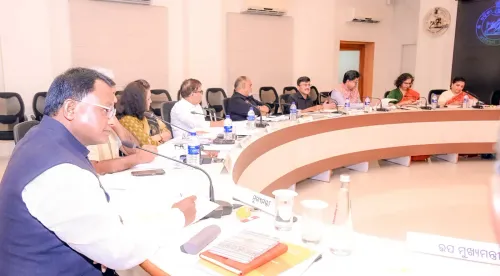
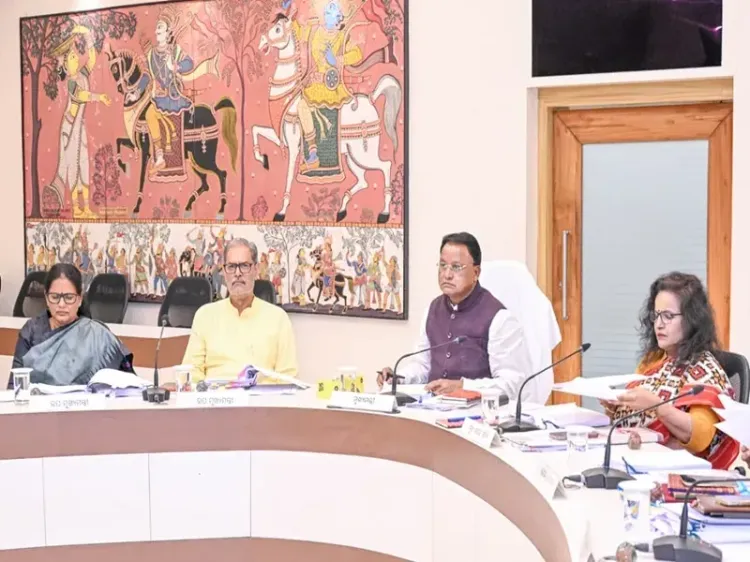
The Odisha Cabinet on Wednesday, 20 May 2026 approved 10 key proposals spanning seven departments — including Law, Energy, and Fisheries and Animal Resources Development — in a wide-ranging reform session chaired by Chief Minister Mohan Charan Majhi in Bhubaneswar. The decisions signal a coordinated push to modernise Odisha's legislative framework and unlock growth in the state's marine economy.
New Marine Fishing Law to Replace 1982 Act
The cabinet's most consequential decision was the approval of the Odisha Marine Fishing (Prohibition and Regulation) Act, 2026 (OMFRA, 2026), which repeals the Odisha Marine Fishing Regulation Act, 1982. The new legislation is designed to establish a modern, inclusive legal framework for the marine fisheries sector, incorporating provisions for marine resource conservation, coastal security, seaweed development, and mariculture — areas that were absent from the four-decade-old law.
Chief Secretary Anu Garg, speaking to reporters after the cabinet meeting, said: 'Chief Minister has announced in the budget that there will be a deep sea fishing mission and a shrimp export mission, and therefore it was very important to enact this legislation, whereby emphasis will be laid on marine resource conservation, coastal security, and ensuring that seaweed development and mariculture, which hitherto were not included, will also be introduced. We are hopeful that this will give a boost to the marine economy.'
The government has set an ambitious target of ₹25,000 crore in seafood exports by 2036, aligned with the Viksit Odisha Vision 2036–47 and the state's broader Blue Economy strategy. Notably, this legislative overhaul follows the Chief Minister's budget announcement of a dedicated deep-sea fishing mission — making the legal framework a prerequisite for operationalising those schemes.
358 Redundant Acts to Be Repealed
Acting on recommendations from the Odisha State Law Commission, the cabinet approved the Odisha Repealing Bill, 2026, which will strike off 358 Acts enacted between 1974 and 2025 from the statute book. According to an official statement, most of these are amendment Acts whose provisions have already been absorbed into their respective principal Acts, rendering them redundant. A further subset was enacted as one-time measures for specific purposes and ceased to be relevant upon coming into force.
This is one of the most extensive legislative housekeeping exercises undertaken by the state in recent years, and follows a broader national trend of statute rationalisation that several states — including Rajasthan and Maharashtra — have undertaken over the past decade.
Odisha Thermal Power Policy Amended
The cabinet also approved amendments to the Odisha Thermal Power Policy, 2008, reducing the mandatory power allocation by Independent Power Producers (IPPs) to the state government from the existing 12–14 per cent to 5 per cent. The revision aligns Odisha's policy with Government of India recommendations and brings it in line with practices already adopted in states such as Chhattisgarh. The change is expected to improve the commercial viability of private power projects in the state and potentially attract fresh investment in the energy sector.
Other Approvals and What Comes Next
Several additional proposals across the seven departments also received cabinet clearance during Wednesday's meeting, though full details are awaited from the government. The passage of the Odisha Marine Fishing Regulation Bill, 2026 and the Odisha Repealing Bill, 2026 will now require formal enactment by the state legislature. Industry stakeholders in the fisheries sector will be watching closely to see how the deep-sea fishing mission and shrimp export mission are operationalised under the new legal architecture.
Point of View
2026 is less a routine legislative update and more a foundational bet on Odisha's Blue Economy ambitions — without a modern legal scaffold, the deep-sea fishing mission and shrimp export mission would have had no enforceable basis. The ₹25,000 crore export target by 2036 is bold but not implausible given Odisha's coastline; the real question is whether enforcement capacity — coast guard coordination, licensing infrastructure, mariculture oversight — will scale alongside the law. The repeal of 358 Acts is overdue housekeeping, but its political value should not be overstated: statute rationalisation rarely changes ground-level governance unless accompanied by regulatory simplification. The IPP power-allocation cut is the quietest but potentially most commercially significant decision of the session, signalling that the Majhi government is willing to subordinate legacy rent-extraction mechanisms to attract private capital in energy.
NationPress
19 Sept 2026
Frequently Asked Questions
What is the Odisha Marine Fishing (Prohibition and Regulation) Act, 2026?
It is a new state law approved by the Odisha Cabinet on 20 May 2026, replacing the four-decade-old Odisha Marine Fishing Regulation Act, 1982. It introduces provisions for marine resource conservation, coastal security, seaweed development, and mariculture, and forms the legal backbone of the state's deep-sea fishing mission and ₹25,000 crore seafood export target by 2036.
Why is Odisha repealing 358 Acts?
The Odisha Cabinet approved the Odisha Repealing Bill, 2026 to remove 358 laws enacted between 1974 and 2025 that have become redundant or obsolete. Most are amendment Acts whose provisions have already been incorporated into principal legislation, and some were one-time measures that lost relevance after coming into force. The move follows recommendations by the Odisha State Law Commission.
What change has been made to the Odisha Thermal Power Policy?
The cabinet amended the Odisha Thermal Power Policy, 2008 to reduce the mandatory power allocation by Independent Power Producers to the state government from 12–14 per cent to 5 per cent. The revision aligns Odisha with Government of India recommendations and mirrors practices in states such as Chhattisgarh, and is expected to improve the commercial viability of private power projects.
What is Odisha's seafood export target and when is it due?
Odisha has set a target of ₹25,000 crore in seafood exports by 2036, as part of its Viksit Odisha Vision 2036–47 and Blue Economy initiatives. The new marine fishing legislation approved on 20 May 2026 is intended to provide the regulatory framework needed to achieve this goal.
Who chaired the Odisha Cabinet meeting on 20 May 2026?
The cabinet meeting was chaired by Chief Minister Mohan Charan Majhi in Bhubaneswar. Chief Secretary Anu Garg briefed reporters on the key decisions after the meeting.