Pradhan joins fisheries review meet in Bhubaneswar
Synopsis
Union Education Minister Dharmendra Pradhan joined fisheries ministers in Bhubaneswar to review central aquaculture schemes in Odisha, discuss a rural fish-export roadmap, and commit to a Deep Sea Fishing Policy with grants and loans for youth and startups.
Key Takeaways
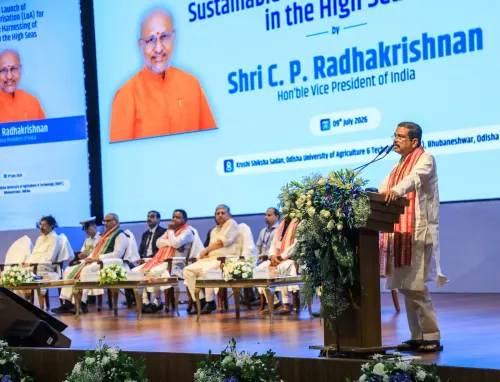
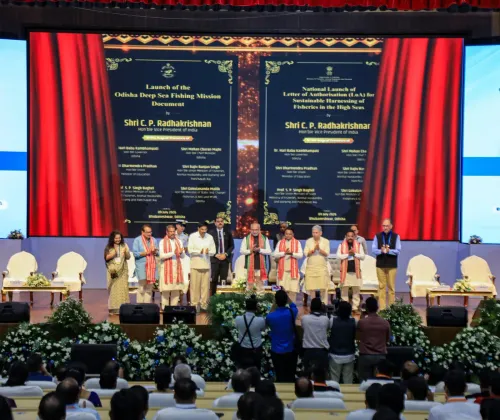
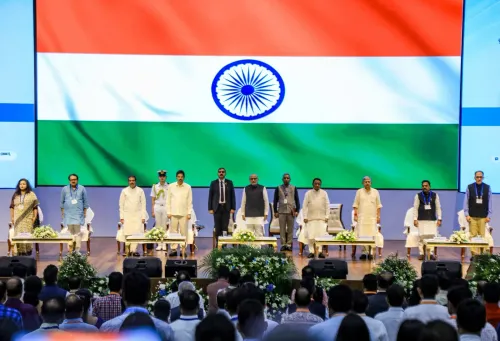
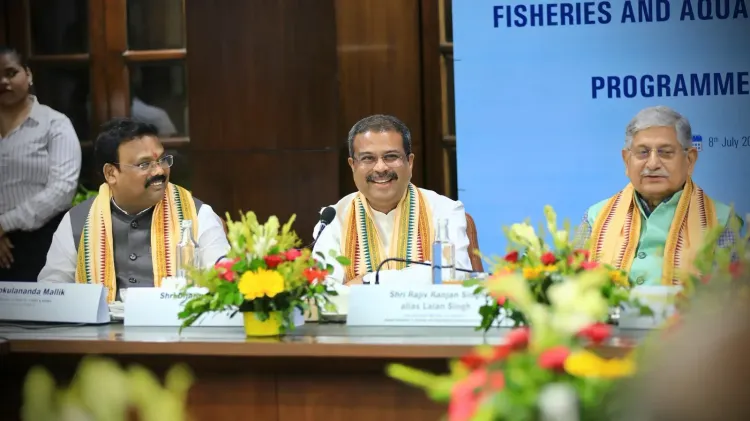
Dharmendra Pradhan attended a fisheries and aquaculture review meeting in Bhubaneswar on 8 July 2026 .
Union Minister Lalan Singh and MoS Prof.
Singh Baghel participated alongside Odisha Fisheries Minister Gokulananda Mallik .
A roadmap was prepared to export fish from rural Odisha to overseas markets and boost fishermen's incomes.
The government committed to developing a Deep Sea Fishing Policy for Odisha.
Financial grants and concessional loans for youth and aquaculture startups were discussed under existing central schemes.
The meeting reflects the NDA's 'double engine' governance model coordinating central and state BJP administrations on livelihood programmes.
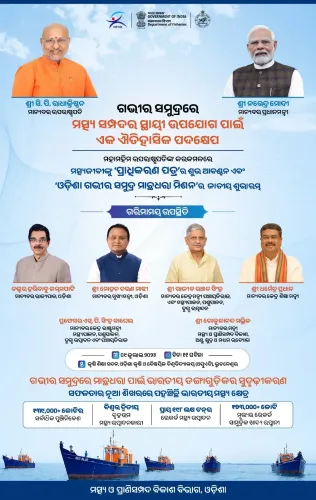
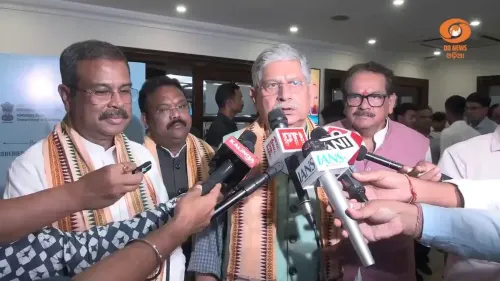
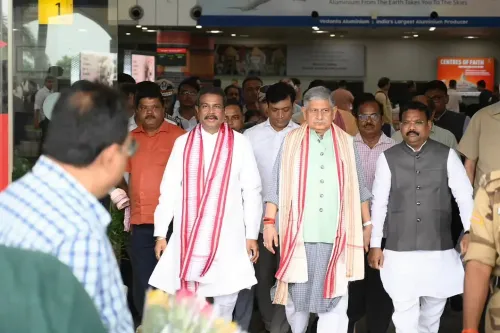
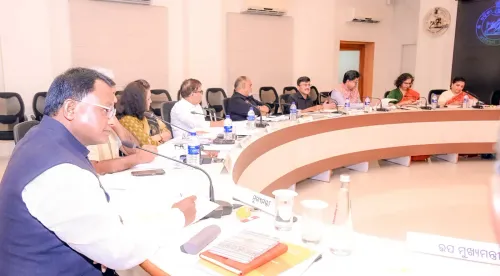
Union Education Minister Dharmendra Pradhan attended a high-level review meeting on fisheries and aquaculture schemes in Odisha at Bhubaneswar on 8 July 2026, joining Union Minister of Fisheries, Animal Husbandry and Dairying Lalan Singh and Minister of State Prof. S. P. Singh Baghel, alongside Odisha's Fisheries, Animal Husbandry and MSME Minister Gokulananda Mallik.
Context
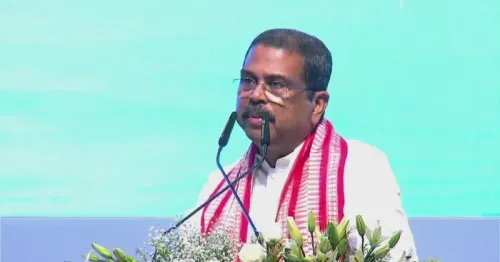
Posting in Odia, Pradhan said the meeting reviewed the status of central government fisheries promotion schemes in Odisha and charted a roadmap to export fish from rural areas to overseas markets, with the aim of financially empowering fishermen. He wrote: 'ଡବଲ ଇଞ୍ଜିନ ସରକାରର ମିଳିତ ପ୍ରୟାସ' — 'the combined effort of the double-engine government' — to enrich fisherfolk by exporting rural catch to foreign markets. Pradhan also underscored the government's commitment to developing a Deep Sea Fishing Policy for the state and extending financial grants and loans to youth and startups in the sector.
Policy Backdrop
The meeting sits within the broader framework of the Pradhan Mantri Matsya Sampada Yojana (PMMSY), launched in 2020 to modernise fisheries infrastructure, boost production, and scale up seafood exports. The earlier Fisheries and Aquaculture Infrastructure Development Fund (FIDF), established in 2018, provides concessional finance for fisheries projects, including cold-chain and processing units. Odisha, with its roughly 480-km coastline and established brackish-water aquaculture clusters, has been a priority focus under both schemes.
The NDA's 'double engine' model — where a BJP-led central government coordinates with a BJP-ruled state administration — is central to how these schemes are being implemented on the ground. The review meeting is a direct expression of that coordination, bringing together central and state ministers under one roof to assess implementation gaps and set targets.
Stakeholders and Impact
The primary beneficiaries of the roadmap discussed are coastal and rural fishermen, who stand to gain from improved export linkages and better market access. Rural youth and aquaculture startups are specifically identified as recipients of financial grants and concessional loans under the proposed framework. Expanding deep-sea fishing capacity could also open new livelihood avenues beyond the near-shore fisheries that most small operators currently depend on.
Odisha's fishing communities, concentrated along the coast and in inland water bodies, have historically faced income volatility tied to seasonal catches and limited processing infrastructure. A structured export roadmap, if implemented, could provide more stable earnings and reduce dependence on intermediaries.
What's Next
The key deliverables to watch are the formal rollout of Odisha's Deep Sea Fishing Policy and the actual disbursement of central funds and loans to youth entrepreneurs and startups in the fisheries sector. Progress on aligning state-level aquaculture clusters with PMMSY targets will also be a measure of how effectively the 'double engine' coordination translates from the review table to the ground. The meeting signals a push to position Odisha as a larger player in India's seafood export chain — a goal that will depend on investments in cold-chain logistics, processing capacity, and port-side infrastructure.
Point of View
With Odisha serving as a showcase. The push for a Deep Sea Fishing Policy and startup-linked loans signals an attempt to modernise a traditionally subsistence sector and create a visible economic dividend ahead of future electoral cycles. Anchoring the agenda to export earnings rather than just welfare payouts marks a subtle shift in how the party frames its fisheries outreach to coastal communities. Whether the roadmap produces measurable export growth will be the real test of this coordination exercise.
NationPress
7 Oct 2026
Frequently Asked Questions
Why did Education Minister Dharmendra Pradhan attend a fisheries meeting in Bhubaneswar?
Pradhan, a senior BJP leader from Odisha, joined the review as part of the 'double engine' coordination between the central government and the BJP-ruled Odisha state government, even though fisheries falls outside his Education portfolio.
What is the Pradhan Mantri Matsya Sampada Yojana and how does it apply to Odisha?
PMMSY, launched in 2020, is a central scheme to modernise fisheries infrastructure, increase production, and boost seafood exports. Odisha, with its 480-km coastline and brackish-water aquaculture clusters, is a priority state under the scheme.
What is the Deep Sea Fishing Policy discussed at the Bhubaneswar meeting?
The meeting discussed developing a Deep Sea Fishing Policy for Odisha to expand fishing operations beyond near-shore waters, with financial grants and loans earmarked for youth and startups entering the sector.
Who attended the fisheries review meeting in Bhubaneswar on 8 July 2026?
Union Minister of Fisheries Lalan Singh, Minister of State Prof. S. P. Singh Baghel, and Odisha Fisheries Minister Gokulananda Mallik attended, along with Union Education Minister Dharmendra Pradhan.
How does the 'double engine government' model work for fisheries schemes in Odisha?
The 'double engine' model refers to a BJP-led central government and a BJP-ruled state government working in tandem to implement central schemes, allowing faster fund disbursement and coordinated policy rollout at the state level.